The Pull of Consensus, the Repocalypse, and Competitive Advantage

Since the last issue, we’ve publish a new essay, “Private Equity at the Crossroads,” and the latest edition of “Clippings,” which features the usual eclectic selection of charts and other graphics of interest.

As always, your comments, pushbacks, and ideas about any of the content are welcome.

The pull of consensus

Earnest Sweat, writing for his Groundwork newsletter, begins by reflecting on his early years in equity research — specifically on the need to understand Wall Street consensus before publishing research on a company, which confused him:

Was the goal to be right, or was it to be close enough to everyone else that we wouldn’t stand out?

Now he sees that pull of consensus in the realm of venture capital:

Instead of conviction first and validation later, validation is driving conviction.  Investors are circling deals because other investors are circling.  Founders signaling who else is in as a primary input into the decision.  Rounds that start to take shape only after a certain kind of social proof appears.

A strange version of game theory has taken hold.  Not the kind where independent actors make decisions, and the market converges over time, but an inverted version where everyone is trying to anticipate everyone else and move together.  The goal is not to be right, but to not be wrong alone.

This is an issue in many parts of the investment ecosystem; as Sweat says, “It is worth asking what kind of outcomes we are quietly optimizing for.”

The repocalypse

“Hedge Funds, Leveraged Finance and Safe Assets: A Look Through the Lenses of the Repocalypse,” a paper by Stefano Sgambati, “examines the deep entanglements between hedge funds, leveraged finance, and the U.S. Treasury market.”

Sgambati recounts examples of “a recurrent pattern of instability in the U.S. Treasury market:  one that has become increasingly visible over the past three decades.”  He disputes the belief that hedge funds are “opportunistic traders whose failures may harm their investors but pose little systemic risk”:

This view is deeply misleading.  Assets under management are a poor proxy for financial power (the ability to shape market outcomes).  Hedge funds derive their influence not from the size of their balance sheets in net asset value (NAV) terms, but from their capacity to generate gross notional exposure (GNE) through leverage.  By combining repo financing, derivatives, securities lending, and off-balance-sheet synthetic instruments, top hedge funds routinely operate with gross exposures that dwarf their equity capital many times over.  It is gross exposure — not net leverage worth or AUM — that determines market impact and, literally, leverage over financial markets.

This means that “treasury market instability is not a narrow technical issue, stemming from exogenous shocks, but a structural feature of the market itself, now entangled with the balance sheets of hedge funds.”  And the hedge fund industry’s profitability “has become more and more dependent on the systematic (and automated) exploitation of minuscule spreads across markets through extreme leverage.”

The author provides historical context to frame the issue, including from the “repocalypse” of 2019 and the monetary response it triggered:

This scale and persistence of intervention demand explanation.  Markets do not require months of emergency liquidity to recover from minor technical glitches.

The problems that have repeatedly arisen are part of a bigger picture:

The growing instability of the Treasury market, the expansion of hedge fund leverage, and the money market ruptures revealed by the Repocalypse — cannot be understood in isolation.  They are embedded in a broader transformation of credit markets:  the emergence of what can be described as the leveraged finance complex.

For an entirely different view of the risks that hedge funds present, you can read “Hedge Funds and Financial Stability: A Review of the Evidence” by Ron Alquist (of the Managed Funds Association) and Craig Lewis.  Other than the collapse of Long-Term Capital Management (LTCM) in 1998, which they view as “an isolated case,” they find that “hedge funds’ impact on broader financial stability is minimal or absent,” and that the reforms instituted in the wake of LTCM help “market participants accurately price the risks associated with hedge funds” and mitigate potential systematic issues.

Place your bets.

Competitive advantage

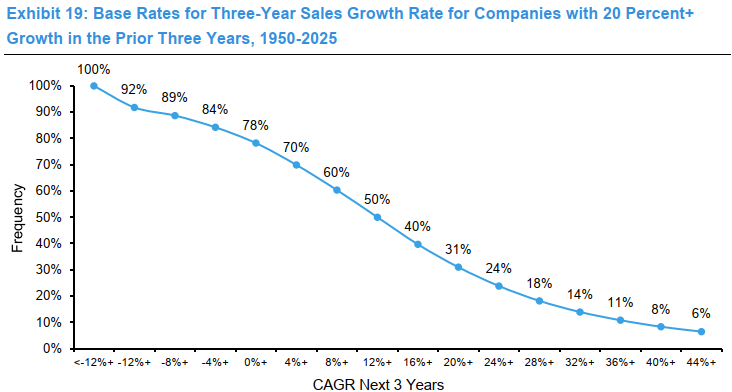
Michael Mauboussin and Dan Callahan have released a report about “the neglected value driver,” that is, the length of the competitive advantage period (CAP) for a firm.  They write that “the tools used to quantify CAP are wanting”:

Specifically, market participants generally assess value using multiples of earnings or cash flow that obfuscate the contributions of growth, return on invested capital, opportunity cost, and CAP.  A smaller number of practitioners use discounted cash flow models, but they limit the model’s utility by making ungrounded assumptions for the terminal value that often makes up the vast majority of the worth.

Their analysis covers a wide swath of the valuation endeavor, including the seminal developments in company analysis and valuation practice.  Toward the end there is a summary of the steps in the valuation process, the exposition of each step having been provided earlier.

Above is one of the charts from the report, demonstrating the importance of knowing the base rates for important variables, in this case regarding sales growth.  (If you were able to plot analyst expectations for the same cohort of companies, you would likely see a much different look, demonstrating the need to include base rates in the valuation framework.)

Cogs in an investment machine

Organizational design is a fascination here at The Investment Ecosystem, so a Bloomberg article from David Ramli about FengHe Fund Management caught our eye.  It details founding partner Matt Hu’s “unusual approach” to running a hedge fund, especially its decision-making process.  Hu makes the decisions; analysts stay mostly within their “monastic cells,” communicating by and large via Slack:

FengHe’s solution is to look for analysts who see this arrangement as a feature, not a bug.  Compared with other funds, there’s less need to be an engaging speaker, have an aggressive ‘alpha’ personality or be politically savvy enough to rally internal support.  Ultimately, it’s the ideas that count.

There are a few common arrangements of the “cogs in an investment machine;” we hear about the uncommon ones when things have gone well.  The question is always whether a given design will work across time in different environments.

Private credit losses

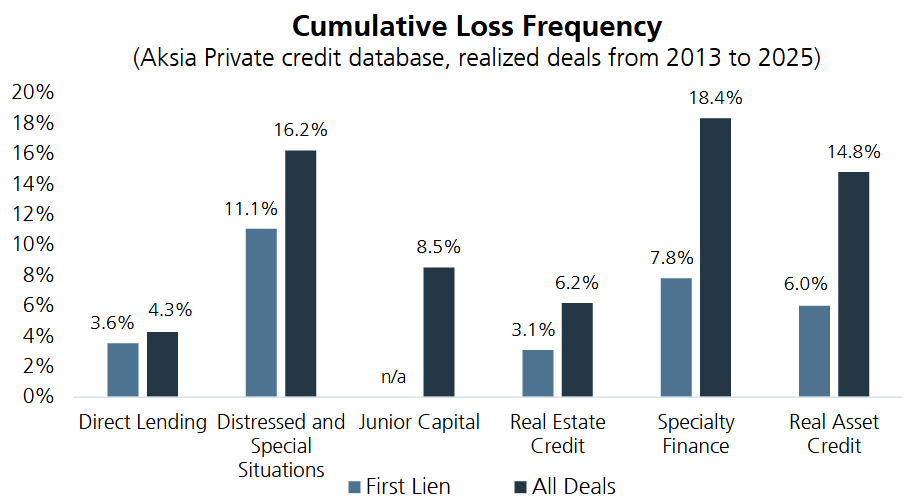
Chris Schelling and Jim Vos of AC Private Markets wrote a report, “Perspectives on Private Credit Risk,” in which they state that “the forward-looking credit loss assumptions being casually tossed around in the financial media appear to have little grounding in fact.”  They have included a number of charts and scenario analyses to support their case.  Note that the image above shows cumulative losses across thirteen years, not annualized rates of loss.

Other reads

“The Distribution Fallacy — Moats, Mechanisms, and Misreads,” The Terminalist.

What AI provides is the capability to move at speed against moats built in an earlier era, under different competitive conditions, with tooling that has since been superseded.

“BDC and Interval Fund Managers Can Stem Redemption Waves with Transparency, Not Reassurance,” Jeffrey Diehl, Adams Street.  This includes a list of metrics that managers should provide to investors.

“Private-Equity Holdings Look Overvalued. Who’s Going to Fix It?” Chris Cumming, Wall Street Journal.

Investors are increasingly worried that private-equity assets are overvalued, and are questioning whether regulators and auditors will hold firms accountable.

“The Impact of AI on SaaS: A Risk Framework for Investors,” Jim Masturzo, Research Affiliates.  A view of the “cyclical (within 12 months), secular (one to five years), and super secular (beyond five years)” risks.

“Investor Advocates Ask FASB to Reconsider Guidance on Secondaries,” Michelle Celarier, Institutional Investor.

Because secondaries can be revalued immediately under current rules, the accounting treatment can lift reported performance early — making them attractive tools for evergreen funds that need steady inflows and investor confidence to manage redemptions.

“New kind of boom for US oil patch: Wall Street securitisation,” Stephanie Findlay, Financial Times.  A strategy to slice up the cash flows of oil and gas wells “has really exploded;” what are the risks?

“Liquidity as a Product Feature, Not a Market Reality,” Nirasha Senanayake, Enterprising Investor.

The issue is that liquidity is increasingly engineered at the product level, often creating expectations that may not hold under stress.

This is a subtle but important shift — from an asset characteristic to what a product promises.

“The Vanishing Footnote,” Nick Nemeth, Mispriced Assets.  Following the trail of private credit exposure to the software firm Medallia, which Thoma Bravo is handing over to creditors (and taking a five billion dollar loss).

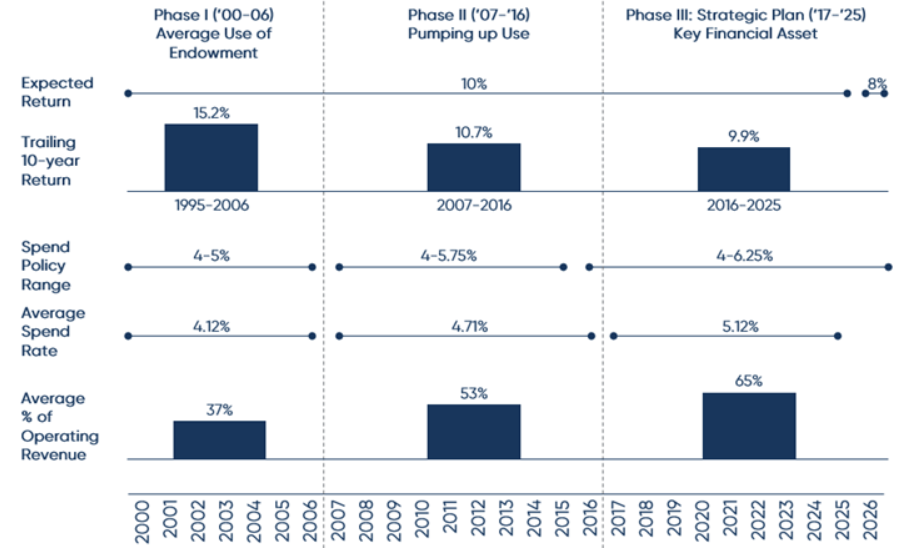
“Endowment Radar Study 2025: A Widening Divide,” Tracy Filosa, Cambridge Associates.

The [study] underscores the increasingly strategic role of the endowment as colleges and universities face persistent financial, political, and operational challenges.

“What to do when you’re underperforming,” The Intellectual Edge.  Helpful ideas from Anthony Bolton.

Grounds for an opinion

“He who knows only his own side of the case, knows little of that.” — John Stuart Mill.

Flashback: Apple

With Apple turning fifty this month there have been a number of retrospective articles about it.  The announcement that Tim Cook will be stepping down as CEO has prompted further reviews, including a New York Times chronicle of the firm’s CEOs since its inception.  (There have been several more than the two that most people remember.)

One fascinating item was shared by Sequoia Capital — Don Valentine’s 1977 memo recommending an investment in the company, although “memo” is overstating it a bit.  Per word, one of the greatest payoffs of all time.

Mass customization

A very early posting on this site, “Mass Customization and Tactical Asset Allocation,” reviewed a paper from BNP Paribas that proposed an automated approach for investment advisory firms to use a single set of investment views to drive customized allocations across a large number of clients.

While the firm’s view — that “Creating a viable industrial TAA process is thus part of the asset manager’s fiduciary duty towards all its clients” — is debatable, since the old-fashioned way still works:

The paper is a good example of the dance between theory and practice, as well as the push and pull in the industry between customization and industrialization.

Thanks for reading.  Many happy total returns.
Published: April 27, 2026

Subscribe

To comment, please send an email to editor@investmentecosystem.com. Comments are for the editor and are not viewable by readers.

Private Equity at the Crossroads

Private equity investing has flourished over the last few decades, dramatically changing the institutional investment landscape.

Buyout, venture, growth equity, and distressed all fall under that general umbrella.  While each subcategory has it own attributes, historically they have been structurally similar, designed as closed-end funds with a limited life that aren’t offered to the general public.

Over time, other vehicles like secondaries and continuation funds have broadened the opportunity set even further.  And there are an increasing number of perpetual or “evergreen” funds that lock up capital for longer periods — to capture greater value in portfolio companies than happens when they ride the typical closed-end fund carousel from manager to manager to manager.

(Recent events have highlighted that investors in those longer-duration funds that have been marketed as “semi-liquid” may have different expectations of liquidity than the structure accommodates.)

The “crossroads” of this posting’s title is applicable to the broad universe of private equity investments, but is specifically aimed at buyout funds, what most people think of as traditional private equity.

The environment

Here are some of the important attributes of the private equity environment today:

~ The latest memo from Howard Marks is titled “What’s Going on in Private Credit?”  Among the topics is the relationship between direct investing and private equity, regarding which he writes:

Bottom line:  private equity was born and existed through 2021 in an interest rate climate that was supportive of it in the extreme.

Unsurprisingly, things went great.

Marks provides a series of bullet points on the effects of the increase in rates on private equity, including the decline in returns, distributions, and new commitments.

~ There are plenty of books and articles about the downside of the standard private equity fund model and the negative effects on companies and communities from high levels of leverage (often in service of goosing early distributions) and extractive practices.

A 2023 essay on this site asked the question, “As an asset owner, does it matter to you how the money is made, or just that the money is made?”  While not all private equity investments should be painted with the same brush, there are clearly negative externalities that result from industry practices.  Many asset owners have turned a blind eye to the problems — often in contravention of their stated missions.

To that point, an anonymous author (“a senior partner at a leading international law firm”) wrote a short paper on “The Dark Side of Private Equity.”  While stating that “the PE investment model can and should continue to be a substantial vehicle for productive investment,” the author proposes reforms that “would realign PE fund incentives toward resilience and quality without freezing capital formation or growth.”

The private equity industry has thrived in spite of these concerns, but there is an undercurrent of distrust that will likely intensify if inflation persists (keeping interest rates where they are or even higher) and/or if there is a prolonged period of economic weakness.  Failed deals expose the weakness of the standard model.

~ To date, the commitment to private equity has remained strong throughout the investment industry.  Surveys of asset owners show little inclination to reduce exposure and those with smaller holdings are still ramping up.  They are encouraged in that quest not only by the narratives of the providers but by the institutionalization (or industrialization) of private equity — and private capital overall — as the key to investment success.

It is rare to hear a consultant or OCIO or credentialing organization question the orthodoxy of the day.  In part that is because working on private capital, with its greater complexity and restricted access, feels like a higher calling.  And it feeds much higher fees into the coffers of the organizations and the wallets of the individuals involved.

Inertia is a powerful force.  It would take more years of disappointment for the current conformity to reverse, but that should not be dismissed as an impossibility.  What would happen if asset owners started stepping back, especially those who have led the parade?

~ The business being what it is, opinions will most likely change only if the current weakness in returns continues for a time.

“Returns” remain a slippery concept for private equity.  Internal rates of return (IRRs) don’t fit neatly with the time-weighted returns that are calculated for traditional investments — and IRRs can be manipulated and communicated in ways that are misleading.

Ludovic Phalippou has been especially good at identifying the shortcomings of IRR and its misuse.  For example, see a LinkedIn posting from him that pointed out the inanity of the return claims of Apollo.  But it’s not just managers who play fast and loose; if you look at the footnotes found in materials from advisors who should be objective about such things, you’ll see that the comparisons made are sometimes apples to oranges — without appropriate context being provided.  (Also, there are still those who pass off smoothed volatility as an acceptable measure of “risk.”)

“Democratization”

Retail investors have been clamoring for private equity for some time, wanting to get in on the high returns and low volatility that they have heard institutional asset owners enjoy.

They now are getting their wish, as private equity is marketing standalone vehicles to individuals and has laid the groundwork for a big push in the defined contribution market.

That makes an article by William Clayton and Elisabeth de Fontenay,  “Private Equity for All: The Paradoxical Push to Democratize Private Markets,” essential reading.  They see “a glaring paradox”:

The democratization narrative has it backwards:  retailization erodes private equity’s famed advantages in investor performance and corporate efficiency, while subjecting retail investors to new risks and imposing burdensome new constraints on the private markets.

For individuals, the grass appears greener elsewhere, but:

The suggestion that retail investors have suffered from being limited to publicly-traded securities is not merely misleading, but fanciful.  Few investments worldwide have performed better over the last half-century than index funds tracking U.S. public equities — an investment strategy available to all retail investors at near-zero cost.

The authors note that private equity returns have diminished over time as the amount of institutional investment in the industry has swelled; it “delivered its strongest performance when it was still a small, exclusive corner of the market.”  And “democratization” will continue that trend and impose other kinds of costs:

Injecting retail investors into private equity directly threatens the very features that make private equity special.  Where retail investors tread, regulation, litigation, and public scrutiny inevitably follow.

Yet, the current state of private equity has hastened the move by fund managers to expand the pool of buyers.  The authors point out that the new push represents a dramatic shift in the industry’s stated philosophy.  As recently as 2023, the American Investment Council (the industry’s lobbying group) “vehemently opposed” changes to private fund regulations that would provide more protection for investors akin to those for registered investment companies:

In pushing back against the proposed regulation, AIC made one thing abundantly clear:  the superiority of the private equity ecosystem depends on the sophistication of the investors in the industry.

The authors outline the historical advantages of private equity —  selection, governance, freedom from regulation and litigation, and (theoretically at least) the ability to capture an illiquidity premium — and then, one by one, argue how each of those advantages will be eroded in the new era of retail participation.

How will institutional investors deal with the changes?

A poll conducted by the authors (of “69 senior in-house attorneys” for asset owners) gives some indications.  First, that the current paucity of distributions has caused a “relative lack of satisfaction with the present-day state of the private funds industry.”  The respondents also think that, as a result of the new distribution initiatives, performance will decline and that “retail investors will suffer most.”

While those polled didn’t anticipate a big drop in exposure by asset owners, their responses did reveal “a fascinating possibility”:

The private equity investor universe could become splintered among institutional investors, on one hand, and retail investors, on the other.  One mechanism for this would simply be for certain investors to avoid managers that accept any retail capital, which would lead to a divide in the market between two types of managers.

The split

To that point, Dan O’Donnell of Laird Norton Wetherby thinks that private equity investors should avoid those private equity firms that are in the asset gathering business.  His report, “Private Equity at 50: Hold Everything,” puts forth an important thesis:

PE’s prolonged success transformed a specialist craft into a $10 trillion dollar industry.  Scale doesn’t just make complex systems bigger.  It reorganizes them around new priorities.  In PE, scale shifts emphasis away from performance-driven carried interest and toward AUM-driven enterprise value.

O’Donnell draws a contrast between managers in “segments within PE where the model is still working the way it was designed” and the firms that dominate the industry and media attention.  Yes, “rates went up,” triggering challenges, but that’s “an incomplete explanation” of what is happening:

The deeper cause — the one that headlines don’t address — operates more slowly, more quietly, but unrelentingly:  scale.

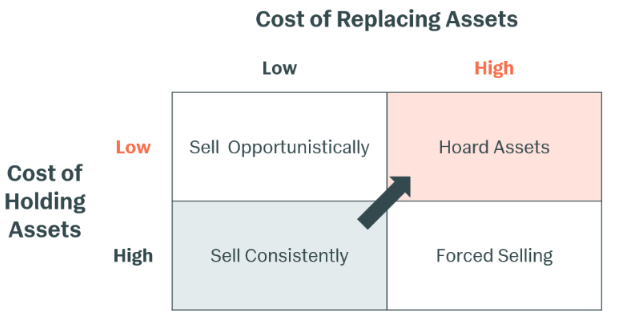
Scale has broken “the iron law of PE,” that “to raise a bigger fund, you had to return capital from prior funds.”  Everything stemmed from that; then “scale reorganized the system.”  Now we have GP stakes and continuation vehicles and NAV loans — facilities that aid in the hoarding of assets:

The more firms that hoard, the more expensive it becomes for everyone else to replace, which pushes more firms toward hoarding.

The PE flywheel is now spinning in reverse.

How the game has changed:

In the second half of his piece, O’Donnell urges limited partners to find the “specific cohort of firms for whom the original model — buy companies, improve them, sell them, return the proceeds — still holds.”  He puts them in three categories:  lower middle market, specialists, and emerging managers.  His rationale for each is provided, including supportive performance comparisons.

What managers will be fit for purpose going forward?  Do you want to invest with asset gatherers or investors (or doesn’t it matter)?  Where are the incentives aligned?  Isn’t it better to have the people in charge close to the investments, with their prospective fortunes relying upon their creative actions rather than by earning fees on assets under management?

In Asset Gatherers, the senior team has a big enterprise to run and competing demands on their time — global fundraising, GP stake negotiations, resource allocation to different vertical or platform teams, sitting on multiple investment committees, managing a 100+ person organization.  But at Investor firms, the senior team is spending most of their time investing — originating deals, leading diligence, crafting value creation plans, sitting onboards, and being directly plugged into what’s happening on the ground.  Because the investment strategy is the business strategy and vice versa.  There’s precious little else to manage.

The crossroads

Private equity is many things.  Different strategies, different structures.  While this posting mostly deals with classic buyout funds, the ripple effects of these changes will alter the entire private equity ecosystem.

Asset owners and their advisors need to reexamine their beliefs and behaviors to see whether they are based on the private equity that was or the private equity that will be.

It’s common to hear due diligence analysts talk about re-underwriting exposure to a current manager, even though such reviews are often perfunctory when historical returns have been good (especially given the fear of being shut out of future vintages if you skip one).

Now, a re-underwriting of the whole asset class and its subcomponents is in order.  Not a casual look rooted in orthodoxy and potentially outdated return expectations, but a deep examination of where the industry is headed and what that means for the size and composition of private equity investments.

Published: April 25, 2026

Subscribe

To comment, please send an email to editor@investmentecosystem.com. Comments are for the editor and are not viewable by readers.

The Self-Driving Portfolio, the Spreadsheet Challenge, and the Problem with Brainstorming

If you aren’t currently receiving these updates via email, you can sign up here.  Also, if you are interested in seeing an eclectic mix of charts every now and then, check out our “clippings” Substack, which has a separate subscription.  (Both are free, so treat your co-workers too; then you don’t have to keep sending them things to read.)

The self-driving portfolio

Here’s the abstract for a new paper from Andrew Ang, et al.:

Agentic AI shifts the investor’s role from analytical execution to oversight.  We present an agentic strategic asset allocation pipeline in which approximately 50 specialized agents produce capital market assumptions, construct portfolios using over 20 competing methods, and critique and vote on each other’s output.  A researcher agent proposes new portfolio construction methods not yet represented, and a meta-agent compares past forecasts against realized returns and rewrites agent code and prompts to improve future performance.  The entire pipeline is governed by the Investment Policy Statement — the same document that guides human portfolio managers can now constrain and direct autonomous agents.

The opening sentence:

The most binding constraint in institutional asset management is not data availability or model sophistication, but the finite bandwidth of human decision-makers.

Gulp.  Well, we knew this was coming.  To be clear, there is no proof to be found here (or even the common “proofiness” of returns that are well short of statistical significance but relied upon nonetheless).  And the authors point out the risks — including “automation surprise” — from delegating strategic asset allocation to a team of non-human agents.

But this short paper does make you think about new possibilities and the implications for organizational design and the need for different kinds of talent:

The human’s role is not diminished; it is elevated, and the human becomes the architect of designing and overseeing an investment workflow.

Also, it’s worth wondering whether we might be better at analyzing and arranging bots than we are at doing the same with humans; how often does this “guiding principle” really guide our design behavior now?

The guiding principle for when to decompose a single agent into a team is the same one that governs organizational design in human institutions:  decompose when the task requires genuinely distinct expertise that benefits from independent reasoning before aggregation.

The spreadsheet challenge

Despite the promise described in the previous section, one big problem needs to be addressed:  most nitty-gritty details of investment analysis reside in spreadsheets.  Until AI can effectively analyze that source material, the implementation of agentic solutions will be delayed.

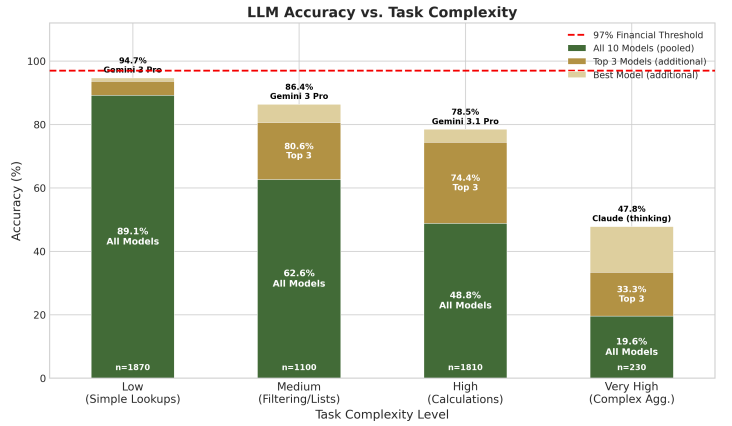
Another paper, “FinSheet-Bench: From Simple Lookups to Complex Reasoning, Where LLMs Break on Financial Spreadsheets,” from Jan Ravnik, et al., studied the current generation of generative AI tools and found them lacking when it comes to spreadsheet analysis:

No standalone model achieves error rates low enough for unsupervised use in professional finance applications.

The authors looked at the process of alternative investment due diligence:

While LLMs can significantly accelerate text-based diligence tasks (document review, clause comparison, compliance checking, and memo generation), a persistent challenge is the extraction of structured financial data from Excel spreadsheets.

The image above shows how their tests of ten current LLM models did on various types of challenges.  The dashed red line shows an accuracy threshold for “automated financial workflows,” although that 97% level seems too low when it comes to making calculations.

Judging the implementation of AI within an organization — whether your own or a counterparty’s — means determining what kinds of tasks are being automated and whether the tools available are really up to the job.

The problem with brainstorming

In summarizing a problem with brainstorming sessions, Sunita Sah captures the core issue with meetings in general (yes, including those of investment committees, etc. within our industry):

Traditional brainstorming rewards a very specific skill:  thinking while talking.  But thinking while talking isn’t the same as thinking well.  It just looks like thinking because words are coming out.

In actuality:

The first idea isn’t usually the best idea.  It’s just the most available one — whatever was already floating near the surface.  Speed retrieves what’s familiar.  It doesn’t generate what’s new.

When we reward quick responses, we’re selecting for a very particular kind of thinking:  associative, reactive, anchored to what’s already known.

In a meeting, those first ideas (especially if they are delivered by the most senior person in the room) tend to frame the discussion and put it on a trajectory along which other notions are easily dismissed or even left unspoken.

The goal is for exemplary investment ideas to win out in the end, but meetings are often conducted in ways that inhibit idea creation and good decision making.  It seems obvious that organizations should want to be good at meetings given their importance in the scheme of things, but they rarely get much attention at all.

Much ado about private credit

The number of pixels published concerning private credit has exploded of late.  Here are just a few of the pieces that are worthy of your attention, starting with a memo from Howard Marks, which covers the history of credit investments since the 1970s, the attributes of newly popular strategies that engender overinvestment, and the state of direct lending today.

Areas of concern:

~ “This is What Systemic Risk Looks Like: Athene’s $30B Exposure to Junk Loans,” Rod Dubitsky.

~ “The Hole,” Nick Nemeth, Mispriced Assets.

~ “Private Credit Unfiltered: What’s Behind the Gate,” JunkBondInvestor.

Not to worry:

~ “Why the Private Credit Boom Isn’t the Next 2008,” Larry Swedroe.

~ “Private Credit, Balance Sheets and Financial Stability,” Gregor Matvos, et al., SSRN.

Also:

The US Treasury [on April 1] said it would meet domestic and international insurance regulators over the risks in private credit after recent upheaval in the multitrillion-dollar market.

A certain risk mindset

Alex Turnbull of Syncretica wrote about “non-recourse national strategy,” referencing the risk-taking framework that’s endemic to the venture capital industry:

People who thrive in limited recourse environments develop a very particular relationship with risk.  They learn, through repetition and reward, that bold bets on low-probability outcomes are structurally advantaged because the payoff on the upside is uncapped while the downside is bounded.  They learn that hesitation is expensive, that deliberation is for people who don’t have conviction, and that the main failure mode is not swinging.  They are, in the language of behavioral finance, calibrated to be systematically overconfident in their own ability to identify signal in noise, and structurally indifferent to path dependence because in their world, paths don’t particularly matter — if this startup dies, you do the next one.  The option resets.

Turnbull sees the same mindset at work in the United States’ approach to foreign relations.  That connection fits with the increasing number of asset owners speaking out about a change in the investment environment, specifically related to geopolitical risks.  As one example, Top1000Funds reported that Prakash Kannan of GIC believes that such risks are “no longer episodic or peripheral, but structural, persistent, and deeply intertwined with the functioning of global markets,” with the effect of changing “the operating system of how we think about asset allocation.”

Other reads

“The future of asset management,” Phil Bak, BakStack.  A vision of the prospective evolution (revolution?) of the industry, with no fewer than twenty “Then comes . . .” to call out the stages of change.

“The Map That Stopped Working,” Rayna Lesser Hannaway, LinkedIn.

Success is the enemy of curiosity.  The longer something has worked the harder it is to ask whether it still will.

“Beware PMs who lack these 3 traits,” Algy Hall, CityWire Selector.  Ideas from Clare Flynn Levy, including “the big mistake,” found in Stock Market Maestros, which she authored with Lee Freeman-Shor.

“A Family Office’s Honest Take on Fund I Investing,” Domilė Juozapaitė, Commonplace.

The opportunity is real.  Fund Is remain systematically underallocated not because the analysis doesn’t work out — but because most LPs never attempt it.  The reason is discomfort.  And discomfort is something that can be worked on.

“Are You an Analyst or an Investor?” Ian Cassel, MicroCapClub.  Conviction, sizing, and cutting losers; lessons from legendary hedge fund managers.

“Swinging for the Fences: How Do CEO Mega Grants Pay Out for Companies and Shareholders?” David Larcker, et al., Sanford Business.

Companies that award mega grants to their CEO exhibit highly divergent outcomes, with a significant number underperforming and with only a small number outperforming common stock-market benchmarks.

“Unlocking the Answer Library: Turning Institutional Knowledge into a Firmwide Strategic Asset,” Dave Paolisso, CENTRL.  Dealing with the bottleneck in client communications for asset management firms.

“Detecting Skilled Bond Fund Managers,” Ron Kaniel, et al., SSRN.

We identify a small fraction of actively-managed bond funds that outperform systematically on a risk-adjusted basis, and a much larger fraction of funds that under-perform.

What matters

“A small bunch of people who know what they are doing can accomplish more than a big group of people who don’t know what they are doing.” — Attributed to Robert Noyce.

Flashback: The right stuff

More than fifty years after we quit sending astronauts to the moon, the crew of Artemis II did a drive-by last week.  They landed safely in the Pacific Ocean, but before they did a New York Times article explained that a successful return was dependent on a heat shield that was like the one on the unmanned Artemis I flight, which incurred unexplained damage during its reentry.  While the crew was “aware of the flight’s risks,” what could they have been thinking when the capsule hit the atmosphere?

For a story of courage in the face of uncertainty, nothing is quite like The Right Stuff, Tom Wolfe’s book about the first seven astronauts.  Most of them had been test pilots who, along with Chuck Yeager, risked their lives to push the boundaries of what was possible.  The arresting opening chapter of the book tells the stories of the men who died in the process, one after another, and the wives who answered their doors to receive the bad news.  Each time, those that remained “brought out the bridge coats and sang about those in peril in the air” — then went right back at it the next day.

The book provides a mix of the rivalry that drove the space race (the Russians were always ahead in the early days); the competition and comradery among the astronauts; the technical challenges; and the effects of sudden fame (and its unequal apportionment) on them and their families.  And their bravery.

At the time, what most people knew about the early space program was all of the rocket failures that had occurred leading up to the first manned flights.  So the general impression of the astronauts was visceral:

The main thing was:  they had volunteered to sit on top of the rockets — which always blew up!

Imagine being willing to do that.

Explanatory depth

A 2022 essay on this site, “The Goal of Explanatory Depth,” considered the challenge at the heart of due diligence practice — the need for real discovery rather than the acceptance of the narrative that is provided.

The lack of explanatory depth is compounded when that narrative is passed along to others (via an investment memo or presentation) as if it was the product of thorough due diligence rather than a mere repetition of the story that had been offered.

Thanks for reading.  Many happy total returns.
Published: April 13, 2026

Subscribe

To comment, please send an email to editor@investmentecosystem.com. Comments are for the editor and are not viewable by readers.

Rewiring the Ecosystem, Eyes on Insurance, and Fundsmith, et al.

Since the last Fortnightly, we’ve published an essay on portfolio manager predictability and alpha generation — and a Clippings posting that had images related to energy, fixed income, pod shops, emerging managers, the questionable but sticky concept of a “technical correction,” and more.

On to the readings for this issue.

Rewiring the ecosystem

CAIA Association released a report called “The World Rewired.”  It highlights three categories of shifts that are occurring — macro, industry, and organizational — creating a “wholesale rewiring” of the investment ecosystem:

For decades, capital allocation strategies were built on a few key assumptions:  steady globalization, relatively uniform regulatory frameworks, and a clear separation between public and private markets and their participants.

No longer.

Geopolitical risk is increasing, so “understanding the political durability of an investment thesis is now as important as modeling cash flows.”

Are the vehicles and structures that defined the modern investment era fit for purpose going forward?  The report repeatedly touts the benefits of tokenization and the risk to current applications (and assets under management) for those who lag behind the adoption curve.

Asset owners, asset managers, and other entities need to revisit their assumptions for organizational design, incentives, and governance — and to hire different kinds of talent and rework process, especially to tap emerging capabilities of artificial intelligence.

The ideas go hand in hand with CAIA’s Vision 2035.  Some of the ideas may be spot on as to what will happen while others will miss the mark; that’s the nature of such exercises.  Yet, it’s a worthwhile read for leaders as well as practitioners, who are together charged with shaping how organizations change, day by day and year by year.

Eyes on insurance

Private credit has been all over the news of late, with recent headlines focused on the big increase in requested withdrawals by investors in semi-liquid funds, as concerns fester regarding portfolio loans to software firms and more cockroaches appearing.

But the huge increase in private credit at insurance companies is an undercurrent that needs to be addressed.  Assessments of the situation range from “nothing to see here” to the makings of another financial crisis.

In “The PE Sausage Factory,” Phil Bak writes:

Insurance companies that always bought plain vanilla bonds are now being stuffed with private credit originated by their parent companies.  This includes exotic structures, JV and LP interests, and on and on.

Insurance portfolios aren’t as boring as they used to be, but they are still regulated on a state by state basis:

As you’d expect, being regulated by fifty different states with fifty different rules and fifty different priorities creates regulatory arbitrage.

Perhaps some state insurance commissions are equipped to handle the changes and properly evaluate the risks, but what are the chances that that is broadly true for a part of the market that barely existed a decade ago and has exploded in size?  A Wall Street Journal article about Iowa, where “more life-insurance money is parked” than in any other state, delves into some of the issues, without digging into the state’s ability to assess the emerging risks.

Regarding those risks, dive into a posting from Nick Nemeth for Mispriced Assets and see what you think.  At the very least, you’d hope that this whole question is getting a lot of attention from the managers of insurance portfolios, regulators, equity and credit analysts on the Street, and investors.

Fundsmith, et al.

Fundsmith has taken it on the chin the last few years, in the market and in the financial press.

When Terry Smith’s annual letter to the fund’s investors was published in January, a number of articles pointed out that it was its fifth consecutive year of underperformance.  Joseph Wilkins’ commentary for FT Alphaville was particularly on the nose, pointing out that each year’s letter included essentially the same phrase:

Outperforming the market or even making a positive return is not something you should expect from our Fund in every year or reporting period . . .

Fair enough.  Long-term investors should expect variability and periodic underperformance.  But Smith’s firm hauled in £160 million or so in fees in 2025 (and similarly lofty numbers in the other years), so the system of rewards seems a bit off the mark.  Then there is this from Wilkins:

In his letter Smith says he was “not seeking to ‘blame’ anyone or anything” for his recent results, but then blamed three things for coming up short:  index concentration, passive flow dominance swamping active price discovery, and dollar weakness.

Robin Powell of The Evidence-Based Investor disputed Smith’s claim that indexation was the problem, writing that the fund is a factor bet:  “When quality stocks outperform, Smith outperforms.  When they don’t, he doesn’t.”

Which brings us to the fund’s philosophy (seen here on a placard at a fund meeting):  “Buy good companies.  Don’t overpay.  Do nothing.”  The “do nothing” part is shown in the image above from a LinkedIn note by Steven Holden of Copley, which shows that Fundsmith appears in Copley’s “structurally active” segment of managers, who create a “differentiated portfolio built around the same companies over long periods.”

So how do you think about that when the numbers stay weak?  Rupak Ghose wrote about Fundsmith:

Is one year of underperforming a blip?  Likely.
Is three years of underperforming a blip?  Perhaps.
Is five years of underperforming a blip?  Probably not.

To be sure, there are other funds that have held the same general principles and have had similar results (and which have enjoyed the benefits of a lucrative fee model) while they wait for their favored stocks to return to glory.  As an investor, dear reader, what do you do in these kinds of situations?

Overconfidence

At the start of a series on building a trading machine, Alexander Campbell referenced his experiences at Lehman and Bridgewater, two much different firms, each of which “beat the ego out of you” in its own way.  Interesting cultural snapshots.

He then gets into the matter at hand, putting together a trading system using AI:

After spending what feels like years trying to build systems in conjunction with LLMs, here’s what I can tell you:  they’re exactly like first-year analysts/quants/devs from really good schools.

Which brings him back to Lehman and the training he received there.  To wit:

Training to say “I don’t know.”

Not because anybody told you to, but because you remembered what happened last time.

AI has no last time.

Which makes the endeavor something other than what people expect.

The number survivesThis image, from “The AI Intelligence Deficit” by Straven & Co., illustrates how a number can survive in popular discourse even as its context disappears.  It’s presented here because this happens frequently in the investment world, where beliefs and propositions can be buttressed by numbers, which are often presented without the nuance or asterisks that they require.  For a current example, see a piece by Tim McGlinn for TheAtlView regarding a BlackRock estimate that is spreading without its real meaning going along for the ride.

The diligence environment

DiligenceVault produced three postings that provide insight into the current due diligence environment:

~ Topics from investment due diligence and operational due diligence roundtables.

~ From the other side of the process, themes from meetings with asset manager investor relations pofessionals.

~ An overview of the vendors providing technology solutions to deal with RFPs and DDQs.

The new conglomerates

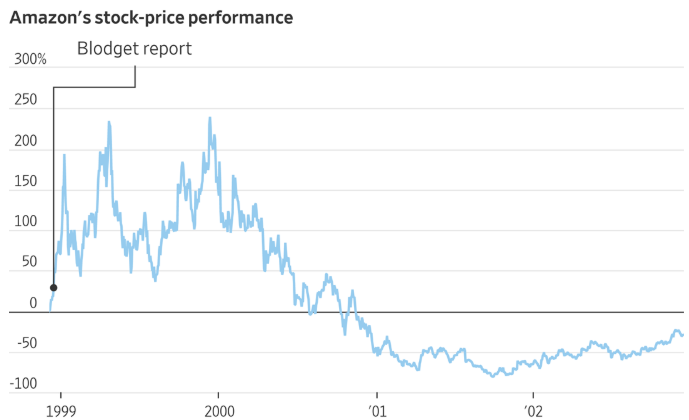
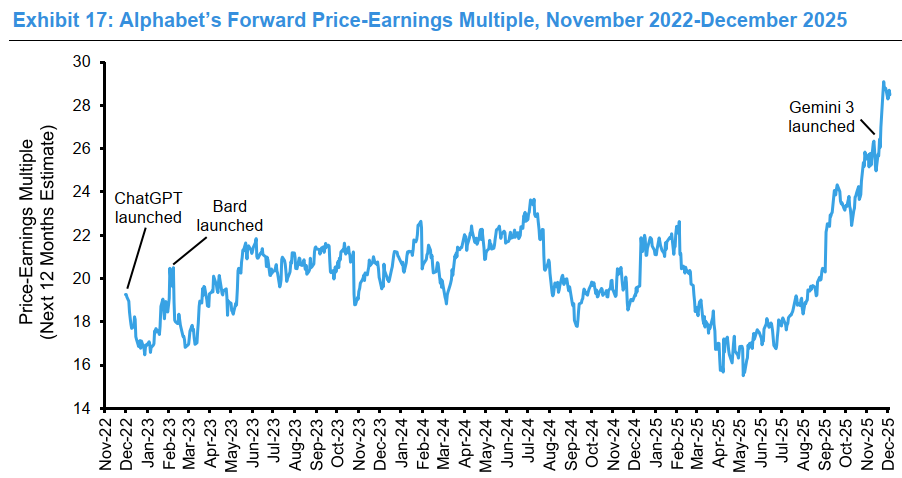
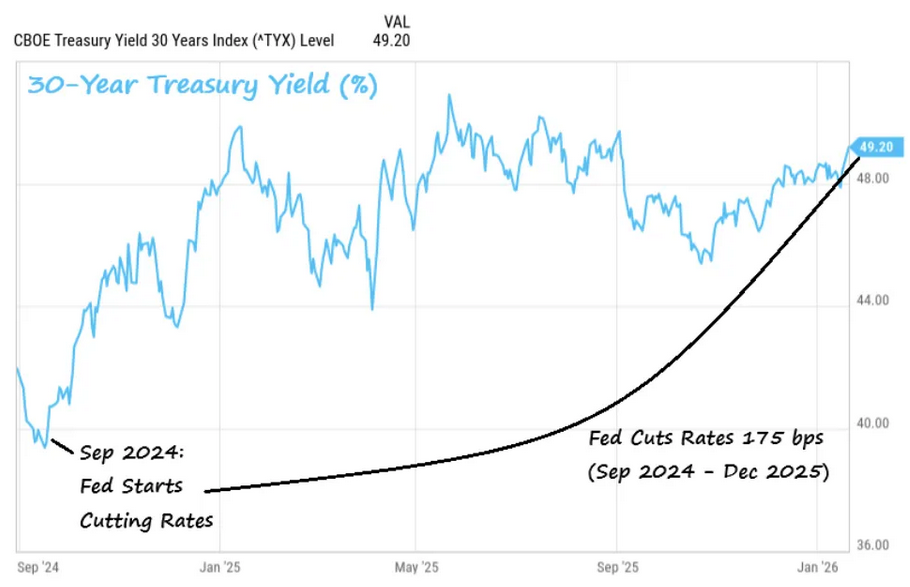
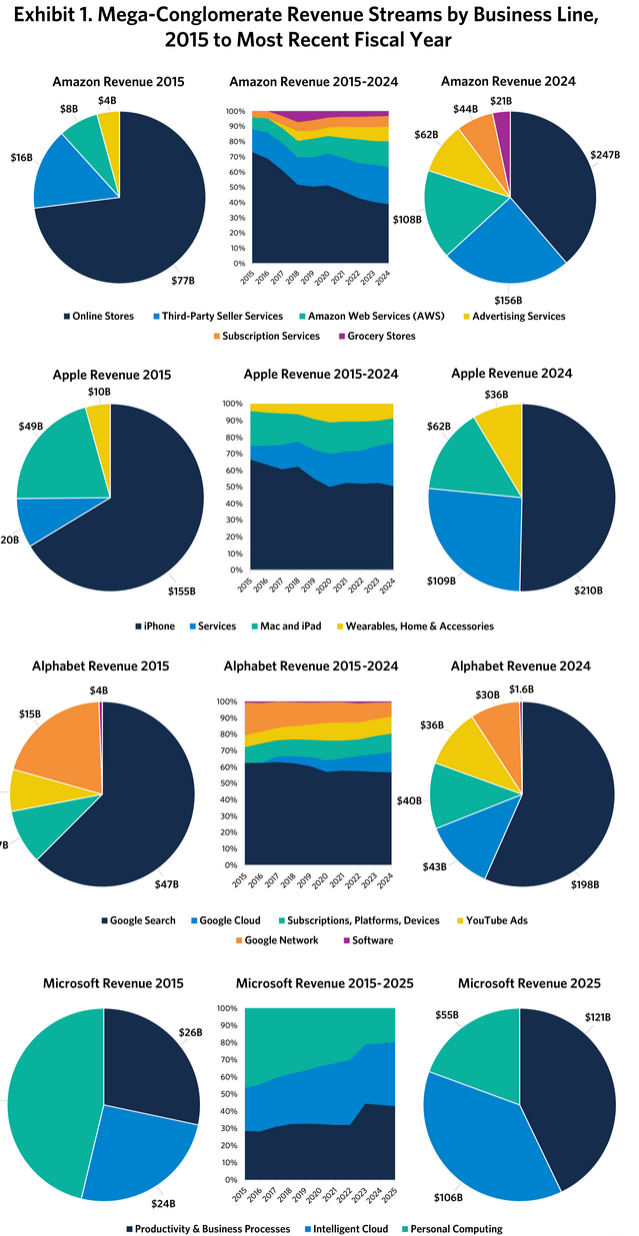
Noah Beck and Que Nguyen of Research Affiliates argue that, while conglomerates are generally maligned in today’s stock market, several of them are instead are leading lights within it.

That is a novel assertion, as the four companies in question, shown above, are normally just thought of as “big tech.”  Another graphic illustrates how the composition of revenues for the firms changed from 2015 to 2024.

Given that the tailwinds in technology seem to have abated for now — perhaps even switched to crosswinds or headwinds — will we see the conglomerate discount show up among this group too?

Other reads

“The Franchise Problem,” Earnest Sweat, Groundwork.

[Regarding venture.]  What I look for now alongside the fundamentals is harder to put in a spreadsheet.  Learning velocity.  Proximity to customers.  Ability to attract talent.  Resilience under ambiguous conditions.  Those are not metrics you calculate.  They are things you observe over time, in how someone reacts when things break, in whether they are telling you what they think you want to hear or what they actually believe.

“Finding your investment lodestar: In search of an investment philosophy!” Aswath Damodaran, Musings on Markets.  The updated third edition of Damodaran’s Investment Philosophies was released today; this posting provides a great overview.

“Ten Years Wasn’t Enough: The Continuation Vehicle Syndication,” Shahrukh Khan, Cash and Carried.

Continuation vehicles (CVs) have rapidly assumed a central role in private equity, transforming from episodic workaround to entrenched liquidity mechanism.

“Culture Is the Human Context Window,” WCM.  As AI reshapes work, a look back reinforces what matters most in those kinds of transitions.

“The Architecture of Mutual Fund Pricing,” Stewart Brown, SSRN.

What is not in question is that sixty years of evidence comprehensively refutes the assumption on which current law rests:  that independent directors will ensure equitable sharing of the scale economies that investors’ capital makes possible.

“One Risk After Another,” Joe Wiggins, Behavioural Investment.  On the “conveyor belt of risks” and “availability cascades [becoming] more frequent and more impactful.”

“No BS: using corporate jargon is really giving you away,” Emma Jacobs, Financial Times.

It is no surprise that ambitious workers encouraged to “fake it till you make it” deploy strings of buzzwords in the hope of career advancement or to deflect attention from shortcomings. After all, the tone is often set from the top, with obfuscating CEOs.

“Anomaly-Driven Demand,” Anders Merrild Posselt and Mads Markvart Kjær, SSRN.  On the price impact of anomaly-driven demand.

The course of study

“One could say that my whole career in Wall Street proved one long process of education in human nature.” — Bernard Baruch.

Flashback: Caribou?

A 1980 article by W. Anthony Hitschler in the Financial Analysts Journal was titled “To Know What We Don’t Know (or, The Caribou Weren’t in the Estimates).”  It is available via CFA Institute or JSTOR.

Even in 1980 people were trying to figure out why portfolio managers underperformed.  Despite the time and effort spent on forecasting, “we can’t forecast the future with enough accuracy to render any forecast more useful than an extrapolation of past growth rates” (which in itself is not that useful).  From the abstract:

When investors’ earnings forecasts are close to the mark, they mean very little to the price of the stock; when they are wrong, they mean a great deal.

The caribou of the title refer to the unexpected and large impact on Atlantic Richfield stock because “the caribou’s migrations [required] redesign of the Alaska pipeline.”  Hitschler:

The “caribou” eventually visit most stocks, and when they visit one with a very high P/E multiple the consequences can be severe.  Yet analysts continue to ignore the great potential of low P/E stocks in favor of a set of forecasts extrapolated from past achievements.

In our era, when low P/Es are hard to find anywhere, the caribou can do a lot of damage.

Reciprocity

A 2023 essay, “The Pull of Reciprocity in Decision Making” — with the help of Cialdini, Munger, and others — explores how the trivial swag and fancy perks of the investment business can sway us.  It ends:

Favors are powerful and reciprocity is a foundational aspect of human interaction.  Our decisions can be affected in ways that we don’t understand.

Thanks for reading.  Many happy total returns.
Published: March 30, 2026

Subscribe

To comment, please send an email to editor@investmentecosystem.com. Comments are for the editor and are not viewable by readers.

If Your Actions are Predictable, Will You Generate Alpha?

The questions of the day at organizations of all kinds revolve around artificial intelligence.  What functions can AI reliably perform?  How will it change our process and business model?  Who will be replaced as a result?

The range of possibilities is extremely broad and varies across different kinds of investment organizations.  This posting reviews the findings of a recent academic paper that uses AI in its analysis, presages issues for asset management firms (and their clients) to consider, and challenges a popular investment notion.

It’s important to remember that the great bulk of research into asset manager behavior is based upon the study of equity mutual funds in the United States, and that is true in this case too.  Therefore, the findings can’t necessarily be extrapolated to other realms.  And, since this is a new angle of research, you can expect the concept to be further investigated by the authors and other researchers.

Findings

The paper, “Mimicking Finance,” was written by Lauren Cohen, Yiwen Lu, and Quoc H. Nguyen.  They used AI and machine learning “to extract and classify the part of key economic agents’ behaviors that are predictable from past behaviors.”  Those key agents?  Portfolio managers.

Among their findings:

~ “71% of mutual fund managers’ trade directions can be predicted in the absence of the agent making a single trade.”

~ Manager behavior “is more predictable and replicable” for those with more experience as a portfolio manager, those within less competitive fund categories, and those who manage across multiple strategies.

~ Portfolio managers with larger ownership stakes in the funds they manage are less predictable.  So are funds that have more managers.

~ “Less predictable managers strongly outperform their peers, while the most predictable managers significantly underperform.”

~ “Even within each manager’s portfolio, those stock positions that are more difficult to predict strongly outperform those that are easier to predict.”

As shown below, when arranged by quintiles of predictability (less predictable managers are on the left of each chart), cumulative performance is monotonic.  (However, the longest period measured is a year after the predictability clusters are formed; future research should look at returns beyond that horizon to see if results vary with an extended time frame.)

Musings

With every study — whether it is published externally or produced internally — you need to consider how it fits with the existing body of knowledge and whether it rings true to the world as you know it.  Then you might adjust your prior views in response, dig in and do some research yourself, or dismiss it out of hand (if you have reason to believe that there’s something wrong with the data or the conclusions drawn).

As laid out above, the findings address the predictability of asset manager behavior, leading to a potential assumption by a reader that AI can replicate a significant portion of an asset manager’s decision making, allowing for AI substitution in the process (potentially lowering costs significantly).

But look at the last two bullet points.  That’s where the interesting part of this research comes in.  Does alpha come from the less predictable actions of portfolio managers?  (The “non-routine” decisions, to use the authors’ description.)

If so, what does that say about the “consistent and repeatable” mantra that asset managers consistently repeat as part of their narratives — and that capital allocators regurgitate in describing the targets of their selection processes?

Maybe predictability isn’t all it’s cracked up to be.  Maybe creativity is the essence of alpha and we’ve been looking for sameness when we should be trying to understand the elements of variability — what kinds of changes add value and what ones detract from it — as well as judging the penalty for stasis in an evolving investment ecosystem.

AI bots can mimic what has worked in the past.  Humans should bring something else to the endeavor.


Related essays on this site you may want to read include “Balancing Exploration and Exploitation in Investment Organizations” and “The Active Management Reinvention Project.”

Published: March 18, 2026

Subscribe

To comment, please send an email to editor@investmentecosystem.com. Comments are for the editor and are not viewable by readers.

Endowment Model Principles, Desirable Characteristics, and AI Scenarios

The latest Clippings posting featured the usual mix of great charts, including a most unusual day in the oil market, crashing free cash flows at the hyperscalers, booming secondaries, and many more.

And now, here are some great reads for you.

Endowment model principles

John-Austin Saviano of High Country Advisors wrote a piece called “Swensen Was Right All Along.”  Saviano uses his own history and evolution as an investment professional to illuminate the effects that David Swensen had on industry practices.

In the early years, he admitted:

My less-experienced self focused on the Endowment Model as a recipe to be followed.  Keep the bar high in your search for PE, venture, hedge funds, etc. and you would create a portfolio which would outperform.

Later, he came to see:

How small the universes were which comprised our understanding of private “asset classes.”  So much of what we knew for sure was grounded in relatively limited (in some strategies, incredibly limited) data sets and dominated by a single 10-15 year period.

Getting hung up on the returns that Swensen produced at Yale led industry participants far and wide to see the recipe as a set of asset class ingredients.  Instead, it was a different kind of recipe that made the cake (much like the adoption of Moneyball in baseball).  Swensen was “playing the game in a fundamentally different way while the rest of the league was still moving on intuition and tradition.”

Now we are in a “massively different environment,” one in which “generating differentiated results today won’t come from artless allocations to private equity, venture, or hedge funds.”  Nevertheless, the real endowment model principles are still valid:  searching for equity or better uncorrelated returns; using asset managers truly aligned with you (and that offer genuine differentiation); and concentrating on non-consensus undercapitalized ideas.

The endowment model has spread far and wide, but only in the sense of that asset class recipe.  Alternatives have become conventional, when the real endowment model means being unconventional and willing to go where the crowds haven’t gathered.

Desirable characteristics

At the end of Saviano’s piece he wrote:

Behaviorally, we need humility, a willingness to accept risk, and curiosity which drives renewal.

In his latest memo, “AI Hurtles Ahead,” Howard Marks opened with a section on understanding AI and recent developments in that area — and ended by revisiting topics from previous writings, namely the possibility of an AI bubble and the potential for negative impacts on society.

In between, he explored the implications for investing from the use of AI, identifying the ways in which the technology could emulate good investor behavior:

It shouldn’t feel fear or greed.  It’s hopefully less likely to have an optimistic or pessimistic bias, anchor to preexisting beliefs, or overemphasize the most recent information — unless it picks up those things from the material it’s trained on.  It isn’t swayed by the fads that are exciting everyone else, and it isn’t afraid of missing out on the trend others are chasing.  In other words, AI possesses a lot of the qualities one needs to be a good investor.

That said, Marks pointed out areas where AI would fall short, including struggling with novel developments for which there aren’t past patterns to draw from and lacking a sense of risk from not having skin in the game.  Also, will AI be able to “make subjective decisions regarding qualitative factors and exercise taste and discernment”?

Rayna Lesser Hannaway believes that self-awareness is the key to success in the investment world.  A LinkedIn posting from her explains that and includes a visual titled “What the best investors practice consistently.”

Those three perspectives provide pieces of the puzzle.  How would you define the most desirable characteristics of an investment professional?

AI Scenarios

In “The AI Disruption: From Doomsday Destruction to Do-Nothing Bots!” Aswath Damodaran considers the AI scenarios that have proliferated of late:

The problem with all of these AI scenarios is that they are rooted in the weakest of responses to uncertainty, which is to either pick a scenario and to describe it in detail, without establishing, at least in qualitative terms, how likely that scenario is, in the first place, or to list out a whole host of scenarios, without making judgments on likelihood of any of them.

That fits with the overwhelming tendency in the investment realm to use point estimates rather than probabilistic distributions when forecasting:

Financial analysts and economics have been slow in adopting and using probabilistic approaches, where point estimates are replaced by distributions, and a single judgment on outcome by a distribution of outcomes.

Damodaran uses his possible/plausible/probable framework to evaluate the potential disruption from AI, focusing on the magnitude and speed of disruption as the key variables.

In closing, he makes an analogy to Pascal’s wager, concluding that you should assume that an AI imitator or bot is coming for your job “even if you don’t believe that it is imminent” — providing a two-by-two matrix of what you believe versus what actually happens (alongside one summarizing Pascal).

Trinary, not binary

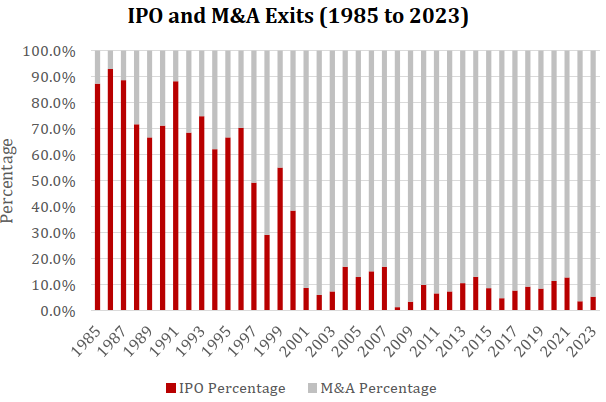
“Public, Private, Acquired,” an article from Alex Platt and Matt Wansley, has a simple premise:  that common beliefs about companies choosing to stay private rather than going public are incomplete:

Startups don’t face a binary choice between going public and staying private.  They face a trinary choice between going public, staying private, and being acquired.  And in the last several decades, startups have increasingly chosen the third option.  The decline of public companies is in large part a story of startups choosing acquisitions over listings.

The graphic shows the stark change over time.  Many of the companies that might have gone public instead got gobbled up by others.

The Berkshire letter

For the first time since Warren Buffett took over Berkshire Hathaway, some one else wrote the 2025 annual letter — his successor as CEO, Greg Abel.

The first eight pages serve as Abel’s restatement of the firm’s culture, structure, and operational approach.  A reader is struck by how unique the total package is among public U.S. corporations.  That doesn’t mean that the firm can generate outstanding performance from here — it is a behemoth after all — but you have to admire the elements that Buffett (and Charlie Munger) put together over time.

Wall Street Journal article by Krystal Hur says that “CEOs Want to Be Like Warren Buffett, Right Down to His Shareholder Letter.”  It focuses on the difficulty of writing simply and clearly about business topics — something Buffett was known for — but there’s nothing about the broader being-like-Buffett in it.

If you’re pining for quotes from Buffett, Phil Mohun pulled some passages from annual reports over the last fifty years.

More leverage than advertised

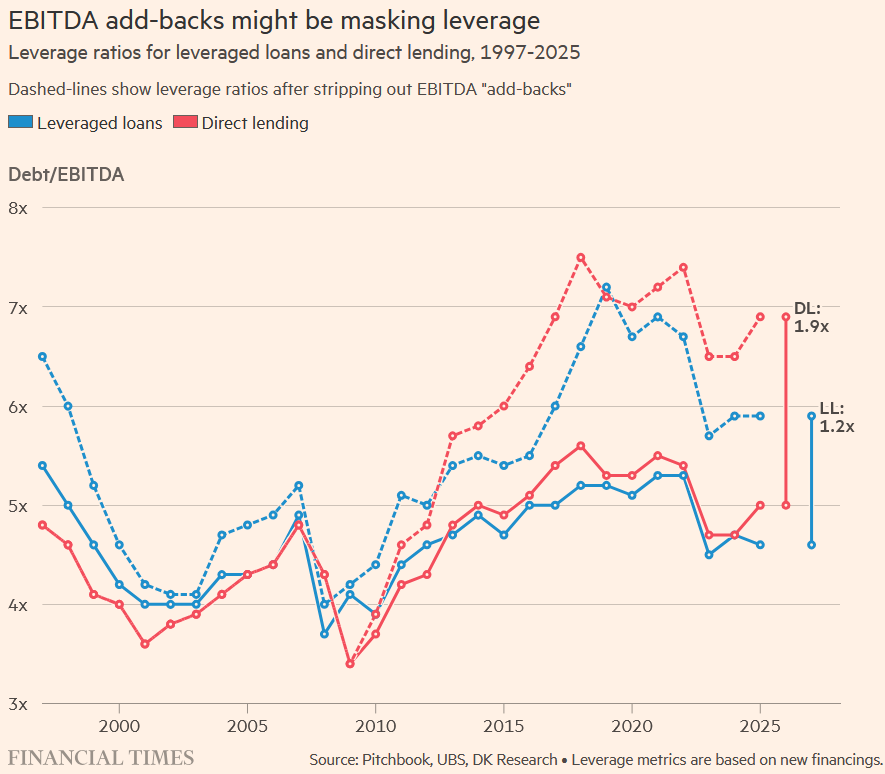
FT Alphaville published a piece by Suzanne Gibbons of Davidson Kempner Capital Management, “Adjusted EBITDA and the masking of leverage.”  As shown in the chart:

Over the past decade, these adjustments [to EBITDA] have expanded materially.  As credit documentation has weakened, the definition of EBITDA in loan agreements has become looser.  Market participants have watched the list of adjustments grow steadily over time, but the data now confirms how far the metric has drifted — so much so that an investment analyst from a decade ago might struggle to recognise it.

In leveraged loans, EBITDA add-backs now reduce reported leverage at issuance by roughly 1.2 turns of leverage.  In direct lending, the impact is even larger — about 1.9 turns.  In both cases the gap is roughly double what it was in 2015.

Other reads

“World (Soft)War II,” Arctos.

AI creates substitution threats for validation and certainty, while simultaneously raising the marginal costs of computing.  This is Software Deflation + Compute Inflation that threatens gross margins.

“Insurance Weapons of Mass Deception,” Rod Dubitsky.  Is reinsurance “a massive and opaque means of credit risk laundering” that “warrants immediate attention by market participants and regulators”?

“The SPEC Test,” Milos Maricic.

The problem is not that quantitative managers are dishonest.  Most are not.  The problem is that the standard framework for evaluating them creates systematic blind spots.

“The Created Value Attribution Handbook,” Paul Viscio and George Pushner, Kroll.  A guide to the firm’s CVA Framework, which was created to correct the “fatal flaws” of the traditional value bridge.

“The Gap Between Wanting AI and Being Ready for It Is Wider Than You Think,” Angelo Calvello, Institutional Investor.

The gap is more consequential than most are willing to admit.  The real obstacle is not the technology.  It is the institutional structure of asset owners themselves.

“Nasdaq’s Shame,” Keubiko’s Musings.  Subtitle:  “How to rig an index to appease a billionaire.”

“How to Actually Align Investments with Your Foundation’s Mission (Without Breaking the Budget),” Kris Shergold, LinkedIn.

Most foundations struggle to translate their specific charitable purpose into an operational mission-aligned investment framework.

“The tyranny of targets,” Tim Harford.  Which metrics are “scaffolding for productivity” and which are “a cage for us poor players”?

“Superstar CEOs and Super Acquisitions,” Weisu Yu and Craig Wilson, SSRN.

These results reveal that the social status a CEO gains from winning a best CEO award plays an important role in explaining their firm’s merger and acquisition decisions.  Our findings provide a potential channel to explain why firms with award-winning CEOs tend to decline in value in the years following the award.

Some investing talk too

“Three-fourths of philosophy and literature is the talk of people trying to convince themselves that they really like the cage they were tricked into entering.” — Gary Snyder.

Flashback: Bell Labs

According to Wikipedia:

Bell Labs and its researchers have been credited with the development of radio astronomy, the transistor, the laser, the photovoltaic cell, the charge-coupled device (CCD), information theory, the Unix operating system, and the programming languages B, C, C++, S, SNOBOL, AWK, AMPL, and others, throughout the 20th century.  Eleven Nobel Prizes and five Turing Awards have been awarded for work completed at Bell Laboratories.

The New York Times recently highlighted some of those developments, which have shaped our modern world.  For more on Bell Labs, check out a book by Jon Gertner, The Idea Factory: Bell Labs and the Great Age of American Innovation.

Understanding your organization

A 2022 posting, “Network Analytics in Investment Organizations,” explored the structure of organizations and how information moves within them.  This is how it ended:

What you would most like to know is how ideas flow through the organization — who originates the best ones, who propagates them, who uses them to great effect, and who kills them off.  And you’d want to understand what functional needs are not being met and where there are skill shortfalls that should be addressed through hiring or training or the restructuring of roles.  Insights like those are mostly the province of observation and intuition now; network analytics may provide more concrete evidence to support design decisions that will produce the investment performance of the future.  Organizations should be examining the possibilities as part of their research and development efforts.

Thanks for reading.  Many happy total returns.
Published: March 16, 2026

Subscribe

To comment, please send an email to editor@investmentecosystem.com. Comments are for the editor and are not viewable by readers.

Thought Exercises, Creatures of the System, and the GP Clawback

If you’re new to this blog and find it interesting, you can subscribe to receive all new postings via email.

A relatively new sister site provides compilations of good charts and graphs from around the investment world.  It’s designed to be viewed in a minute or so.  The most recent posting featured the stocks of private asset managers, CMBS delinquencies, and the AI prisoner’s dilemma among other timely images.  (A subscription to that site is also available.)

On to the readings.

Thought exercises

For decades, the markets fed on press releases from companies and governments; reports from investment organizations; and stories by mainstream and investment-oriented media outlets.  But over time the landscape has changed, principally because of the ease with which individuals and small organizations can put forth ideas online.  They can get traction and move markets in ways that wouldn’t have been possible before.

Last week, Citrini Research published a Substack posting, “The 2028 Global Intelligence Crisis.”  Billed as “a thought exercise,” it caused downdrafts for stocks in companies that Citrini mentioned as having business models that are at risk from the increased capabilities of AI.  The piece amplified an emerging market concern that had already smashed established narratives (and stock prices) across several industries.

Citrini’s thesis has received considerable pushback in the intervening days, including from economists who find its macro assumptions unrealistic.  For example, Citadel Securities provided an alternative view of the future, concluding:

For AI to produce a sustained negative demand shock, the economy must see a material acceleration in adoption, experience near-total labor substitution, no fiscal response, negligible investment absorption, and unconstrained scaling of compute.

In addition to reactions to the substance of Citrini’s imagined future, there were comments on the changed information environment.  Rupak Ghose reviewed the ways in which sell-side research has a leg up over independent analysts, but also identified six “major competitive advantages” of the independents:  internet distribution; broader brand equity (a big change from the days when a number of Wall Street analysts had fame and clout); vastly better storytelling skills; the ability to move across investment themes versus a reliance on “siloed industry verticals;” regulatory arbitrage; and different incentives.

Marc Rubinstein, writing for FT Alphaville, focused on that regulatory arbitrage:

Markets have always found their way around the structures regulators build, and research is no different.  Citrini is just the most dramatic expression of where that migration ends up:  market-moving distribution with zero disclosure architecture.

One point that should be made:  Thought exercises like Citrini’s ought to be part of risk management — and return-seeking — practices within organizations in order to avoid the hardened expectations and narrowed perspectives that limit discovery.

Creatures of the system

The subtitle for a recent interview with Kyle Tucker published on Shahrukh Khan’s Cash and Carried:

What do non-traditional pools of capital in the private markets look like?  What long-standing cultural assumptions drive our understanding of “success” in this industry?

The discourse speaks to the dynamics of the institutional investment world and the demands on individuals who find themselves chafing at playing the game as it is structured — a common feeling among professionals that is usually shared only with trusted friends.  For Tucker:

I just had a sense that I wasn’t right for the institutional environment. . . . I could fake it for some time, but eventually my motivation would wane, and the wheels would come off.

He bemoans practices on both sides of the table.  The gathering of assets is the motivating force of asset managers as they mature (“I’m not sure if the active investment management industry cares about long-term compounding or ever has.”), which necessitates “trying to divine LP astrology” and to “manufacture social proof” to get allocator commitments:

At first, I assumed that the most important thing to investors was money-making.  That is, answering and acting on the fundamental question:  is this bet a good risk-reward?  But I think this is often more like a top two, maybe top three consideration.

One interesting section is in regard to how much to reveal to prospective investors in a business where the narrative is usually burnished to a high sheen:

My solution has basically been (1) to overshare and be transparent as possible (especially the losses, the indignities of firm building, etc.) and (2) try to be as likable as possible (earnest, self-aware, self-deprecating, good-natured, vulnerable, etc.).

Re:  oversharing.  I think I’m okay with folks seeing too much because I like what we are, and I think we’re really good at what we do (did I mention we’re also humble?).

“We got this right, this wrong.  We have this issue” sort of thing.

But candidly, we’ve gotten mixed results here.  Some of our LPs love this.  But in many ways I underappreciated how much institutional folks value things like tightness of narrative over candor and transparency and oversharing.

Fascinating throughout.

The GP clawback

Adam Schwab published a short piece, “The Next Problem for Private Markets: The GP Clawback,” that warns about a coming “headache for LPs.”

Early wins in 2018-2022 vintages that cleared the preferred return requirement led to carried interest being paid to general partners.  But now prospects for many of those funds don’t look so good:

This isn’t a short-term liquidity/uncertainty/volatility issue as claimed by GPs.  It’s a “mediocre companies bought at high prices” issue.  Many funds are stuck, GPs and LPs know it, and now it’s just a game of when the pain is realized.

The pain involves clawing back those previous payments.  For more information, Schwab includes a link to his paper, “GP Clawback Provisions in Private Equity Funds: A Comprehensive Guide.”

Capital light

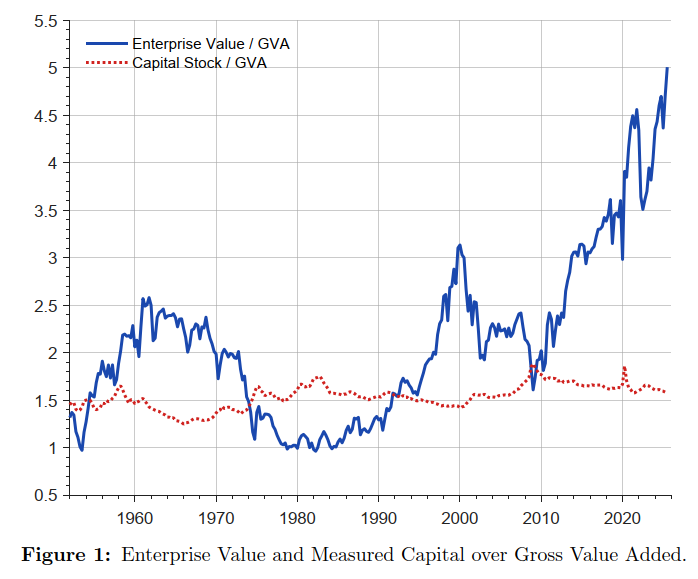
This chart was in a report from the Minneapolis Federal Reserve, “A Macroeconomic Perspective on Stock Market Valuation Ratios.”  It shows that “the ratio of measured capital to output in the corporate sector has remained relatively stable while the ratio of enterprise value to output has boomed.”  From the abstract:

We use macroeconomic data to argue that the observed decline in labor’s share of corporate output in conjunction with relatively weak corporate investment mechanically generates a persistent rise in the ratio of corporate valuation relative to corporate earnings, even absent any changes in expected returns or growth rates.

The same authors — Andrew Atkeson, Jonathan Heathcote, and Fabrizio Perri — also published “Why People Disagree About What Drives Stock Prices,” concluding, “Disagreements about stock market valuation therefore reduce to disagreements about long-run expected returns.”

Guy Spier

The Aquamarine Fund 2025 investor letter starts out as most do, with a review of performance.  But then the founder and managing partner Guy Spier admits:

This is not the letter I wanted to be writing — but it’s the one I have to write.

Because of a health issue, Spier decided to return outside capital.  The rest of the letter includes an explanation of his medical circumstances, the approach to liquidating the portfolio, a look back at the history of the fund (and the people who inspired and helped him), and his framework for selecting stewards of capital.

Then there are reflections on his health situation, friendships, “how to talk about health to someone who is sick,” and lessons he has learned, making it much more than an investor letter.  Ultimately, Spier invokes Hineni (“Here I am”):

I was prepared to play the music of compounding capital for decades to come, but that is not the music I have been given.

Other reads

“Portfolio Design as Gesamtkunstwerk: The Total Portfolio Approach,” Inigo Fraser Jenkins and Alla Harmsworth, AllianceBernstein.

At its heart, TPA is a holistic approach to allocation that rejects the primacy of the asset class or public versus private split as the basis for allocation.  Instead, it recasts the task of an allocator to being the curator of return streams.

Manager benchmark strategies, Robert Doyle, bfinance (via LinkedIn).  Three kinds of managers and how they act.

“Are Family Offices Trading Freedom for Structure?” John Crabb, Institutional Investor.

The market is evolving, and who’s making that noise about evolution?  It’s the usual suspects, the big financial market advisors that worked out the private equity world was saturated, and that families are actually the new golden geese of the investment world.  [Quote from Gilles Erulin.]

“Practical Guidance for Fund Directors on Oversight of Alternative Investments,” Mutual Fund Directors Forum.  Recommended questions for those providing oversight on alternative funds in mutual-fund wrappers (that may aid those doing due diligence on them).

“Why Static Portfolios Fail When Risk Regimes Change,” Bruno Buriozzi, Enterprising Investor.

Here’s the uncomfortable truth:  most institutional portfolios operate under a dangerous fiction — that risk relationships remain stable enough to justify fixed allocation frameworks.

“There’s a punt factor in stocks that investors might be missing,” Rob Mannix, Risk.net.  Has the performance of crypto become a significant factor in how stocks move?

“Financial Market Commentators Need the Skills of a Psychic,” Joe Wiggins, Behavioural Investment.

Financial market commentators face a similar challenge to psychics.  They are expected to be able to predict the future, but as that is an impossible task they instead have to develop strategies that make it appear as if they can.

“Hidden alpha,” Manuel Ammann, et al., Journal of Financial Economics.  Do hidden ties between fund managers and corporate officers result in alpha generation?

“The Empathy Delusion: Why Many Financial Advisors May be Making the Riskiest Bet of Their Careers,” Dan Haylett, LinkedIn.

The advisors who survive and thrive will be the ones who treat AI not as a threat to defend against, but as a capability to master.

“The New Leadership Equation: The Market Rewards Results-Oriented CEOs with a Collective Focus,” Receptiviti.  Among public company CEOs, “high agency is effectively universal,” while “communion” varies widely and “correlates with value creation.”

A real team

“A team is not a group of people who work together.  A team is a group of people who trust each other.” – Simon Sinek.

Flashback: A rigged Nasdaq

Byrne Hobart wrote an interesting post on Capital Gains, revisiting a time when stocks were traded in eighths of a point and Nasdaq market-makers wouldn’t quote the odd-eighths so that they could enjoy fatter margins.  He provides links to an academic paper and an SEC report about the practice.

For the most part, person-to-person trading seems like a long-ago thing, although there are still some markets where it comes into play.  Here is some good prospective from Hobart about the differences in “market color” between the two types of trading:

Manual trade execution is a job where information gets transmitted in two forms:  by prices, and by people sharing interesting tidbits with one another over the phone.  For a market-maker, these rumors are generally about who’s selling and how much.  If you’re a buyer, you care whether the big seller who’s pushed the price down this morning is a random fat-finger trader or a big fund exiting a position.  You aren’t supposed to know the details, but “market color” is a fuzzy concept.  In the voice trading era, it was more common for this to leak out directly, and to go to favored counterparties.  Today, the same kind of information still exists, but it’s in aggregated, anonymized from — prime brokers produce reports on positioning, sentiment, and general market behavior, which puts individual counterparties on a more level playing field.

The corporate life cycle

A book by Aswath Damodaran triggered a posting a year ago about the corporate life cycle.  One snippet:

Walking through the life cycle, Damodaran covers a range of investment strategies, providing evidence about their effectiveness and observations about the gaps between theory and practice.  For instance, in venture investing, pricing mistakes tend “to spiral up and down the pricing chain,” so that “one new round of overpricing or underpricing can spawn many more rounds of overpricing or underpricing.”  (That “me-too” behavior in corporate finance? It’s endemic among professional investors.)

Thanks for reading.  Many happy total returns.
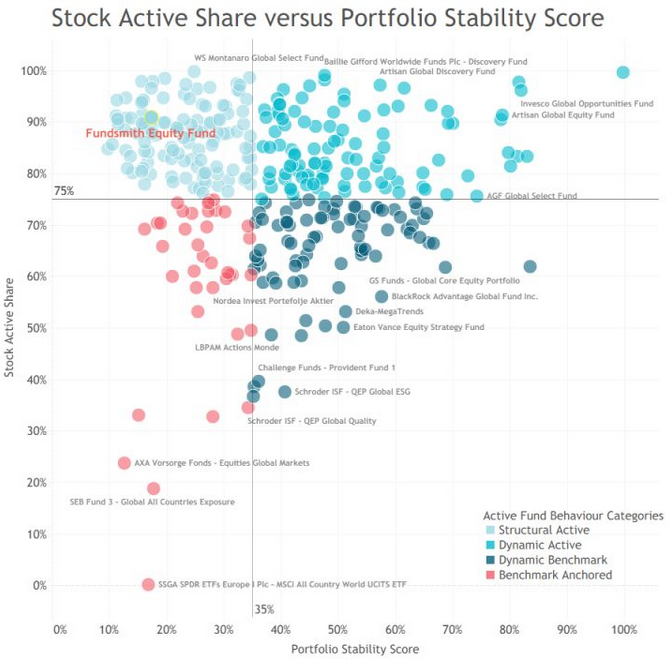
Published: March 2, 2026

Subscribe

To comment, please send an email to editor@investmentecosystem.com. Comments are for the editor and are not viewable by readers.

So Many Questions: Evergreen Funds, Private Credit, and AI

This month, AI has turned into the boogeyman.

Almost every day, equity investors are taking the axe to an industry because of fears of competition from AI.  It started with software, then insurance brokers, then wealth advisors, then real estate services, then trucking/logistics.

The latest “clippings” posting included a chart on the software effects, plus a Tesla triptych and a bunch of other cool visuals.  (Subscribe here if you don’t want to miss these quick, informative, and fun dispatches.)

Meanwhile, there are important questions afoot.

Evergreen funds

In January, Hilary Wiek of PitchBook published a report, “Evergreen Funds: We Have Questions.”  She used the common structure of words beginning with “P” to outline an approach to evaluating funds, in her case seven Ps in all:  people, philosophy, process, portfolio construction, performance, pricing, and potpourri.  (The last, unusual one consisting of investor concentration and suitability.)  As advertised, each section offers important questions for prospective investors.

On the other side of the table, managers — eager to cash in on the retail demand for private assets — are actively promoting evergreens.  Two examples:  KKR offered “5 Questions to Ask Managers about Evergreen Private Equity” and Ares published “Evaluating Evergreens: Navigating the Subtleties of Private Markets Fund Structures,” much of which compares evergreen to drawdown structures.

To Wiek’s seven Ps, Tim McGlinn of TheAltView adds another uncommon one:  “ponzicity.”  He uses the Ares Private Markets Fund to show how “NAV-Squeezing” — buying secondaries at a discount and immediately marking them at net asset value — can juice the returns of evergreen funds.

While being careful not to call “any evergreen secondary fund an actual Ponzi scheme,” McGlinn thinks it will feel like that to some investors when the virtuous markup cycle runs out of gas.

Private credit

In response to what it sees as a “misguided narrative” about private credit (conflating issues in the broadly syndicated loan market with other forms of lending), Cliffwater issued a report called “Back to Basics: The Five Ws of Private Debt.”  The five questions to ask:  “Who is borrowing?  What supports repayment?  When does capital return?  Where does the lender sit in the capital structure?  Why does the borrower need the capital?”

The Five Ws describe the shape of risk.  The final question is how that risk is managed.

In response, Rachel Volynsky wrote a posting for Leyla Kunimoto’s Accredited Investor Insights, “Five Q(uestion)s for Cliffwater’s Five Ws.”  While generally complimentary about Cliffwater’s work, Volynsky has qualms, best summed up in this paragraph:

The Five Ws framework explains how private debt is supposed to work.  What it does not ask is how it behaves when it stops working as advertised.

What will happen “when correlations rise, exits stall, amendments proliferate, and liquidity becomes scarce?”  As is always the case regarding newer strategies, “we have heard plenty of reassurance, but most of it comes from within the asset management ecosystem itself.”  Will the early evidence stand up in less benign market environments?

AI

Will the promise of investments in AI pay off?  More specifically, will the forecasts of companies at the heart of AI development come to fruition?

That’s the question behind “Bayes and Base Rates,” a short article from Michael Mauboussin and Dan Callahan.  It first looks at OpenAI’s 2029 revenue forecast, as shown here, that calls for a compound growth rate of 108%.  In looking for comparables, the authors find that “no public company [with similar revenues] has grown this fast for five years in the last three-quarters of a century.”  (Also of interest, the rate of stock-based compensation at OpenAI is seven times higher than any large technology companies prior to going public.)

The second example provided is in regards to Oracle’s cloud infrastructure business, where the conclusion is the same — there’s no precedent for the kind of revenue growth expected.

Unfortunately:  “The math of Bayes’ Theorem does not work if the initial belief is based on an outcome with a probability of zero,” which is what the base rates for these expectations are.  Plus, the success rates of large projects (being on time and on budget, with benefits as expected) are close to zero too.  A highly speculative set of assumptions out there.

For more on AI investment possibilities, see the Sparkline investor letter from Kai Wu.  It’s full of interesting charts and perspectives, including:

Lofty AI infrastructure stock valuations price in rapid growth in near-term AI demand.  Unfortunately, precisely forecasting the speed of adoption is nearly impossible.  That said, we believe risk skews to the downside, as these stocks could see significant losses from multiple compression if demand does not materialize as quickly as investors expect.

Princeton

In a surprise move, Princeton slashed the expected return on its endowment from 10.2% to 8%.  Anne Duggan of TIFF covers the “highs” of the endowment relative to its peers:  high endowment dependency, high sensitivity to changes in endowment value, a high spend rate, and a high expected return.  Given sloppy returns on private assets lately and other pressures on universities, observers have been wondering how investment policies might change.  Princeton realized that lofty investment expectations had led to unsustainable practices and is downshifting its projections, as spending is being cut across the university.

The hidden organization

When doing due diligence, accepting the narrative as it is doesn’t lead to discovery or understanding.  One point in the structure model of the Advanced Due Diligence and Manager Selection course is that an organization chart doesn’t tell you as much as you think it does.  There is always a hidden organization based on who really matters without regard to where (or whether) they appear in an organization chart.  (And, yes, the investment process in the pitch book may not be that great of a representation either.)

That all came to mind upon reading this wonderful paragraph on a much different topic (the “SaaSpocalypse”) in a piece by Chris Walker:

You learn that the org chart is a polite fiction.  The real map of influence and trust is invisible, legible only through presence, and it determines which initiatives actually ship and which ones die in committee.  You learn which tools people rely on versus which ones they dutifully log into for compliance.  You observe the workarounds, the informal protocols, the tribal knowledge passed between colleagues.  None of this is written down.  Very little of it can be written down.

Family offices

In the paper “The Family Office Effect: How Ownership Style Shapes Firm Strategy,” Jeroen Verbouw, et al. examine how the ownership preferences of family offices differ from those of typical institutional buyers:

Our findings demonstrate that FOs, driven by their unique ownership style, pursue more distinct investment strategies, hold investments for longer, and foster a strategic orientation that emphasizes sustainable profitability over aggressive growth.

R&D alpha

A paper by Abhishek Sehgal includes the conclusion that a measure of R&D intensity “offers a complementary return source for factor-based investors” (while choosing not to ascribe causality to the “mispricing of intangible assets” or “risk compensation for innovation exposure”).

In addition to the research itself, the paper is notable for its clarity in comparison to most academic research.  Explanatory sidebars throughout describe key terminology, “what we do vs. what we do not claim,” limitations, how to interpret the results of tests, etc.  A model to follow (for investment communications as well as research papers).

Other reads

“Beyond the Hype: How AI Is Changing Equity Investing ,” Weichen Ding, bfinance.

The right question for investors is no longer “Are you using AI?” but “How is AI changing your process — and can you prove it?”

“The Pain of Starting Work on Another GP,” Anthony Hagan, Freedomization.  Regarding “the psychological anguish many investment analysts experience before they begin deep work on a manager they have never analyzed before.”

“NBIM quantifies the portfolio threat of economic fragmentation,” Darcy Song, Top1000Funds.

A risk assessment of Norges Bank Investment Management’s portfolio reveals global economic fragmentation as the most threatening risk scenario analysed, with the fund’s latest stress test highlighting that alienated trade blocs, aggressive tariffs and restrictions on foreign investments could erase more than a third of the fund’s value.

“How the Merrill Lynch deal made Bloomberg,” Rupak Ghose.  The history of that “David and Goliath partnership” of yore might provide lessons for potential hookups between financial firms and upstart data vendors today.

“Super Bowl Ads as a Bubble Warning,” Owen Lamont, Acadian.

If the wave of AI ads at the Super Bowl is followed by a wave of AI IPOs later this year, watch out.

“The Second Coming,” Rajiv Sethi, Imperfect Information.  Now available:  A prediction market contract on whether Jesus will return this year — and a derivative bet for the real players out there.

“The Data Delusion in Venture,” Rohit Yadav, All Things VC.

Stop underwriting stories about data.  Underwrite systems.

“Here’s Fidelity Contrafund’s Will Danoff’s Secret Sauce,” Robby Greengold, Morningstar.  Insights on Danoff’s long and successful tenure.

“Come Clean,” Jeffrey Ptak, Basis Pointing.

Absent some better explanation, it sure seems like the manager misrepresented the economic substance of XOVR’s participation in SpaceX equity.

It can go on and on

“It’s amazing how many times you can take 20% out of these things.”  (Overheard at a common-area Quotron during a 1980s pullback in small technology stocks.)

Flashback: The Blodget report

A December newsletter from Spencer Jakab of the Wall Street Journal marked the day 27 years earlier when Henry Blodget, “a young analyst at second-tier brokerage firm CIBC Oppenheimer,” raised his target on Amazon from $150 to $400.

In response, Amazon soared and then crashed hard, ultimately providing an opportunity for anyone brave enough or foresighted enough to take a shot at the beaten-down stock.

Those were the star analyst years, as recounted in a 2022 posting on this site.  These days, the hype often comes from CEOs rather than analysts — or from influencers leading a mob of individual investors.  In any case, if we do get a collapse in today’s highfliers, there will be a few choice long-term bargains on offer.

Cliques and claques

Another 2022 posting offered thoughts on this theme:

Cliques and claques are foundational elements of the practice, if not the theory, of investing, which is dominated by social proof and pressure.  The investment textbooks don’t get into that, but the sociology and anthropology ones do.

Thanks for reading.  Many happy total returns.
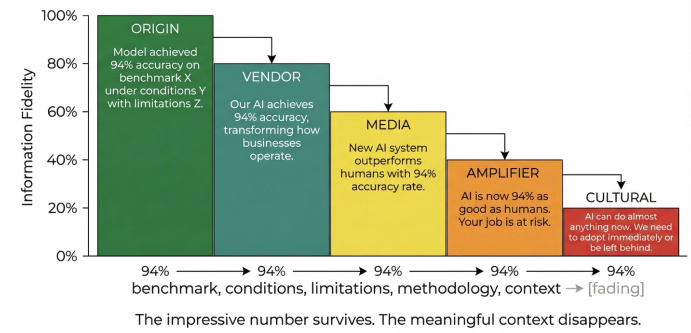
Published: February 16, 2026

Subscribe

To comment, please send an email to editor@investmentecosystem.com. Comments are for the editor and are not viewable by readers.

BDCs, Creditor Wars, and Hedge Fund Alpha

The modest entity that produces these postings is located in a suburb of Minneapolis.

The city has been headlining the news for weeks because of Operation Metro Surge (which, despite its name, includes not only the Twin Cities but small towns across Minnesota).

A paramilitary force whose mission is billed as apprehending the “worst of the worst” is doing nothing of the sort, and its extralegal tactics are making a mockery of the Bill of Rights.

That’s the sort of report that normally emanates from a banana republic.  (Put that in your model.)

BDCs

Business development companies are in the spotlight these days, which makes it a perfect time for a new paper from David Robinson and Melanie Wallskog, “Why is Private Lending So Popular?”  In it, the authors look at BDCs and find that “their growth is intimately connected to growth in private equity” (about 70% of the growth from 2001 to 2023).

The BDC category includes public, non-public finite-life, and non-public evergreen funds, but the authors focus on the public vehicles in their study.  Surprisingly, about half of the average BDC portfolio is in “non-bank-like” investments, so they aren’t typical loan books, even though they are often described that way.  They also include payment-in-kind vehicles, preferred equity, common equity, and warrants.

The title of a Wall Street Journal article by Matt Wirz describes the latest bit of BDC news to roil the market:  “How a BlackRock Loss Reignited Worries About What Is Hiding in Private Credit.”  BlackRock TCP Capital wrote down its net asset value by 19%:

BlackRock’s disclosure underscores the risks investors face inside the opaque private-credit world.  It can be difficult to know what investments are worth at any given time, given that they hardly ever trade and instead are valued by fund managers using a mix of internal analysis and third-party pricing services.  The way private funds mark their holdings determines the fees they charge clients.

A piece by Rod Dubitsky elaborates on BDCs’ reporting practices, the implications for their credit ratings (he believes BDCs are “uniformly mis-rated”), and that the BlackRock overvaluation “isn’t unique.”

In response to the news, Matt Levine fronted his Bloomberg column with a look at BDCs and private credit — and how the current “alts for the masses” push will change things:

Of course the classic buy-and-hold private credit model is supposed to be immune from bank runs, because it has long-term locked-up capital from patient investors.  But that’s changing to appeal to retail.  And as it changes, it becomes much more important that the marks be correct.

Creditor wars

Financial Times article by Sujeet Indap begins:

Troubled companies that seek to avoid costly US bankruptcy proceedings by striking controversial deals with creditors overwhelmingly default within three years, new research shows, raising questions about whether the processes do more harm than good.

The research by Mark Roe and Vasile Rotaru takes a deep dive into so-called “liability management exercises,” whereby some creditors take advantage of other creditors through “non-pro-rata deals”:

The prospect of extracting value from others — and the risk of being left behind — distorts incentives.  Deals can close even when they do not improve firm value — if the dealmakers gain from nonparticipating or coerced creditors.

Just don’t believe the stories that are told about likely outcomes to justify the transactions:

Non-pro-rata LMEs may well continue at their current pace.  Even if they coerce minority creditors, their operational costs could be modest and, in some cases, they may indeed help distressed firms take off.  That is the basic pro-LME story.  But our results are largely inconsistent with this positive view; most coercive LMEs lead to bankruptcy anyway — the runway, even if extended, is short.  LMEs’ promise to strengthen the capital base and prevent bankruptcy falls well short of its proponents’ predictions.

Hedge fund alpha

Rupak Ghose published a posting on “the hunt for hedge fund alpha.”  Included is a list of the twenty managers ranked by profits last year:

At first glance, this appears to be a perfectly sensible list of top hedge funds.  If you define a hedge fund as an exclusive club that only institutional investors or high net worth individuals can access rather than mom and pop, this list ticks that box.  But when I think about what a hedge fund is, it is defined more by how it invests than who its clients are.

Ghose then covers some of the different flavors of hedge funds by looking at several systematic strategies, as well as traditional long-only funds and those that incorporate private markets.

Elsewhere, the title of a Wall Street Journal article by Peter Rudegeair, “Hedge Funds Are Back on Top After a Long ‘Alpha Winter’,” is a reminder that the perception of “alpha” availability going forward is formed by recent nominal performance as well as returns relative to other popular asset classes.  The chasing never stops.

On the other side

In the latest report from Michael Mauboussin and Dan Callahan, they ask, “Who Is On the Other Side?”  Included are refreshers of topics that they have addressed before, like “What game are we playing?” and the BAIT categories of inefficiencies (behavioral, analytical, informational, and technical).

Among the observations is that “who is doing the buying and selling matters.”  Three big trends are covered, including “the massive flow out of actively-managed funds and into index mutual funds and ETFs,” the move to shorter horizons by active managers, and the rise in retail trading.  The general principle to keep in mind:

The question you should ask every time that you anticipate excess returns when buying or selling is “who is on the other side?”  The goal is to understand your counterparty’s motivation to act and assess whether you have an edge.

The chart above comes from a section on “the power of narratives,” about how even “very large companies, which are extremely well followed by analysts and reasonably predictable, can see huge swings in value.”

The coming-out party for ChatGPT led to concerns that Google’s dominance in search could be at risk, leading to pressure on the valuation of its parent company’s stock.  Yet the multiple almost doubled in a few months last year as it became obvious to market participants that Google was very much a leading player in AI, causing a surge in the stock price.  It was, as the authors put it, “a narrative swing from imminent obsolescence to one of inevitable dominance.”

Risks

A report from Harindra de Silva of AJO Vista enumerates ten risks under the title of “Structural Vulnerabilities & Liquidity Illusions.”  The theme:

In 2026, the primary market risks are no longer defined solely by macro-shocks (inflation, geopolitics) but by market structure fragility and valuation discontinuities.

The short piece (four of the risks have a few bullet points and the rest are single sentences) is an effective prompt for discussions by teams and organizations regarding possibilities and beliefs.

Clippings

This chart led the most recent edition of Clippings, a Substack newsletter full of interesting snippets from around the ecosystem.  (You may sign up for it here.)

The image, from Charlie Bilello, is a reminder that long-term rates, which drive much economic activity, don’t necessarily move in concert with short-term rates.  Recent Fed cuts have led to higher bond yields.

Kevin Warsh, the new Fed chair, will have to wrestle with that fact — and with pressure to lower rates from politicians who don’t understand it.

Of related interest:  “How the Fed makes decisions: Disagreement, beliefs, and the power of the Chair,” a posting from the Centre for Economic Development.

Other reads

“The quant shop — AI lab convergence,” Grant Stenger and Richard Dewey, FT Alphaville.

One optimises trading revenues, while the other optimises ad or subscription revenues.  Under the hood, they share a pipeline — data, model, constraints, execution, feedback — and increasingly a talent pool, a hardware stack, and strict IP norms.

“Oblique Strategies, Giusppe Paleologo, At night we walk in circles and are consumed by fire.  Three qualities needed in the AI age:  abstract thinking; “people who are good at the human side of things: communication, motivation, and most important of all, listening;” and creativity.

“Fund-of-funds doing secondaries adds conflict on top of conflict,” Jessica Hamlin, PitchBook.

When a secondary investor is both an LP and a buyer in a continuation fund, the sales process needs to be squeaky clean.  In many cases, it’s not.

“Winning and Losing,” Ian Cassel, MicroCapClub.  Three tribes of losers and two tribes of winners.

“The Total Portfolio Approach Is Still a Human Framework — And That’s the Problem,” Angelo Calvello, Institutional Investor.

Strategic Asset Allocation failed because it treated a dynamic problem as static.  Total Portfolio Approach represents incremental progress by acknowledging complexity and expanding the optimization surface, but it remains a more sophisticated hack, not a solution, as it is constrained by the same bottleneck:  humans designing rules, selecting factors, and predicting correlations in environments too complex for their ex ante modeling.

“Why Private Equity Is Suddenly Awash With Zombie Firms,” Hank Tucker, Forbes.  A tougher environment has stopped the momentum of a number of notable PE firms.

“Everyone Becomes a Bank Eventually,” Covenant Lite.

The last fifty years of non-bank history indicate liability design is crucial.  Most non-banks eventually become banks, not by choice but by necessity, when a crisis forces them to seek stable capital and only banks can provide it.

“Worst to First: How IU Football Flipped the Script by Hiring Curt Cignetti,” Kent Wilson, Wilson Talent Solutions.  It is arguably the greatest sports story in history — are there lessons to be learned from it that apply to other kinds of organizations?

“This Foundation Invests Almost Everything in Private Equity and VC. How Does It Work?” James Comtois, Institutional Investor.

While most endowments and foundations are working to ensure they have ample liquidity, The Dietrich Foundation is taking the opposite approach.  Roughly 90 percent of its $1.6 billion portfolio is allocated to venture capital and private equity — and only 2 percent is in cash.

Reflexivity

“The participants’ views influence the course of events, and the course of events influences the participants’ views.” — George Soros.

Flashback: The yellow keys

Ted Merz was a long-time employee of Bloomberg.  On LinkedIn and in his blog, he shares ideas about communication, his meetings with people creating interesting businesses, and, at times, stories from the history of Bloomberg.

He recently wrote about the yellow keys on the original Bloomberg machine, one for each investment category.  When the firm was starting out, the only yellow key that worked was for government bonds.

Of course, in a few years the other areas of fixed income and the other asset classes got built out.  For those of us that were early users of the Bloomberg, you could see the outline of the future if not the details of it.  One of the great business stories of our time and its game plan was laid out at the start.  Among many others, the dominant vendors at that moment should have taken the upstart more seriously.

The organizational hairball

A 2023 posting leveraged a “quirky little book with a quirky title,” Orbiting the Giant Hairball by Gordon MacKenzie, to look at how organizational baggage builds up over time and how it is hard to resist inertia even if it’s necessary for future success or even survival.

The posting concerned the need for creativity in the world of asset management.  An excerpt:

The asset management business model has been so wonderful for so long that it seems stupid to rock the boat, even if accepting the current condition amounts to rolling the dice on the vagaries of performance-chasing clients in a business where results are dominated by noise.

One of MacKenzie’s concepts applies here.  Like people within a bureaucracy, firms find themselves “wrapped in a cocoon of realities” that has evolved over time, which provides a sense of security.  But that cocoon “is also a shroud that binds and cripples us.”

Thanks for reading.  Many happy total returns.
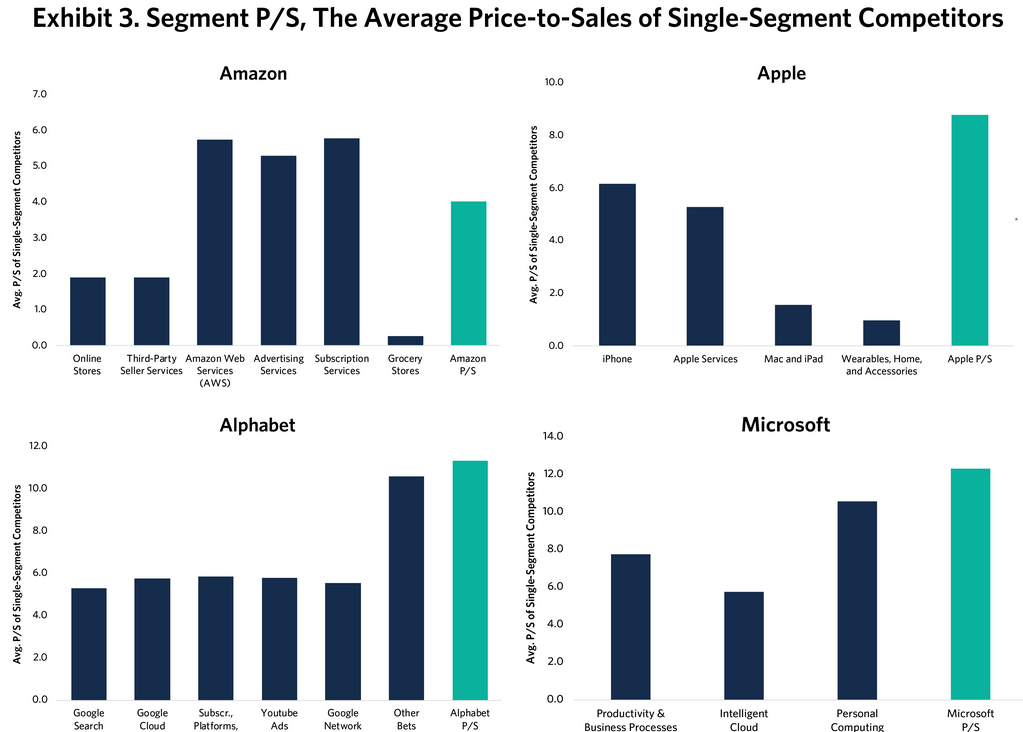
Published: February 2, 2026

Subscribe

To comment, please send an email to editor@investmentecosystem.com. Comments are for the editor and are not viewable by readers.

Private Equity Data, Boutique Manager Failures, and Mania and Value in ESG

The second posting of Investment Ecosystem Clippings came out recently.

It’s an offshoot of this site, available on Substack — a scrapbook of charts and other pieces that illustrate happenings in today’s investing world.

Quick to review and full of diverse ideas, a new edition will be coming out soon.  You may sign up here.

Private equity data

Speaking of Substack, there has been a blossoming of investment-related newsletters on the site in recent months, several of which focus on alternative investments.

Among them is one by Ludovic Phalippou, a professor at the University of Oxford who has challenged much of the private equity orthodoxy.

A helpful posting, “Navigating Private Equity Data: What the Main Datasets Actually Contain,” provides a synopsis of a recent paper, of which he writes:

The paper does not argue that any dataset is superior in all dimensions.  Instead, it documents the strengths and weaknesses of each source and emphasizes that data choice should be driven by the research question.

Private equity data has improved substantially over time, but important limitations remain.  Transparency about data construction, careful validation, and modesty in interpretation remain essential.

Statistics about private equity performance can be squishy; serious research starts with this kind of detailed knowledge about the data used.

See also:  “Yale. How an IRR Became a Legend.”

It is a story about numbers, incentives, and how an entire industry collectively decided not to look too closely once a good narrative emerged.

It should be required reading for every asset owner and (now that individual investors are the major targets of the industry) every investment advisor.  Not because there aren’t opportunities in private equity to be had, but because the narrative force field built up over time contains distortions that should have long since disappeared.

(Tim McGlinn of TheAltView has published several examples of industry advocacy groups, asset managers, and asset owners mixing internal rates of return with time-weighted ones in reports, obscuring the true economics at work.  See, for example, a posting about “fun with numbers” in pension league tables and a follow-up to it.)

Boutique manager failures

A podcast featuring Chris Banholzer, Chas Burkhart, and Brad Mook of Rosemont Investment Group explored the topic, “Lessons Learned from Boutique Asset Manager Collapses.”  (A transcript is also available.)

In looking at the data, “What started as a handful of high profile blowups over the last fifteen or so years, now feels a bit more systemic.”  Once substantial businesses have lost large percentages of their assets under management.

Performance challenges are a factor, as are undue concentrations in product categories, clients, subadvisory arrangements, or consultant support — especially when there has been a lumpiness of inflows around performance peaks.  But some firms survive and others fold or just limp along.  One broad problem:

Great management and great leadership have proven over time to be extremely difficult to achieve.

Given the inherent variability in outcomes over time, sustainability depends on the soft attributes, the “behavioral characteristics of the people” across a variety of market and competitive environments, as well as the real culture (as opposed to the advertised one).

Succession issues and the need for an ownership transition often aren’t tackled in a timely fashion, which can lead to a sale to a financial buyer and the erosion of the franchise.

There’s much more of worth in this discussion among the principals, who make minority investments in asset management firms.

Mania and value in ESG

Two very different pieces of research on ESG came out recently, as is evidenced by their contrasting titles:  “ESG Mania and Institutional Investments” (Riza Demirer and Huacheng Zhang) and “ESG Value Creation in Private Equity: From Rhetoric to Returns” (Evan Greenfield, Ashby Monk, and Dane Rook).

Mania:  The authors of the first study categorize ESG investors as those who are “impact-chasing” (interested in achieving specific goals) and those who are “impact-washing” (“mainly driven by pragmatic motivations, including pecuniary, fad, agency concern, or fund flow”).  Their conclusion:

Overall, our statistical and economic analyses show that most institutions crowd into the ESG market not because they aim to chase impact but more likely because they tend to impact-wash their funds.

Value:  The second is a much different kind of paper, focused on situations where ESG is “embedded in investment judgment and aligned with fiduciary duty.”  It summarizes the approach across the private equity investment cycle by British Columbia Investment Management Corporation (BCI).  Three cases are offered, each of which includes descriptions of the activities that are attributed to ESG considerations and the specific changes in enterprise value that are expected as a result.  The authors end by offering “five guiding principles for embedding ESG into the core of private equity investing.”

The casino

Bloomberg story by Lu Wang examines “the fading line between investing and gambling.”  There is a great conversion happening between prediction markets, sports betting, and traditional investment markets.  Spawned by loosened regulations, the ease of placing wagers on phones, and the propensity of users to take leveraged positions, the scramble for a piece of the action among exchanges, trading houses, and other players has become relentless.  New boundaries are being drawn:

To regulators the stakes are no longer just financial.  They’re existential.  If every interface becomes a casino, where does responsibility lie?  With the trader?  The tech?  The system itself?

As the chart above shows, the 2024 elections caused a spike in activity (at least on Kalshi), but the big change on that site came when sports came into play.

We are clearly in the loosening part of the regulatory cycle, with professionals and amateurs flooding in to take advantage.  It may go the other way some time in the future, but for now it’s full speed ahead.

Rolling the dice

An Institutional Investor article from Michelle Celarier about Seawolf Capital, which had strong performance last year, is unusual in that the firm is quoted as being unusually blunt about its aggressive tactics.  A Mafia metaphor and a sports one (a shot clock) are involved.  In the markets, as in the underworld, you never really know when time will run out.

Timing is everything

It’s hard when you make a bold call within an organization and it goes wrong, especially when it goes wrong right away.  But (for the most part) it stays inside.

Not so for those on the sell-side who put out reports that announce and memorialize their calls.  One particularly bad bit of timing recently:  downgrading Venezuelan bonds the evening before the Saturday intervention by the United States that unleashed a wave of positive speculation about the nation’s prospects.  Oof, indeed.

Other reads

“There Are No Counterfactuals,” Old Rope Research.

Processes can and should change.  Investing is a field in which every circumstance is a 1 of 1, unfortunately.  Pattern recognition and applying certain mental models do work, but only insofar as the facts and underwriting probabilities line up with the current market pricing.

“This is How a Run on an Insurance Company Could Happen,” Rod Dubitsky, Rod’s Substack.  Looking at the “deep trouble brewing” at two insurers to see “how a run could happen on PE linked insurance companies.”

“The red flags investors should look for in private lending,” Michael Gatto, Financial Times.

Financial statement analysis has become something of a lost art in today’s era of rapid capital deployment in the credit markets.

“Jain Hedge Fund Costs Cut Into $750 Million Profits in 2025,” Nishant Kumar, et al., Bloomberg.  The pod shop model in start-up mode:  “gross returns in the mid-teens shrank to about a net 3.7% gain” for investors.

“Fast and Unsteady,” Jeffrey Ptak, Basis Pointing.

It’s a fool’s errand to try to handicap which funds will rank near the very top of their peer group 10 years hence.  Stick with what you can count on — such as the persistence of fee differences between funds — and that should yield a more-than-acceptable result.

“The Evolution of GP Financing Solutions: From GP Stakes to GP Structures,” Dawson Partners.  “Anemic” distributions have led to new forms of financing.

“Asset management is not a meritocracy,” Joachim Klement, Klement on Investing.

In short, even in a business where it is remarkably easy to assess the performance of an employee in numerical detail, women and minorities are subject to unconscious biases.  And they say DEI initiatives aren’t necessary . . .

“Alignment Over Access: Gauging the Fit Between Alternative Investment Strategies and their Fund Structures,” John Moore, CAIA Association.  How to evaluate vehicles repackaging institutional strategies in wrappers created for broader access.

Wanting

“There are only two tragedies.  One is not getting what one wants, and the other is getting it.” — Oscar Wilde.

Flashback: The risk of risk management

During the depths of the financial crisis, quantitative finance expert Paul Wilmott offered thoughts on how “a failure to see beyond the numbers” dooms risk management as it should be practiced.  He uses a simple example of a magician picking a card from a deck as an analogy to make his point:

This is really a question about whether modern risk managers are capable of thinking beyond maths and formulas.

Do they appreciate the human side of finance, the herding behaviour of people, the unintended consequences — what I think of as all the fun stuff?

Too much risk management stops before all that fun stuff (which is ultimately the most important).

Quantitative strategies

All of the previous postings are in the archives.  For example, a 2022 posting covers an interview with Campbell Harvey on important topics in quantitative investment (and a few other things).  It’s worth reading three-plus years later to see what has changed.  One thing hasn’t, which closed the piece:

According to Harvey, “Short-termism is a fundamental problem with our political system and with the way businesses are run.”  (And with much investment decision making.)

Thanks for reading.  Many happy total returns.
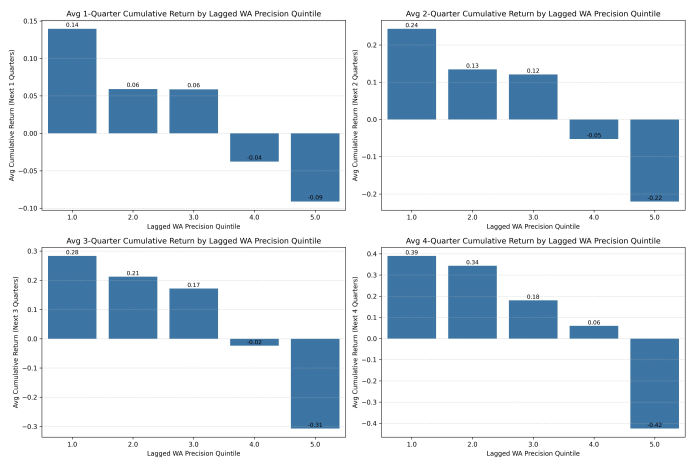
Published: January 19, 2026

Subscribe

To comment, please send an email to editor@investmentecosystem.com. Comments are for the editor and are not viewable by readers.