The Advisory Dilemma: Personalized or Systematic?

A number of white papers from management consultants (and articles in industry publications) have argued that investment advisory firms can benefit from providing more personalized services to their clients.  Those recommendations prompt some questions about the desired relationships between advisors and clients — and between advisors and their organizations.

The advisory promise

Potential clients want to feel as if an investment advisor will provide advice and services that are appropriate for their circumstances and beliefs.  Therefore, marketing messages and prospect meetings usually are geared to play to the hope that recommended solutions will be tailored to individual needs.

As a result, clients have expectations as to how personalized their experience will be, setting up a potential mismatch in cases where the reality doesn’t live up to the apparent promise.  Those kinds of disconnects can come from too much hype in the sales process or the client not understanding exactly what is being offered.  Either way, a lack of shared understanding is a poor foundation for a long-term relationship.

The dilemma

For advisory firms and advisors, there is a tension between the individual needs of clients and the desire to operate a business that can meet those needs in an efficient, effective, and profitable manner.  Decisions about the trade-offs involved determine both the future of the firm and the nature of the client experience.

Where should the lines be drawn between an assembly-line approach and an artisanal one?  What are the professional obligations of an advisor as the primary intermediary between the firm and the client?

The emergence of large RIA firms, which are in most cases conglomerations of smaller entities, has brought those questions into high relief, although they apply to advisory organizations of all sizes and types.

Getting started

The initial meetings with a new client set the tone for the relationship.  Those discussions should involve a sharing of information between the client and the advisor, but it is hard for either party to be as open as would be desired, so the quality of those exchanges can vary dramatically.

In most cases, the conversation is led by the advisor, who can dominate the conversation, demonstrating command of the two domains at play — the investment one and the conversational one.  A posting from Russell Investments counsels advisors to “Stop talking and start listening,” using these questions as a way to frame the nature of an interaction with a client:

How much of the time did the adviser speak?

How much of the time did the adviser ask questions?

How many words did the client speak during the interaction?

Whether they realize it or not, in their first meetings a client and an advisor are creating a behavioral world that they will inhabit for years to come (if the relationship lasts).

In addition to those discussions — and the gathering of the necessary data and approvals — there is typically some sort of risk-profiling process that is instrumental in triggering categorical approaches to future investment plans.  In a CFA Institute Research Foundation brief on risk profiling, Joachim Klement found most risk questionnaires to be “highly unreliable” because they focus on “socioeconomic variables” and “hypothetical scenarios,” while overlooking lifetime experiences, past decisions, and the influence of family and friends, all of which should be used by advisors “to enhance their understanding of client preferences.”

These elements — the communication and behavioral framework that is established between advisor and client, and the slotting of the client as a result of the risk profiling — form the foundation for the collaborative efforts of the two parties.

A reflective arrangement

The standard advisory relationship is between an expert (“I am presumed to know, and must claim to do so, regardless of my own uncertainty”) and a client who has little or no relevant expertise (“I put myself into the professional’s hands and, in doing this, I gain a sense of security based on faith”).  Those quotes are from a forty-year-old book by Donald Schön, The Reflective Practitioner.  Subtitled “How Professionals Think in Action,” the book is not specifically about investment advisors; it deals broadly with issues faced by professionals in general, including the nature of their relationships with clients.

Much of the book is focused on examples of professional practice that illustrate the frictions that are created when a professional applies a body of knowledge to a specific situation.  Should the approach be a formulaic exercise, one of execution, or something more adaptive, more reflective of the specifics of a situation?  That question gets to the heart of many investment advisory situations — and to the trade-offs that are made between personalization and systemization in the provision of advice.

As an extension of those ideas, Schön advocated for a “reflective contract” between advisor and client, in which each can share their beliefs and uncertainties in honest and open ways — to build their relationship on communication that is oriented to continual learning and good questions rather than rules of thumb and easy answers.

That represents a challenge for most clients, since they usually aren’t familiar with investments (or the advisor) and therefore are reticent to share their thoughts in an unguarded fashion during the crucial first meetings.  And it can be especially hard for advisors, who are used to wearing a “professional façade” and offering confident solutions to fuzzy problems.  (They are not alone.  In a similar way, it is rare for asset managers to freely share their doubts, challenges, and aspects of their work that they think need to be improved, since they don’t want to introduce cracks in their narratives.)

Some questions from Schön that indicate the characteristics of a reflective professional who is willing to enter into a deep relationship with a client:

Is the practitioner willing to talk about the issue at hand, to consider it from more than one point of view, to reveal his own uncertainties?

Is he interested in the client’s perceptions of the issue?

Is he open to confrontation, without defensiveness?

What is his stance toward his own knowledge?

Does he claim only to “know,” or is he interested in, rather than threatened by, alternative ways of seeing the phenomena that do not fit his models?

The fear for advisors is that being open is a sign of weakness that could diminish the client’s trust.  There is a paradox at work, since a display of confidence may engender short-term trust but a reflective, transparent approach is a better starting point for building long-term trust.  So an advisor has to consider whether it is worth the risk to foster that kind of relationship.

What gets personalized?

Advisory firms vary significantly by size, resources, and beliefs, so generalizations are elusive.  For example, some of those serving very wealthy clients might offer customized concierge services and specialized capabilities that are outside of normal presumptions of what an advisory firm does.  That is personalization of a sort.  And yet a sole proprietor advisor with a small practice may excel at working closely with clients and providing bespoke investment solutions for them that are beyond what some fancier competitors provide.

Firms may offer a variety of capabilities in house (tax, estate, insurance, lending, etc.), but consider the two core areas of financial planning and investment management.  For each of them, advisory firms have formalized processes that they expect advisors to hew to in their work for clients.  The appropriate degree of latitude for advisors around those models and practices is the essence of the standardized-versus-personalized dilemma.

Financial planning begins with personalized information from the client, but most of the rest of the process is standardized based upon the capital market assumptions used by a firm, the specific financial models it employs, and the outcomes of the risk-profiling process it uses.  Each of those three elements has potential problems, although they are rarely discussed with clients.

An earlier posting talked about some of the issues related to capital market assumptions and Klement’s arguments cited above address the question of the accuracy of risk assessments.  In addition, Monte Carlo simulations that promise a financial plan tested by running ten thousand scenarios yield faith in the overall probability-of-success number that is generated, but the embedded assumptions of normal distributions, constant correlations, etc. don’t match the reality of markets.  And they don’t adequately capture sequence-of-returns risk, a concern given the tendency for above-average and below-average returns to alternate for long periods (and that the last forty years have been decidedly in the above-average category).

That said, would a seat-of-the-pants approach by an advisor to financial planning be better?  Probably not, since advisors are likely biased to believe in financial market success, no matter the conditions — and to realize that optimism is a good sales tool.

A reflective professional would take the middle ground:  using the best assumptions and models that are available, but understanding their shortcomings, investigating the implications of them, and communicating the uncertainties involved to the client.  Not what most advisors want to do.

The same kinds of issues present themselves on the investment front.  At some firms, decisions regarding investments are almost mechanistic, inviting comparisons to robo-advisors, who charge about a fourth of the industry-standard fee of one percent.  That differential in fees may be justified on the basis of financial planning advice or behavioral counseling that contributes to better long-term results, but in many cases there is more promise than delivery in that regard, and clients overpay for what they get.

But, again, such simplicity has a lot to offer (if priced right), since it is hard to beat a plain-vanilla investment plan.  Advisors can recommend strategies and products that detract rather than add value, so giving them flexibility in implementation means that there is variability (probably on balance to the downside) in results.  Of course, it also should be noted that advisory firms themselves can make similar decisions, so sometimes the negative effects of product choices are systematized rather than customized.

Organizations and roles

Since the turn of the century, we have witnessed the industrialization of the advice industry, as diversified financial services companies have intensified their commitment to their wealth management divisions and RIA rollups have gained considerable size through consolidations.  The owners of those entities are more focused on scale, consistency, efficiency, and the bottom line than their smaller competitors in what had been largely a cottage industry.  The result is a trend toward a systematic approach.

And that mentality trickles down.  After all, owners of smaller advisory firms are being pestered about their interest in selling, and many are taking advantage of cash-out opportunities that are beyond what they could have imagined a few years ago.  What kinds of firms are most attractive as acquisitions, those that have a wide range of implementation or more freewheeling ones?

Customized advice and the kind of reflective relationship advocated by Schön are more time-consuming, and therefore less bottom-line-friendly.

Decisions about customized versus personalized services alter the role of the individual investment advisor, who is the critical link between a client and the firm.  Is an advisor expected to implement advice created by others or to be involved in creating the advice?  Is it an investment role or a relationship role?  What are the advisor’s obligations to the client in terms of assuring that the firm’s recommendations are in fact appropriate?

And what are the advisor’s obligations in terms of moving the firm forward?  One theme of the Schön book is that a reflective practitioner is willing to question and improve the organization’s methods and recommendations — “is essential to the process by which individuals function as agents of significant organizational learning,” even though that can present “a threat to organizational stability” at times.  Do you want an advisor who is active in trying to improve things, or inert, carrying out what is predetermined by others?

While these questions — and this whole posting — have been presented in black-and-white terms to have you think about the ends of the spectrum, implementation is usually in tones of gray.  What do you want the advisor’s role to be and why?

While we’re at it, we should throw in the topic of the moment and ask what the effect of artificial intelligence will be in terms of these questions and on an advisor’s responsibilities (if that position is still around in a few years).

A new world is already being marketed.  Here’s the beginning of a recent unsolicited email from a vendor:

In today’s experience economy, clients expect bespoke engagement tailored to their unique needs.  One-size-fits-all approaches no longer suffice.  But efficiently scaling personalization across a complex book of clients poses challenges.

The solution lies with artificial intelligence.

A useful paper by Andrew Lo and Jillian Ross, “Can ChatGPT Plan Your Retirement?: Generative AI and Financial Advice,” offers some perspective on the challenges involved in using AI:

The financial sector has always been an eager consumer of technological advances that reduce cost and increase efficiency.  But the pace of financial innovation is a function not just of technical capability but also of trust and reliability.

One section in the paper deals with the roles and responsibilities of advisors; the concepts of ethics, trust, and fiduciary duty; and observations about the emergence of robo-advisors and the experiences clients have had with them to date.

Regarding the current crop of large language models:

An LLM can roleplay a financial advisor convincingly and often accurately for a client, but even the largest language model currently appears to lack the sense of responsibility and ethics required by law from a human financial advisor.

Nevertheless, the authors see a bright future for AI-based advice:

The simplest extrapolation suggests a transformation of retail investment, in which every holder of investable wealth will make locally optimal investment decisions towards their life goals, a full democratization of finance.

The debate goes on

In a LinkedIn update, Michael Kitces wrote,

Potentially controversial take with the ongoing industry buzz of tech that builds hyper-personalized portfolios:  Most clients don’t actually want “personalized” portfolios.

What they want, according to Kitces and a poll he conducted online, “is simply to feel heard and understood.”  If they do, they are fine with a model portfolio provided by a firm if “that’s what we really believe and can show is the right path for them to achieve the outcomes they desire.”

A number of advisors offered their opinions in response.

Decision making

Ultimately, a firm must decide where it stands on the issues laid out here, which define the expectations for the organization, its advisors, and its clients.  It also should have on its research and development agenda an examination of emerging technologies and how their evolution could change the fundamental nature of the firm and of the industry.

Of more immediate concern for many is how to deal with increased demand from clients for alternative investment products and the concerted marketing push to advisory organizations by the sponsors of those products.  (That was the topic of this 2022 piece.)  By their nature, those vehicles prompt a variety of decisions regarding the personalization or uniformity of advisory services that a firm chooses to provide — and how it wants to position itself in the market.

Published: May 9, 2024

Subscribe

To comment, please send an email to editor@investmentecosystem.com. Comments are for the editor and are not viewable by readers.

Mistaken Assumptions, Getting Unstuck, and Nonlinear Thinking

A new short course, Analyzing Investment Process, is now available in the Investment Ecosystem Academy.  It features the most popular module from Advanced Due Diligence and Manager Selection, plus some introductory material from the full course (which is available in course-only or course-plus-coaching options).

In addition, new essays will be on the way in coming days for subscribers to these emails.  Sign up here if you haven’t already.

Mistaken assumptions

As with anything else, analyses of the performance of asset classes are reliant on the quality of the data used to make the assessments.  In that regard, new research from Daniel Barth, et al., is particularly interesting.  It doesn’t address the performance of an asset class but of “hedge funds,” that varied collection of investment strategies that gets lumped together.

The conclusion is that many analyses of hedge fund performance are misleading because they are based upon data from commercial database vendors.  Those databases are voluntary, and the authors find that hedge funds who don’t participate in those databases “have less fragile capital and higher alphas” than those that do.

Larry Swedroe has published an excellent summary of this important research.

Data governance

The lede for the latest paper (“Governing Your Way to Better Long-Term Returns”) by Dane Rook and Ashby Monk:

Data governance isn’t sexy, but it can lead to better investment decision-making, which in turn can lead to better investment returns . . . and better returns are always sexy.

The paper draws a line between data management (“how efficiently data is handled”) and data governance (which is “concerned with how the quality of data affects the quality of investment decisions”), and the authors stress that data governance “must align with the technology, culture, organizational structure, leadership and other resources an investor uses when it makes investment decisions.”

While written for asset owners, the ideas put forth by Rook and Monk apply equally to other kinds of investment organizations.

Getting unstuck

Unusual events offer researchers the opportunities to analyze changes that are otherwise hard to see.  The pandemic has spawned quite a bit of academic research along those lines (and there will no doubt be much more to come across a wide range of fields).

In a paper, “Do Firms Get ‘Stuck’ Issuing Quarterly Earnings Guidance?” Andy Call, et al. took the opportunity to study changes in guidance practices by U.S. companies in response to the onset of the pandemic.  The chart above shows the number of firms over time that stopped guidance and did not restart it.  In response to the pandemic, 180 firms discontinued guidance, but 110 subsequently restarted it.  The seventy who did not represent the two-quarter spike you see and are the subject of the analysis.

The provision of guidance, the earnings management practices of companies, and the resultant guessing games about their motivations by analysts make for a fascinating aspect of equity investment activity.  Many decry the game as it is played, but most companies still engage in the practice of giving guidance.

Two sections from the authors summarize the results of their analysis:

We find that the post-stoppage abnormal returns (subsequent 6-month and 12-month returns) of firms that stopped guidance during the pandemic are significantly positive, whereas the subsequent returns of firms that stopped guidance between 2010 and 2019 are consistently negative.

We interpret these results as evidence that many firms viewed the COVID-19 pandemic as an opportunity to exit the guidance game when the likelihood of a market penalty for stopping was low, and when investors would be less likely to interpret the absence of guidance as a negative signal about future performance.

Speaking of company guidance, another paper, by Lauren Cohen and Quoc Nguyen, finds that firms “strategically move their targets in reporting performance to investors,” but that “investors fail to realize or take into account the valuable information in these simple changes in targets.”  At a time when everyone is getting excited about the possibilities of AI:

While technology could also aid in the collection and processing of this same information, we show that far from needing complicated state-of-the-art solutions, simply collecting performance targets from year to year [provides] powerful information that is seemingly being ignored by the capital markets.

The big dog

Fidelity’s brokerage division has said it will add a $100 fee for purchase of ETFs from sponsors that haven’t agreed to share revenues with it.  That has spawned a number of articles in the press and reactions from the financial blogosphere and Twitterverse.  A Citywire RIA article covers the basics, a LinkedIn posting from Meb Faber (CEO of one of the affected ETF sponsors) argues against the new policy, and a piece from Dave Nadig provides important industry background and perspective, including:

I’m not defending the move by Fidelity here — at best it’s ham-handed and wildly too much, too fast, without context.  At worst it’s just plain stupid and won’t make them any more money.  But I also do not believe that the last 20bps or so for distribution in financial services is ever going to really go to zero.

Free is always a fake price.  Free means someone else is paying, or you’re paying and just haven’t figured out how.  “Free Shipping” is never free.

Limited partner management

“Mastering LP Management,” by John-Austin Saviano of High Country Advisors, was published in March 2023, but hasn’t been highlighted in a Fortnightly before.  It offers asset managers worthwhile tips on interacting with their clients.  After all:

The stakes are huge. Happy LPs stay with their managers longer and are advocates for managers in the marketplace.  Conversely, unhappy LPs will seek other homes for their capital and can send negative signals to their peers.

Other reads

“Valuation Multiples,” Michael Mauboussin and Dan Callahan, Morgan Stanley.

This report discusses four topics.  The first is what multiples miss and why they are becoming less informative than they were in the past.  Second is an examination of why the two most popular multiples that equity analysts use, P/E and EV/EBITDA, can provide different signals about a stock’s relative attractiveness.  Third is a look at the alternative measures of earnings and EBITDA that companies report to see if they add insight.  Finally, we focus on EV/EBITDA multiples and link them back to fundamental drivers of value.

“Building Blocks and Costs of an Internal Investment Office,” Strategic Investment Group.  Based upon a limited sample, some estimates of costs for different sizes of asset owners, plus comparisons of inhouse, OCIO, and hybrid approaches (from an OCIO manager).

“Money for Nothing? Hedge Funds Haven’t Budged on Hurdle Rates (Yet),” Chris Stevens, bfinance.

What used to be an essentially academic distinction in net returns for the two types of fee structure during the ‘ZIRP’ era has now become a very meaningful difference.

“Charting a New Course,” Scott Treloar, Noviscient.  On the importance of both long-term and short-term thinking in investment organizations.

“Is the Boom-and-Bust Business Cycle Dead?” Talmon Smith, New York Times.  A perceptive assessment of a new order — or wishful thinking?

“But one point to keep in mind,” [Rick] Rieder continued, “is that satellites don’t land and maybe that is a better analogy for a modern advanced economy” like the United States.  In other words, dips in momentum will now happen within a steadier orbit.

“International Intangible Value,” Kai Wu, Sparkline.  An extension of Sparkline’s previous research on intangibles — offering a third way between international stocks being viewed either as “an amazing contrarian buying opportunity” or “value traps”?

“A framework for allocating to cash: risk, horizon, and funding level,” Vanguard.

There is a clear need for cash in financial planning, but from a portfolio construction perspective, the need for cash depends on the investor’s circumstances and mindset.

“Most Financial Phenomena are Older than they Look,” Byrne Hobart, The Diff.  A book from 1900 shows that times may change but people’s inclinations don’t; “Conflicts, revenge trades, YOLOing into options — it’s all there.”

“How to Solve the ‘Willie Nelson’ Problem,” Gapingvoid.

How does a person or an organization keep its creative vitality once they have already become successful, already become comfortable?

The right stuff

“The art of being wise is the art of knowing what to overlook.”  — William James.

Flashback: Linear thinking (in a nonlinear world)

A 2017 article in Harvard Business Review by Bart de Langhe, et al. provided a number of examples of how “the human mind struggles to understand nonlinear relationships” in a business context.

Written for corporate executives, it provides a number of examples of ways in which assumptions of linearity lead to poor decision making.  Those examples, accompanied by simple diagrams, are instructive for investment analysts, who can suffer from the same misconceptions.

As noted in the piece, it is not just the basics of costs, volumes, and price for which the linear/nonlinear dynamics come into play, but things like consumer attitudes.  Environmental concerns versus purchase behavior is offered as a good example.

Other kinds of nonlinearity come into play in the investment realm.  For example, mortgage repayments and investment fund flows often follow nonlinear patterns.  And things that resist quantification can suffer from straight-line thinking too — to wit, the social nature of investment ideas means that they accelerate and decelerate in popularity in nonlinear ways.

Postings

The archives include all of the previous postings.  You can also sort them by category or search by keyword.

For instance, two years ago the essay “Decisions with Other People’s Money” examined the principal-agent problem, including the effects of social relationships, incentive structures, and differential risk preferences between principals and agents.

Thank you for reading.  Many happy total returns.

Published: April 29, 2024

Subscribe

To comment, please send an email to editor@investmentecosystem.com. Comments are for the editor and are not viewable by readers.

Differences of Opinion, the Playbook, and Stylized Answers

If you missed the series “Three Books about Capital Allocators,” you can find a short summary of it (with links to the postings) here.

Other new essays will be out soon.  Sign up if you want to receive them (and these Fortnightlys full of curated readings) when they are released.

Differences of opinion

They say that it takes two sides to make a market.  While that phrase is used to refer to the buyers and sellers of an investment vehicle, it is also true for theories, ideas, and practices.

There are positions staked out on every topic imaginable and ongoing debates between their proponents.  With the rise of “alternative” investing and the varied ways of interpreting the performance of many of the strategies found within that category, the debates seem to go on without end.

Take private credit, which has exploded in popularity since the financial crisis, appearing as an asset class in most allocation schemes only within the last decade.  A new working paper, “Risk-Adjusting the Returns to Private Debt Funds,” by Isil Erel, et al., has gotten a lot of attention.  In it, the authors note the challenge for researchers evaluating a relatively new area of investment:

The academic literature on private debt funds is remarkably sparse.  While practitioners argue that these funds are excellent investments, our knowledge is limited about their returns and whether these returns are sufficient to justify their risk.

Their conclusion?

Our estimates suggest that the risk-adjusted abnormal return on $1 of capital invested in private credit funds is indistinguishable from zero.

Cliffwater begs to differ:

A recently published academic study’s conclusion that private debt produces no after-fee excess return has caught the attention of some familiar naysayers in the business press.  We briefly critique the paper below and, contrary to the authors’ conclusion, find a large and statistically significant 4% after-fee excess return using a different, but more familiar risk measurement methodology coupled with a transparent and contemporary database of private debt performance.

The firm is an investment advisor and manager specializing in alternatives.  It also oversees the Cliffwater Direct Lending Index; another piece argues that its approach meets the criteria for a good benchmark (and that other ones don’t).

(Also of note:  The International Monetary Fund released “The Rise and Risks of Private Credit,” which deals with the macroprudential aspects of “the recent evolution of private credit into a major asset class,” of importance since financial crises typically stem from large increases in new types of leverage in the system.  The report covers credit, liquidity, leverage, asset valuation, interconnectedness, and conduct risks.)

On another front:

Many European and UK asset owners have pulled their allocation to hedge funds in recent years, unsure what multiple strategies with different outcomes are trying to achieve or if hedge funds really do capitalize on bull markets and protect them in a downturn.

That opens an article from Top1000Funds that details the double-digit weighting of TfL Pension Fund to hedge fund strategies, making it “a bit unique.”  Unlike other categories of alternatives, hedge fund allocations have shrunk in many portfolios, even while (as links offered in past postings have shown) some think that the time is right for increased allocations due to changes in the broad economic environment.

The debate is a messy one, because so many disparate strategies are lumped into one category — and goals for their use are all over the map.  It’s past time to discontinue using “hedge funds” as a descriptor, since it doesn’t really mean anything; each strategy should be placed appropriately in an allocation scheme based upon its economic drivers and risk/return characteristics.  (And analyzed on that basis; for example, see research from Rodney Sullivan and Matthew Wey on the decline in risk-adjusted alpha for global macro and managed futures managers.)

The playbook

Ted Seides has a message for asset managers:

New investment relationships start when the manager fits into the allocator’s playbook, not the other way around.  Managers often only see the game from their perspective. What happens on the other side of the field significantly influences the likelihood of a new allocation.

The investment office playbook takes place over four seasons — governance, deployment, optimization, and maturity.  The seasons repeat each time a new CIO takes the helm.  Other rules influencing investment activity include fund flows to the investment office and the CIO’s tenure in the seat.

For the most part, there is a sweet spot that starts a year or two after a new chief investment officer takes over, when most changes take place in the portfolio.  Before that, governance decisions take precedence and there is very little chance for a new allocation.  After the deployment period, prospective managers face limited opportunities, as “any new allocations to managers face severe competition for capital.”  (How should managers consider such implementation cycles when creating their marketing playbook?)

Stylized answers

In a LinkedIn article, Mervin Burton calls public equities “a space where alpha generation seems as difficult and elusive as building an anti-gravity machine.”  Burton offers a clever listing of fifteen “stylized answers” put forth by managers of different stripes (and the clients who hire them), grouped into fundamental, quantitative, tilts, and passive camps.

ETFs for asset owners

This chart illustrates the ownership of ETFs by U.S. and Canadian pensions, endowments, foundations, and sovereign wealth funds.  It comes from the latest quarterly report on such ownership by S&P Dow Jones Indices.  It shows a substantial rise in the usage of ETFs over the five years ending in December 2023.

As noted in the report, the AUM number appears to indicate a decline in appetite for the vehicles over the last couple of years, but in reality the dip is due to market performance, not to reduced exposure.  (A share count comparison is one of more than twenty exhibits provided.)

The increased use of ETFs prompts some questions:  What kinds of ETFs are being used?  In what ways?  For short- or long-term positions?  What strategic decisions are behind the changes?  How have performance patterns changed as a result?

Influencer

These days you shouldn’t be surprised if a young person tells you that they want to be an influencer when they grow up.  Maybe even a finfluencer.

An influencer of a different kind and era — with a lasting effect on the investment world — passed away recently.  Daniel Kahneman won the Nobel Prize in economics for his work on behavioral finance, even though he wasn’t an economist.  Among the notable tributes to him are those from Behavioral Scientist (“A Mosaic of Memories and Lessons”), David Epstein (“The ‘Lesson I Have Learned’ Mindset”), Jason Zweig (“The Psychologist Who Turned the Investing World on Its Head”), and Bob Seawright, (“Crackpots Work Alone”).

AI in the analyst trenches

New York Times article by Rob Copeland, “The Worst Part of a Wall Street Career May Be Coming to an End,” considers what will happen when the “grunt work” done by investment banking analysts is farmed out to AI bots.  Similar questions are being asked about jobs throughout the investment ecosystem.

Writing for CAIA Association, Steven Novakovic offers an important perspective:

If we use AI to automate these mundane tasks, that means we need fewer fresh-eyed analysts, and that we assign our fresh-eyed analysts to tasks that we haven’t yet figured out how to automate with AI.  And those analysts that we do hire, aren’t going through the same experience-building process that those before them benefitted from.  When the bosses of these fresh-eyed analysts retire, what experiences and practical knowledge will the analysts have missed out on?  Will they be able to absorb all the information provided to them by the AI bots and know what it means, what to do with it, and know when the AI bot is lying?  Will they know what rules to give to AI to help find the next great investment?  Will they actually truly comprehend?

Other reads

“Tunnel Vision: 2024 Inflation and Growth Forecasts in Historical Perspective,” D. E. Shaw.

Historical distributions can’t tell us whether or when rapid disinflation or runaway growth will occur.  But they remind us that such outcomes have happened before, even during periods preceded by notably subdued macroeconomic volatility, and with much greater frequency than recent forecasts might suggest.

“Alternative risk premia: Building blocks for resilient portfolios,” Farouk Jivraj, et al., Fidelity.  This argues for long-short implementation of factor strategies versus long-only “smart beta” approaches.

“Generative AI in Systematic Investing: The Sizzle and the Steak,” Vladimir Zdorovtsov, et al., Acadian.

While excitement about generative AI is certainly warranted, we find that current speculations about its applicability and promise are in some cases misplaced and in others premature — both broadly speaking as well as in the context of systematic investing.

“Unexceptional Endowment Performance,” Richard Ennis.  A look at the fifteen-year returns for a sample of large U.S. endowments against risk-matched passive exposures.

“What is a Compounder, really,” Old Rope.

This is all vernacular nitpicking and possibly sophistry, simply because investment professionals mean whatever they want when they throw around jargon.

“Can Foundation Endowments Achieve Greater Impact?” Bridgespan Social Impact and Capricorn Investment Group.  Perspectives for organizations that want to more closely align their investment approach with their mission.

“Carbon Trading Strategies,” Chris Stevens and Toby Goodworth, bfinance.

Although still a somewhat small niche of the investment landscape, carbon trading is becoming increasingly relevant, particularly for hedge funds:  we’re seeing CTA/managed futures, multi-strategy, global macro and even long-short equity funds with exposure, as well as an emergent cohort of dedicated carbon trading strategies.

“The Alternative Truth of Private Equity and What That Means for Asset Allocation,” Christopher Carrano, Institutional Investor.  On the definition of an “alternative” and “paper diversification versus real diversification.”

“Would an asset manager by any other name still smell so sweet?” Chris Sloley, Citywire Selector.

While the jokes about Abrdn are likely to persist for the foreseeable future, this is another article in the funds industry which references that name.  To quote Oscar Wilde, the only thing worse than being talked about, is not being talked about.

It happens

“My karma ran over my dogma.”  — Attributed to many; the earliest reference on Google comes from a 1996 NYT article.

Flashback: Vague but exciting

It is now thirty years or so since the World Wide Web became publicly available.  It had its roots in a paper written by Tim Berners-Lee in 1989:  “Information Management: A Proposal.”  On it, his supervisor wrote, “Vague but exciting . . .”

Postings

The archives include all of the previous postings.  You can also sort them by category or search by keyword.

For example, “Two Sides of Ambivalence” from 2022 asked:

What is your preference?  Do you favor people and organizations who are highly confident in their positions, or would you rather have them be open about the uncertainties that exist (and their own doubts and concerns)?

Thank you for reading.  Many happy total returns.

Published: April 15, 2024

Subscribe

To comment, please send an email to editor@investmentecosystem.com. Comments are for the editor and are not viewable by readers.

A Total Portfolio Approach (and Reads About the Pieces Within)

The series, “Three Books about Capital Allocation,” concluded with postings about The Rebel Allocator (on decision making in companies) and The Counting House (in regards to institutional investing).

No April Fools’ Day material in them — or in this great set of readings for you.

The total portfolio

CAIA Association has released a report on the “total portfolio approach” (TPA). It’s also known as “total portfolio management” — and Future Fund calls it “a joined-up whole-portfolio approach.”  By whatever name, the ideas underlying it are put forth in this piece by representatives of CAIA and four organizations that implement TPA.

In John Bowman’s introductory summary, he writes that TPA “is not a monolithic methodology that can be applied off the shelf,” but more a “state of mind.”  That state, as described in the report, has several notable features:

“Stepping away from traditional asset class bucketing,” which, having been taken to the nth degree by most organizations, has become “counterproductive.”

Dropping strict mean-variance optimization and strategic asset allocation limitations.

An evolution in governance that involves greater interaction between the governing board and management as opportunities and exposures require consideration and action in ways that are different than the policy and implementation cycles of the past.

A focus on evaluating the best ideas to employ in the context of the total portfolio, not within asset class silos; there is a “competition for capital” in the broadest sense.

The management of factors and risk becomes the essential top-down activity.

The mindset starts with “the premise that it’s impossible to know what investment opportunities will present themselves over time.”  In building an organization that can implement TPA, there are new considerations in regards to talent assessment and hiring — adaptability and the ability to see the whole picture should be prized; personal fiefdoms and inflexible thinking need to be avoided.  Which is not to say that specialized expertise won’t be important, but it must fit into a new environment.  Ultimately, “adopting TPA is a change management process, and one that requires bold leadership and vision.”

Vetting AI claims

Angelo Calvello wrote a column for Institutional Investor titled “Every Allocator Should Ask These Questions Before Hiring a Manager Using Large Language Models.”  It stressed the need to deeply understand how those models are being used by managers:

Allocators should make sure that their vetting process goes beyond managers’ demonstrations of slick user interfaces and general claims of success.  Integrating LLMs into an investment process is a complex and expensive project with considerable investment and business risks and ethical considerations.

As some managers have found out, the SEC is on the lookout for “AI washing.”  Calvello:

As regulated entities, managers must already adhere to a complicated set of domestic and international regulations.  Using LLMs amplifies this burden.

But relying on the regulators to police the managers is foolhardy:

All LLMs have technical vulnerabilities and limitations that can taint the model’s output and the firm’s reputation.

Those doing due diligence need to understand in which ways large language models are being used by a manager, the risks and vulnerabilities of the approach, and avenues of inquiry that can lead to the necessary understanding of how these emerging tools are being used.  Calvello offers perspective on all of those topics.

Alternative credit

A new monograph from the CFA Institute Research Foundation, “An Introduction to Alternative Credit,” provides a good overview of issues in that red-hot area (more often referred to as private credit).  Seven different categories that fall under that umbrella are examined.

The first chapter gives a general overview that includes characteristics and yield ranges for various instruments.  Within that chapter is a six-page exhibit on due diligence activities which lists a variety of parameters, noting the prevalence of questions about them.  The most common entry in that column is “Nearly all investors ask this.”  That provides a rough outline of the basics which asset managers would be likely to include in presentations and questionnaires — the documentation to be expected and therefore widely known.  The discoveries beyond should be the goal of due diligence.

Time to get to work

The latest edition of Bain’s global private equity report was released.  The lede:

It’s safe to say the private equity industry has never seen anything quite like what’s happened over the last 24 months.

Events “have left private equity hamstrung.”  The charts above display the scene; investments and exits plummeted in 2023, while inflows actually moved up to previous highs.

A changed environment has laid bare a longstanding problem:

We’ve talked about it for years:  The industry has relied disproportionately on rising multiples and revenue gains to generate returns while margin improvement has contributed practically nothing.  That no longer works when rising rates serve as ballast for asset multiples.

A variety of exhibits paint the situation in finer detail.  For example, under 40% of portfolio companies had less than three times interest coverage (defined as EBITDA/cash interest) in 2020; now more than 80% are in that situation.  And the holding period for buyouts has continued to increase.  Last year it was 6.1 years — compared to 3.1 in 2000.

Bain stresses that it is important for managers to tell a better story:

The next step is communicating to LPs how portfolio managers are using all the tools at their disposal to act as a trusted steward of investor capital.  GPs aren’t particularly adept at this kind of communication because they haven’t had to be in the past.

After reminding readers of the industry hurdles that have been cleared before, the introductory section ends with a call to action:

This is one of those moments.  Time to get to work.

Private equity firms and consultants are already on the case, promoting the strategies by relying on historical performance patterns (including the strong results that followed previous lulls), often without discussing the potential effects of changes in underlying fundamentals.  See, for example, “You can’t control the cycles, but you can control your nerves,” the second installment in the “mythbusters series” from Partners Group.

Surveys of asset owners generally indicate plans to maintain or increase their exposure to private equity.  Most major institutional asset owners have boosted their holdings dramatically over the last few years, but there are some exceptions.

Robin Wigglesworth wrote an article for the Financial Times about the Norwegian sovereign wealth fund’s hopes to start investing in private equity.  Titled “Is private equity worth it?” the article provides some history of the strategy; a “lies, damned lies, and investment return statistics” section; problems with benchmarking; changes in the environment; and questions about whether the “illiquidity premium” has morphed into an “illiquidity discount.”  A good summary for the Norwegian fund’s stakeholders to consider — or anyone else.

Richard Ennis has made no secret of where he comes down on these questions.  In his latest paper, “Second-Guessing CalSTRS on Investment Strategy: A Case Study,” he addresses its plans to further increase its weighting in alternatives (not just private equity) to around half of the portfolio.  Ennis concludes that “CalSTRS’s experience with alternative investments is similar to that of public pension funds in the main:  Alternative investments have detracted from performance.”  He explains why the CalSTRS custom benchmark (like those adopted by other asset owners) “makes it impossible to determine whether active investing has paid off.”  (See earlier postings about Ennis’ work in that regard and his role in the history of the institutional consulting business.)

Untapped indicator?

A surprising paper, “The Financial Statements of Investment Companies,” by James Li, was recently updated.  Surprising, because who would think that the boring financials of mutual funds could actually improve prediction of future performance?  Investors pore over return and fee information, but Li finds that tips exist elsewhere.

Dividend income is “highly predictive” of future income:  “Funds that outperformed their benchmarks by selecting high dividend-paying stocks continued to do so in the future; they also outperformed their peers having lower dividend yields.”  In contrast, unrealized gains and losses do not persist but mean-revert.  (Unfortunately, the noisy variability of valuation often leads investors to mistake luck for skill in the meantime.)  Fee waivers, which “temporarily increase fund performance, and thus fund rankings,” are another way that investors who aren’t careful can be fooled.  Li’s analysis shows that investors do not react to changes in the financial statement variables, even though he finds them predictive.

Other reads

“Apples and IRRanges: Peeling Back the Challenges of Performance Measurement in Private Markets,” Phil Huber, Cliffwater (via LinkedIn).

Understanding that IRR and TWR are like apples and oranges for comparative purposes, allocators need a framework to help bridge that gap as they increasingly adopt evergreen structures like tender-offer funds and interval funds.

“Beware Naive Comparisons of Asset Management Fees and Returns,” Byrne Hobart, Capital Gains.  Subhead:  “Why investors pay 1000x more for a 10% return from Millennium than for a 10% return from Vanguard.”

“Equity Risk Premiums (ERP): Determinants, Estimation, and Implications – The 2024 Edition,” Aswath Damodaran, SSRN.

Given its importance, it is surprising how haphazard the estimation of equity risk premiums remains in practice.

“Too Much Certainty is a Terrible Thing,” Inigo Fraser Jenkins and Alla Harmsworth, AllianceBernstein.  Looking at benchmarks from different angles, including within a changed environment:

The new regime creates a tension between two different concepts of risk:  risk measured as the ability to maintain purchasing power is now in conflict with risk measured as the standard deviation of returns.

“The Language of Investment Management,” Ryan Bunn, Reference Equity.  Do asset managers talk most about fundamental business issues or other transitory factors?  Do asset owners compel them to focus unproductively on the latter?

“Recovery rates as a mitigator against default rates,” StepStone.

Entering an uncertain economic environment, default rates often offer valuable insights into current economic conditions.  However, they only tell part of the story:  Their impact on returns can be offset by higher recovery rates.

“Breaking down barriers with new building blocks,” Deloitte.  Benefits and challenges of fund tokenization.

“Decarbonisation Theory vs. Reality,” John Ploeg, PGIM.

In theory, a single, portfolio-level metric is appealing because it is easy to track and compare across portfolios.  In reality, though, managing to a single, portfolio-level metric often produces results that are counterproductive to real-world decarbonisation.

“But We Are Long-Term Investors,” Ian Cassel, MicroCapClub.  Repeating the mantra of your philosophy as emotions try to pull you away from it.

“Belonging at Scale,” Gapingvoid.

The lesson here applies to leaders in business as well.  The trick is to create space for people to develop strong and effective communities that all ladder up to a singular North Star.

For the files

“Our memos always attribute success to something.  But I’m not sure if we write memos to convey information or just to cover our tracks.”  — The CIO, in The Counting House, by Gary Sernovitz (see the posting about it).

Flashback:  Pension fund management

A 1992 paper, “The Structure and Performance of the Money Management Industry,” by Josef Lakonishok, et al., looks specifically at pension funds, then dominated by corporate plans.  It concluded:

When all is said and done, we doubt that an industry that has added little if any value can continue to exist in its present form.

In one sense that’s true, because corporate plans are not the key driver of the pension industry as they were then; public funds are.  But many of the problematic conditions related to the use of outside managers remain:  agency issues, underperformance by asset managers, and performance chasing by plan sponsors.

Of note, the paper cites a jump in indexation at the time.  That was the first sizable shift to passive (which would spread to other kinds of investors), although most pension plans have moved aggressively back to active management through the increased exposure to alternatives.

(This pivotal time in the evolution of pension management was the subject of an earlier posting, “The Anthropologists and the Pension Funds.”)

Postings

The archives include all of the previous postings.  You can also sort them by category or search by keyword.

For example, check out a short posting on benchmarking from 2022.

Thank you for reading.  Many happy total returns.

Published: April 1, 2024

Subscribe

To comment, please send an email to editor@investmentecosystem.com. Comments are for the editor and are not viewable by readers.

Three Books about Capital Allocation (Part Three)

The third book on capital allocation to be reviewed is The Counting House by Gary Sernovitz.  As with Ana Marshall’s The Climb to Investment Excellence, it concerns the work of a chief investment officer on behalf of an institutional asset owner.  And like The Rebel Allocator by Jacob Taylor, it deals with allocation ideas in a fictional setting, which allows for an exposition of the main character’s inner life.

The protagonist

Throughout the book, the protagonist is referred to only as “the CIO.”  He oversees the $6 billion endowment of a university — not an Ivy, but “frustratingly close to the super-elite,” albeit geographically off the beaten path.

The CIO had a great track record at a family foundation, where the performance during the financial crisis got him noticed and led to his job at the endowment.  The hot streak continued there (“the three glorious years and the article in the Times”), although performance has been slumping over the last couple of years and everything seems hard:

The thought, the one metastasizing through every midnight when the numbers were bad:  that I am not a genius investor, that I’m not even a good investor, that I have only been lucky when good, and that if I am not a good investor, what am I, what am I, what am I — and what happens (to the pay, the purpose, the status) when They find out?

In meetings, his sarcasm lands differently than it has before.  He is becoming impatient with everything and everyone, quick to leave interactions either mentally or physically.  A year before, his wife had asked him, “Why are you doing this job if it’s no longer fun?”  Now it seems the only fun is making impertinent comments to others.

The game

The CIO is cynical about the investment business and the trappings (and traps) that come along with how the game is played.  He says that Wall Street’s greatest product is “lectures on the way the world really works” and its greatest talent is “to throw way too much money at any idea and make the returns go away.”  Its oldest rule?  “When you do well, you’re a genius.  When they do well, they’re lucky.”  It is, more than anything, “colossal bullshit,” wrapped in an “allocation-of-capital faux-purpose.”

From “the hero worship in Finance Bro Culture” to “the returns to be captured by intermediaries to intermediaries to intermediaries” to managers “temporarily performing but still able to conjure wealth to fly in private jets over kids in neighborhoods doomed by opioids and gangs and trauma and dreadful schools,” the CIO looks at the industry with a jaundiced eye:

The money, they will tell you, “doesn’t really matter,” even if everyone is scheming and clawing for a larger piece of the pie.

Would he want his daughter to follow in his footsteps?

There is no part of my imagined future for her in which she spends her days thinking of money as her mission, as her measurement, as her profession — I don’t know — as her identity.

Scorecards

A number of times in the book, the CIO either mentions to others or ruminates about the $264 million that the endowment is expected to provide to support the school.  That figure, which will escalate in future years, is an absolute yardstick by which the CIO is measuring himself.

But there are relative benchmarks too, especially how the endowment — the twentieth largest in the country — fares against the nineteen bigger ones.  Will it be “middling” (twelfth of twenty) again this year?

All involved (at the school and at those other endowments) try to figure out how they might stack up when the numbers come out.  When they do (“The Journal included the compulsory paragraph about the sub-Top Twenty Freak of the Year,” which this time was Reed College), the CIO can’t figure out “how he could be six points behind Duke.”  (He had already heard that Harvard had “another dumpster fire.”)

The CIO is also searching for his inner scorecard (a topic of the last posting) as he juggles meetings and calls with the president of the school, trustees, his team, and the parade of asset managers selling their wares.

Managers

The book is set up in chapters with the titles indicating the date and form of those various encounters, many of which capture exchanges with asset managers, as the team tries to sort the wheat from the chaff:

There is an endless supply of asset management firms desperate to get some of this endowment to manage.  Some of them are hustlers, some of them are creeps, all of them, deep in their hearts, believe it’s their divine right to become billionaires.

The CIO has seen it all and increasingly vents to the managers about the sameness he witnesses, as in this response to a presentation by a lower-middle market private credit manager:

Almost sixty incoming pitches from direct lending firms like yourself.  Sixty firms screaming at us, “Pick me, pick me, I’m incredibly unique.”

Among the strategies the managers present are Asian long-only public equity, mineral rights acquisition, industrial real estate, cannabis sector venture, buyout, emerging markets credit, and quantitative equities.  Of the managers of a GP stakes fund, the CIO asks:

Do you find this hard?  This divining the Truth of Individual Manager Performance Persistence.  Because that’s the same thing we are trying to do.  And we find it hard.

The pumping of numbers in advance of fundraising.  The “peacocking.”  The narratives!  (“Did these words and shapes and boxes mean a system?” — “Everyone talks about experience and processes. . . . Everyone has a market niche that others don’t fully understand.”)

When the CIO tells a manager he’s looking for firms that can translate their ideas into performance over long periods, the manager responds, “We do.”  But the CIO corrects the tense and cites reality, “You did, and maybe you will.”

In order to fill the portfolio, “One is required to have faith in human beings.”  But it is so hard to muster that faith when there is a paucity of “honest human communication” in these get-togethers.

The endowment model

“Do you think this works anymore?” Ben Wirbin (a Goldman Sachs investment banker and the “first among equals” on the investment committee) asked the CIO at one point, meaning the endowment model.  If not, “We got to find something that does work.”

Heresy.

Those twenty endowments (and multitudes of other asset owners) have copied the David Swensen playbook.  Once adopted, modes of thinking cement themselves, but the CIO is more than willing to question orthodoxy, even when he realizes he’s a captive of it.  In a meeting with a manager, he references “the Chief Investment God of Yale and Father to Us All,” explaining that:

Because of Swensen, if I tried to go 20 percent into old-fashioned fixed income — corporate bonds, not these new, snazzy private credit funds loaning money directly — all the CIOs at the CIO Summer Jamboree would call me Fixed Income Fatty or Bond Boy Barry.

(Later, he says traditional fixed income is “the cassette tape of endowment finance.”)

At a meeting of his investment team, the CIO asks, “Do we think our asset allocation should be set by what David Swensen and Some People Who Used to Work for David Swensen do?”

In that phone conversation with Wirbin, he references “the Heroic CIO Era in endowment management’s late decadent period,” with “layers of interns, associates, VPs, managing directors, with huge offices far from campus”:

And the newest trend is that once you do a physical makeover, you do a personnel makeover.  Out with the sheepy allocators of capital to GPs, in with new types who see themselves as peers of the GPs, smarter than GPs, playing them off each other, seizing special economics and deal flow.  Co-investments everywhere.

Is that the next step for the school, the prerequisite for true group membership going forward?

At one point, a private equity manager complains to the CIO about having to present to junior people at some of those endowments “who think investing is running a highlighter through Pioneering Portfolio Management.”  Has it all gone too far?

The mystery man

Michael Hermann graduated from the school.  If press accounts are right, he’s worth $11 billion.  Labeled the Most Mysterious Man on Wall Street for his investing prowess, he has never given a dime to his alma mater.

Not that they haven’t asked.  And thought at times that maybe they should just give him all or part of the endowment to manage.

The longest chapter, the penultimate one in the book, recounts the CIO’s visit with Hermann, after much urging by others at the school.  Upon arriving, he observes that Hermann’s office is, like those of the school’s investment team, “below its means.”

After the CIO sits down, Hermann doesn’t say anything for several minutes, focusing instead on his Bloomberg, so the CIO tries to start the conversation.  In return, Hermann asks, “What do you do?”

“Most of us operate in normal science in the Swensen Era,” the CIO says, boiling it down to deciding on an asset mix and a risk posture, then allocating capital to external managers.

Hermann responds, “And you think that makes sense?”

“That’s the question, I guess,” the CIO says.  After the CIO offers vague comments about his manager selection practices, Hermann asks, “Do you think that’s a unique advantage?”

When trying to further explain the allocation process, the CIO offers, “Toddlers know that manager performance distribution within asset classes is so wide that outperformance is about picking the best managers.”

To which Hermann replies, “And this is something you can do?”

The Most Mysterious Man repeatedly leaves the conversation (such as it is) to pay attention to his Bloomberg, occasionally asking questions or making comments, as the CIO becomes more and more uncomfortable.  For Hermann, everything is about reducing distractions, and the CIO in his office is clearly one of them.

When he does open up a bit, Hermann proves to be even more cynical than the CIO.  He says (three different times), “The only problem with the investment management business is the investment management business,” thinking it a place where the actual craft of investing gets lost:

When I started working, it annoyed me that the Street’s so-called competition was also around unproductive end goals and personal status.  It annoyed me how people like Ben Wirbin stop when they find a short cut, an AUM trick, or a salary arbitrage.  It annoyed me how people failed upwards.  And, yes, it annoyed me that a lazy mediocrity could get a bigger bonus than I did from two trades in the casino.  And so I put a program in place to not be annoyed.

He bemoans the “entropy of talent as asset managers scale;” how “personal career ambitions are a cancer on performance;” pervasive agency issues; “incentives that distort the pursuit of their fundamental goals;” political decision making within organizations; and how “certain [investment] positions, in certain peer groups, signal intelligence,” resulting in choices made for the wrong reasons.

It is, he thinks, “most often a career in which the data proves that Trader, Banker, Analyst, or Investor X is unnecessary, replaceable, and/or counterproductive.”

Hermann doesn’t hold back regarding the boldfaced names in the investment business either, considering their avocations — art, politics, trophy properties, being a public intellectual, buying sports teams — are signs that they feel that they need to be interesting.  And, by extension, that they think that being a good investor is not interesting.

That’s not Hermann’s philosophy.  He believes that “the costs of being distracted are subtracted from the benefits of deploying a talent undistracted.”  Everything flows from that.

The CIO, of course, wants to hear about how he manages money.  Eventually Hermann offers a little insight:  eliminating agency problems, preserving “offensive liquidity and an equity bias at the same time,” and finding the difficult-to-predict ways that markets are inefficient at any time.  Plus extreme focus.  As he says, “Reading Buffett and Munger would have gotten you an approximation of the most useful parts.”

Important questions

Based upon this posting, you might suspect that the author is an outside agitator trying to question the dark arts of those at the heart of modern finance, but in his day job Gary Sernovitz works at a private equity firm.  His industry knowledge makes this a great read.

Sernovitz captures the asset owner milieu — the people, the pressures, the expectations, the norms, the managers, the stakeholders — and uses references to products and firms and investment leading lights in ways that feel true to life rather than cut-and-pasted from publications.

His story surfaces important questions for those of us that want to see the industry improve:

~ What aspects of current practice need to be reformed?

~ Which rituals, models, and narratives are performative distractions that inhibit rather than abet effective and efficient capital allocation?

~ And, for us as individuals, what do we do when our inner scorecard is at odds with the norms and activities of the industry?  Leave?  Bide our time and reap the rewards?  Or try to change things for the better?


The series index for “Three Books about Capital Allocation” is here.

Published: March 27, 2024

Subscribe

To comment, please send an email to editor@investmentecosystem.com. Comments are for the editor and are not viewable by readers.

Three Books about Capital Allocation (Part Two)

The first posting in this series on capital allocation covered Ana Marshall’s how-to guide for institutional asset owners.  This one shifts to a much different kind of allocation, concerning the choices made by business owners and managers that build or destroy value in their firms over time.  Plus, it deals with those concepts in a fictional setting.

The novel currently in hand is The Rebel Allocator by Jacob Taylor.  It tells the story of a low-key billionaire — Francis Xavier (“Mr. X,” sometimes called “The Rebel Allocator” in press accounts), who owns a company called Cootie Burger — and the young narrator, Nick, whose chance encounter with Mr. X blossoms into a series of meetings between them about business decision making (and a deep personal connection).

Lesson plan

Mr. X imparts his lessons to Nick by having him read a succession of business observations from notable figures, which form the basis for discussions about putting those ideas into practice, mapping out Mr. X’s allocation and business philosophy in the process.

In a note at the start of the book, Taylor writes that it started out as nonfiction; he wanted to create a book about “capital allocations done right.”  His chief source of inspiration is Warren Buffett.  The bulk of the observations given to Nick for study are from Buffett; Mr. X shares more than a few personal characteristics with Buffett; and Taylor says in his acknowledgements that “most of Mr. X’s sage quotes are often directly cribbed from Warren and Charlie.”

To illustrate the core allocation concepts, Mr. X uses three straws (from Cootie Burger) to show Nick the simple but powerful relationships between cost, price, and value — and how profit (price minus cost) and brand (value minus price) are altered by various business decisions.  (The straw formations are shown in the book.)

Story

Nick was raised by anti-capitalist parents and he settled on a journalism major in college, where he became known for “exposés taking down nefarious companies” in the school newspaper.  But he ended up applying for a job at a private equity firm called Big Rock, which in turn encouraged him to get an MBA after hours.  It was through that program that he won a drawing to join others in visiting “The Wizard of Wichita” (Mr. X) — in the same way many students have met “The Oracle of Omaha” in real life.

During their visit to Wichita, Mr. X tells the students to focus on their inner scorecards:

Don’t spend a lot of time worrying about what other people think of you.  Progress is only accomplished by those who are stubborn and a little weird.

That sounds great, but it is difficult to put into action; the pressures of keeping up and fitting in mean that the inner scorecard gets overwritten by others.  Nick’s struggles in that regard form his personal story, which proceeds alongside (and is related to) his philosophical apprenticeship with Mr. X.  He faces problems typical of people fresh out of school, including the burden of student loans, learning the ins and outs of an organization, and diving into unfamiliar work — along with juggling his studies, a girlfriend, and regular visits to Wichita for his meetings with Mr. X.

Themes

Capital allocation.  Toward the end of the book, Mr. X offers a definition of capital allocation:

At the most basic level, it’s how you decide to spend money.  But it’s even deeper than that.  Successful capital allocation means converting inputs like money, materials, energy, ideas, human effort, into more valuable outputs.  It’s that transformation process.

By that point, he had provided examples of decisions at Cootie Burger, from small but important ones (often recommended by junior employees, who are closest to the work and the customer) to those more grand in scope.

The capital allocation philosophy offered by Mr. X often gets lost in the habits and practices of those running businesses, especially if they are attempting to meet the expectations of public markets or private equity investors.  Different scorecards.

Continuous improvement.  Mr. X thinks that many in business are looking for a silver bullet that “you fire once and it’s game over,” but:

My view is that there are no silver bullets.  You’re either getting slightly better or slightly worse every single day.  There’s no stasis.

Beware projections.  In contrast to much investment analysis, Mr. X stresses that there’s no right answers to be found in forecasting, so it’s best to think in terms of probability distributions.  Unfortunately:

It’s easy to fudge the projections on individual projects and make the numbers work. . . . Humans tend to be overconfident and extrapolate in straight upward lines when they get excited.

Doing deals.  It shouldn’t come as a surprise that Mr. X is wary of doing deals, which people often undertake for the wrong reasons:

First is just the thrill of action — to be in the game, to make something happen, even if it’s stupid.

The second wrong reason is size, status, and ego.

I’ll classify the third as general overconfidence.  If you’ve had some recent successes, you might think you’re on a hot streak.

Some more of his thoughts on the topic:

Never trust pitch books put together by investment bankers.  It’s funny — they can give you precise numbers for what a business will earn ten years into the future, but they can’t tell you what their own business will earn next month.

Beware buying anything late in the cycle when everyone wants in.  Usually the biggest and most colossally stupid activity occurs late in the game, near the top.

Private equity.  Because of Nick’s job at Big Rock, the contrasts between that firm’s ethos and the beliefs of Mr. X are impossible to avoid.  When he first went to work there, Nick could see that in some cases private equity served as a “white knight,” turning things around for the better, but at other times it behaved “like a short-term renter — a squatter even.”

Mr. X referenced the problem of investor expectations regarding returns within a certain time frame:  “It can really cloud a decision maker’s thinking when there’s a shot clock.”  To which Nick replied, “At Big Rock, they’re always looking to turn things around as fast as possible and then sell before the wheels fall off.”

Psychology.  Mr. X relayed that he’s “never been afraid to reach over the fence to grab helpful ideas, no matter the source,” citing psychology in particular.  In the book there are references to the subjective experience of customers and how the perceived value of a product translates into brand power — as well as explanations of the dynamics of social proof, delayed gratification, and other concepts.

Communication.  While Nick’s journalism background was not ideal for a private equity analyst position, his ability to communicate gave him a different kind of advantage versus others (one that is too often not nurtured in the investment world).  It also was key to his being selected by Mr. X to convey his story and ideas to others.

And Mr. X repeatedly demonstrated the importance of simplifying a message to yield understanding.  At one point Nick thought to himself, “The old man had a knack for distilling concepts that tangled my brain at work and school.”

That other allocation

The book prompts questions about another kind of allocation, the one between work life and personal life.  As the story nears its conclusion, it is clear that Mr. X had made choices in which he sacrificed the latter for the former.  Were they worth it?

Additional information

Taylor is CEO of Farnam Street Investments; his client letters can be found here.  Also online is a compilation of “Rebel Resources” that includes two appendices from the book, as well as “cutting room floor materials,” a bibliography with links, and a large number of white papers, articles, and shareholder letters authored by others.  A rich trove of information.

The book is best suited for those interested in learning about the basics of capital allocation and business management.  Readers early in their careers might also see themselves in Nick as he navigates his first job in a competitive organization and searches for his own inner scorecard.


The entire series may be found here.

Published: March 21, 2024

Subscribe

To comment, please send an email to editor@investmentecosystem.com. Comments are for the editor and are not viewable by readers.

Conviction and Quality, Theory and Practice, Top-Down and Bottom-Up

A new series of postings, “Three Books about Capital Allocation,” has started with an essay about Ana Marshall’s The Climb to Investment Excellence.  Two other books will be covered, each different in content, style, and perspective.

To get email notices of future postings, sign up here.  You may comment (for the editor’s eyes only) by responding to an email or sending a note.  And now, some great things for you to read.

Conviction and Quality

Josh Tarasoff of Greenlea Lane Capital Management wrote a wonderful piece about conviction and quality.  The first part explores two kinds of conviction — explicit and implicit — which “often exist in tension.”   Tarasoff clearly explains and provides examples of each type, detailing how they can come into conflict in investment decision making by supporting “opposite conclusions.”

In practice:

It isn’t difficult to see why the investment industry is inhospitable to implicit conviction, and why its partner rules the roost.  Implicit conviction forms of its own accord and cannot be planned.  It defies quantification, eliciting the charge of being too “fuzzy” to matter.  Nor can it be fully captured in words.  Implicit conviction is impossible to transmit from analyst to portfolio manager or from portfolio manager to client, which is highly inconvenient for the business of managing money.  It is primarily personal.  It is quiet.  By contrast, the appeal of the explicit is clear.

Tarasoff then links that dichotomy to explore a related concept:

I will use “Quality” (capitalized to distinguish it from the ordinary sense of the term) to indicate the deeper-something on which implicit conviction is based.

Using the term in that way “pays homage to the work of Robert Pirsig,” the author of Zen and the Art of Motorcycle Maintenance.  (A series on a predecessor site to the Investment Ecosystem connected challenges in the investment world to the themes of the book.)  Tarasoff covers the role of intuition and pattern recognition; “the complexity inherent in any company”; and how the superficial and ephemeral aspects of a firm conveyed in words and schematics are ultimately less important in the long term than the cultural values that drive it.

Theory and practice

The latest research from Michael Mauboussin and Dan Callahan is “Cost of Capital and Capital Allocation,” which focuses on the theory of corporate behavior regarding those topics as compared to actual practice.  To illustrate the discrepancies, they use the “easy money” period of thirteen years ending in 2021 with the similar time frame that preceded it.

The authors bifurcate charts into the two periods to show the actions of companies regarding investment activity, debt to total capital, excess cash and marketable securities, and buybacks.  The evidence supports the belief that “executives make financial decisions that stray from the ideal of creating long-term value for continuing shareholders and instead focus on maximizing earnings per share.”

Top-down versus bottom-up

Markets are forward-looking and, while changes in valuation often drive prices in the short term, earnings are the ultimate anchor for returns.  Therefore, a lot of energy goes into forecasting earnings for the S&P 500 and other indices.

Two types of numbers are quoted by professionals:  Top-down projections by strategists and the bottom-up aggregation of analyst estimates for individual companies.  Which is more accurate?  That’s the topic of “Top-Down vs. Bottom-Up Index Forecasts: Are Market Strategists Strategically Pessimistic?” by Min Park, et al.  Both kinds of forecasts err on the high side, but strategists as a group are somewhat more pessimistic, as the chart above indicates.

The degree of that relative pessimism varies over time, because the forecasts of strategists are more sensitive to the macro environment.  As a result, the relationship between the two series “has significant information content in predicting future earnings surprises and stock returns.”

Factor dustup

Mary Childs and Justina Lee published an article for Bloomberg, “Upstarts Challenge a Foundation of Modern Investing.”  It concerns changes in the famous Fama-French historical data that underlies much factor investing — and the academic dustup surrounding it, specifically a couple of papers published by a trio of University of Toronto researchers.  The debate about it spilled over onto what’s left of Twitter, with Cliff Asness calling the authors “pissant nobodies” while referring to Fama and French as “OG finance researchers.”

It all is a reminder that the evidence for “evidence-based investing” changes over time, mostly because of evolutions in the market but also due to adjustments to historical information, especially from much-earlier periods.

(One sidebar to the story is the involvement of Dimensional Fund Advisors in the data updates.  Also of interest:  Dimensional commissioned famed filmmaker Errol Morris to create a ninety-minute documentary about the fund company, “Tune Out the Noise.”  The access code is MARKETSWORK.)

The pig(s) in the python
This image comes from a CB Insights report, “State of CVC” (corporate venture capital).  It looks like most every other chart of VC investment, with a huge bulge in 2021 and the first part of 2022, as everyone rushed to the trough at once.

In addition to the corporate investors pigging out, there were the VC funds (and their limited partners) and a number of mutual fund and investment trust managers.  In response to the news that Scottish Mortgage was buying back its own shares because of the discount to stated NAV, Robin Wigglesworth of FT Alphaville wrote:

If the Baillie Gifford-managed investment trust was so concerned about share price-NAV discounts, perhaps the better move would have been to mark down the value of its huge private company holdings to something closer to what the market clearly thinks they’re worth?

Related:  One working paper found that from 2000-22, “All the performance metrics examined show that funds incorporating VC fail to outperform.”

Risk management

Risk management is often viewed as a quantitative activity, but forward-looking, qualitative imaginings should be at the heart of it.  A question:  Is the sun on your list of concerns?  (Yes, that giant ball in the sky.)

Homework for your next risk management meeting:  “What a Major Solar Storm Could Do to Our Planet,” an article in the New Yorker by Kathryn Schulz.  The electronic world that has come to envelop our lives is ill-suited for one aspect of the natural world we inhabit.

An important case study of historical precedents, changed circumstances, odds, and possible consequences.

Other reads

“Memos,” Sriram Krishnan.  A great collection of examples.

I’m fascinated by interesting memos written for an internal audience — a company, a campaign or even for the President.  Raw, not smoothened over for PR departments, they help shed light on how people really think inside institutions.

“The Outsourcing of Kodak’s Pension: “They Worked Themselves Out of a Job’,” Alicia McElhaney, Institutional Investor.  The outsourcing of the function once headed by the legendary Rusty Olson illustrates how the investment of corporate defined benefit plans has changed.

“Growth Equity,” Lubomir Litov and William Megginson, SSRN.  This short paper provides a reminder that new categories of investment are always emerging — and addresses how the use (and study) of this one has evolved.

“Lifetime Financial Advice,” Thomas Idzorek and Paul Kaplan, CFA Institute Research Foundation.

This book proposes a practical, integrated three-stage model for financial planning that not only embraces life-cycle finance but also integrates it with single-period optimization models.

“The NACUBO Endowment Study: A 50-Year Retrospective,” Commonfund.  Documenting “a period of unprecedented change,” including shifts to total return investing, different kinds of external managers and advisors, alternative investments, and “responsible investing.”

“Times Change: The Era of the Private Equity Denominator Effect,” Massimiliano Saccone, Enterprising Investor.  Thoughts on the traditional playbook for those who are overweight (and overcommitted for the future).

“The Great Paradox of the U.S. Market!” Jeremy Grantham, GMO.

[Investors are] predicting near perfection; yet we face in reality not just a very risky disturbed geopolitical world, with growing concerns about democracy, equality, and capitalism, but also an unprecedented list of long-term negatives beginning to bite.

“What’s on the Minds of ODD Professionals,” DiligenceVault.  Among the issues:  cybersecurity, fee structures and disclosures, Gen AI, and ripple effects from changes in lockup provisions and continuation vehicles.

“Prime brokerage: the multi-billion dollar cash cow redefining banks’ trading divisions,” Christopher Whittall, IFR.

Despite the vocal scrutiny from the regulators, we’re surprised to still see some fairly aggressive behaviour from banks competing on margin terms that we wouldn’t agree to.  We don’t think that’s prudent or sustainable in the long term.

“Is There A Way out of the ESG Rock Fight for Boards?” Lawrence Cunningham and Anna Pinedo, Across the Board.  The “polarized debate . . . obscures the genuine and legitimate benefits of longstanding ethical business practices.”

They come with the territory

“Never promote a man who hasn’t made some bad mistakes, because you would be promoting someone who hasn’t done much.” — Herbert Henry Dow.

Flashback: Explosions on Wall Street

We’re not referencing stocks that explode higher or those that explode into nothingness, but real explosions.  In 1891, according to Wall Street: A Pictorial History, a Boston broker “entered the office of Russell Sage, the millionaire moneylender,” and demanded more than a million dollars or he would set off ten pounds of dynamite.  Sage refused and the man followed through on the threat, killing two and seriously injuring five (but not Sage, who had “made a dash for the door).”

In 1920, a horse-drawn wagon filled with a hundred pounds of dynamite and an estimated five hundred pounds of metal was blown up in front of the J.P. Morgan building at 23 Wall Street as the noon bells of Trinity Church finished ringing.  38 people died and hundreds were injured in what is considered one of the first terrorist attacks, which was believed to be perpetrated by Italian anarchists.

In 1993, a bomb was set off in the World Trade Center and eight years later the Twin Towers were destroyed as terrorists once again targeted the locus of American financial power.

Postings

The archives include Fortnightly postings like this one, plus in-depth postings on important investment topics.

For example, check out a couple of postings from two years ago, “Building an Organization Oriented to Improvement” (picking up on research by Michael Mauboussin and Dan Callahan) and “Angles of Discovery for Due Diligence,”  which uses that foundation as a way to understand how (or if) an organization is getting better all the time.

Thank you for reading.  Many happy total returns.
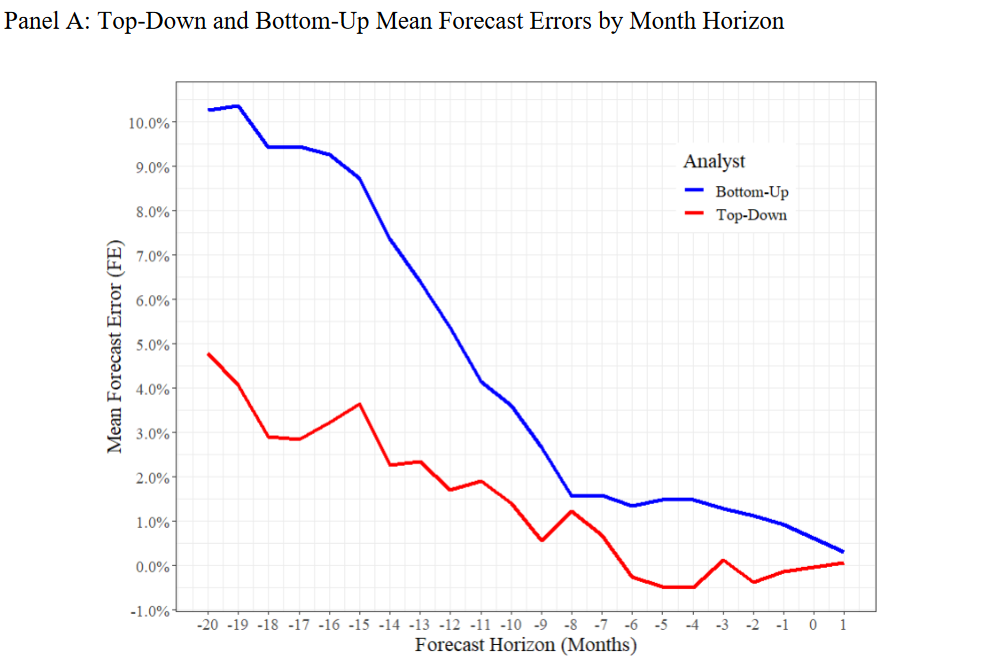
Published: March 18, 2024

Subscribe

To comment, please send an email to editor@investmentecosystem.com. Comments are for the editor and are not viewable by readers.

Three Books about Capital Allocation (Part One)

As the title indicates, this is the first of three postings on books which address the challenges of capital allocation.  Each one has a different perspective on that term — which is used in disparate ways in the investment world — and is written in a style unlike the others.

The book currently under review, The Climb to Investment Excellence, was written by Ana Marshall, chief investment officer of the Hewlett Foundation.  Its subtitle:  “A practitioner’s guide to building exceptional portfolios and teams.”

Marshall uses the analogy of mountain climbing throughout the book, which is structured as a series of moves from a base camp to the pinnacle.  Thematically:

Alpinism is similar to investing in that it is the interplay between the technical skills and endurance of the climber/investor and the conditions of the mountain/market that result in a successful summit.

Base camp

The preparations begin with setting up the right goals and structure “to maximize the probability of success.”  In the first two chapters, Marshall addresses investment objectives, constraints, risk tolerance, and time horizon, as well as creating the proper governance framework.

Marshall stresses that there is no one perfect approach.  Getting the staff, the investment committee, and the board on the same page is essential, knowing that circumstances may force unexpected changes in plans.

Also at the start, it is important to know the tools that will be used, so Marshall provides her perspectives on the attributes and applications of various public and private investment vehicles.  A few ideas from her that are worth referencing:

~ Hedge funds and real estate partnerships suffer from a common problem:  Investors use them in diverse ways and have divergent expectations.  Therefore it is essential that the purpose of those vehicles in the portfolio is clear and that there is an alignment with what the investment manager is attempting to deliver.

~ Regarding private equity buyouts, Marshall writes, “The goal is to create valuable companies that can flourish for decades after the GP exits the investment.”  It is hard to square that with how partnerships are actually structured and operated; decisions and actions are optimized for profitable exits, not for long-term sustainability.

~ “The closer the institution is to the theoretical or actual maximum illiquidity threshold, the greater the premium any [private] investment needs to have to earn a place in the portfolio.”

~ “Technical analysis can be useful as a trading tool.”

Up the slope

As Marshall moves to a series of “camps” progressing up the mountain, she deals with policy portfolios, benchmarks, and a variety of portfolio management and manager selection topics.

Policy portfolio.  Marshall argues against “a dogmatic interpretation of the efficient frontier,” preferring instead a “cloud of efficiency” that includes portfolio mixes that are close to the boundary of a mean-variance optimization but which incorporate subjective judgment.  The volatility used for private strategies in the analysis should reflect their inherent variability, not the stated historical numbers — and return projections should not include “hoped-for alpha generation.”

Active risk.  She thinks a diversified portfolio should be expected to have a tracking error of 2-3%, with the individual asset classes running 4-6% — and “a successful investment team aims to deliver a long-term information ratio of 0.50-0.75 or 100-200 bps above the benchmark alpha.”

Liquidity management.  Marshall:

While cash flow models have limitations, the sensitivity in the output from the models lies almost entirely in the behavior of distributions from the portfolio, and not in the pace of commitments.

Asset owners are experiencing this right now, with distributions lagging expectations, changing the liquidity profile of the portfolio overall and altering previous pacing plans.  (Also noted:  single-asset continuation funds and direct investments lead to increased difficulty in modeling distributions versus typical funds.)

Secondaries.  In addition to forced sales due to liquidity issues, over time there has been an increase in the active management of private holdings in the secondary market.  The book covers the trade-offs involved in such transactions, as well as operational considerations.

Manager selection.  This section starts with a quote from John Krakauer’s Into Thin Air, in which he says that half of those at a Mount Everest base camp are “clinically delusional.”  The analogy is to the investment managers who are “eternal optimists, and, perhaps delusional” when it comes to their ability to add value.  (It is also true that some doing due diligence may believe that they are properly prepared to evaluate managers when they aren’t.)

Marshall wants to find A-rated teams with A-rated opportunity sets, and places heavy emphasis on organizational analysis:

Through the process, the CIO and team should come to understand how the managing partners at the GP make decisions, admit mistakes, recruit and develop talent, and align incentives to promote a healthy culture.

There are comments on various aspects of the due diligence and selection processes, with reminders that there are a range of choices in implementation.  Here are some worthwhile excerpts:

It is impossible from the outside to know everything about an investment firm or predict how the partners will act when things go south (in markets there are always challenging periods).

Since the cost of being wrong is higher, the hurdle for adding a new private manager and underwriting a follow-on commitment to an existing manager is higher in private assets than in public asset classes.

While checklists can be useful in ensuring all diligence items are covered, if an investor is focused on getting items checked off they may not be listening to the manager for clues that perhaps contradict key areas deemed important by the organization.

Successful investment teams have designed due diligence processes that hold themselves to the same exacting standards they expect their managers to complete before they invest the organization’s capital.

(The last point reflects an effective pushback in a situation where an asset manager is not providing information that a person doing due diligence is seeking.  A researcher being rebuffed should ask, “Would the members of your team settle for inadequate disclosure when investing our money?”)

The chapter on manager selection closes with Marshall’s thoughts about examining the biases that can creep into a portfolio and “knowing when to quit” a manager — with examples that illustrate when “the evolution of the firm or the opportunity set may be reason enough to walk away.”

Manager relationships.  At several points throughout the book Marshall references (and reverences) relationships with investment managers, especially those in the private arena where, when Hewlett considers a new manager, they assume they “are making a decision for three funding cycles.”

Hewlett uses the term “partner” to indicate the kinds of relationships they would like, and it seeks to earn the trust and respect of those providers so that it can continue to get access to managers and is a first call for opportunities even if its size may not warrant that.  It wants to be “a reliable source of capital.”  All of that makes sense.

However, for asset owners, including Hewlett, the power in the relationship in terms of access and sizing (and pricing) is in the hands of the general partners, so it can be difficult to walk the line between relationship building and impartial analysis.  In that regard, finding out that “feedback from several GPs” is an element in the performance reviews of the members of the Hewlett investment team makes one wonder as to whether the balance is tipped too far in one direction.

Relationships, courage, and trust

The last part of the book, “The Summit in View,” focuses “on the importance of relationships, and the role of courage and trust.”  There are thoughts about culture, structure, needed skills, decision making process, leadership, compensation/incentives, and performance reviews as they relate to the creation and nurturing of an outstanding investment team.

Also covered are relationships with an investment committee and board of directors (connecting back to the groundwork laid in the governance section), fellow investors, and asset managers.  Finally, there is a chapter on “Managing the Self.”  Marshall stresses the need for a clear investment philosophy, as well as the technical skills appropriate for a given role and the qualities of curiosity, creativity, confidence, compounding knowledge, and connecting the dots.

Using the book

As with much communication in the investment realm, books like this face the challenge of meeting the needs of people with different levels of expertise and interest.  In the prologue, Marshall writes, “This book is a handbook to help anyone with a fiduciary responsibility for overseeing or managing significant sums of capital.”  That would include people who are members of governing bodies and those who are actively involved on investment teams.

For those in the second group, who are already familiar with the material, the book serves as a way to compare practices and perspectives, and to look for areas of difference that can be debated and investigated as a part of continual improvement efforts.

Its most natural audience will be those in governance roles, who can benefit from the breadth of topics covered in an accessible fashion.  There are a number of good exhibits that frame individual topics and pose questions for fiduciaries to consider.  The one shortcoming is that the glossary is very skimpy, leaving out many definitions of terms used in the book that would be helpful for those who are early in their governance responsibilities and don’t have a lot of investment experience.

Occasionally the mountain climbing analogies seem forced.  And, while the elements for the management of an investment function are well covered, thinking of them as stages in a linear progression to the summit raises questions about the order in which the topics appear.  That’s especially true for the closing chapters about people and creating an organization that makes good decisions.  Marshall places those topics at the end as an indication of their importance in reaching the top of the mountain, but they could also have appeared at the beginning, to convey that without them as a foundation you would be bound to fail somewhere along the way.

Successful investing

In the prologue, Marshall writes, “Being successful in investing requires a mix of theory, practice, and luck.”  She provides a nice mix of the first two, as well as a number of examples of the vagaries that arise in an uncertain, complex system.  Preparation and discipline are essential, but so are humility and adaptability.

Her general philosophy is well summarized in a list she includes in the book of the characteristics of successful investors.


The complete series may be found here.

Visit the archives for more essays in the Asset Owner and Due Diligence categories.

Published: March 15, 2024

Subscribe

To comment, please send an email to editor@investmentecosystem.com. Comments are for the editor and are not viewable by readers.

Investment Motivation, Technological Disruption, and Private Credit Gaps

The last posting here, “Inside a Powerful Narrative Creation Machine,” is one of the most popular ever.  It concerns Bridgewater, a fascinating case study of leadership and organizational behavior.  While it is unique in many ways, questions about analyzing that firm apply equally to other asset managers.

To receive emails whenever a new posting is released, subscribe here.

And now, a great crop of readings for you.

Investment motivation

Christopher Schelling wrote an intriguing posting on LinkedIn, “Theories of (Investment) Motivation,” that provides a series of interlocking ideas for assessing private asset managers.

The first part of it involves the never-ending question of whether to rely on historical performance for selection decisions.  Schelling:

One tenet of investing which we are all taught is that past performance is not indicative of future returns. That may be true; however, past behavior is the strongest predictor of future behavior.

Regarding the decline in persistence for buyout firms over the past two decades, Schelling thinks that the academic work illustrating that downtrend is flawed, since those responsible for the initial returns often leave to start their own shops; following the people rather than the brand is a better way to judge persistence.

For all involved (and, for all of us, period), there are intrinsic and extrinsic motivations that drive behavior.  On the extrinsic side of things, the paydays come from performance on the one hand and asset fees on the other.  Schelling argues that managers should be evaluated on what he calls the “X Ratio” (for extrinsic), which compares the variable compensation and capital gains of the general partner to its cumulative fixed fee income (historically and/or prospectively), in order to assess the proclivity for a performance orientation versus an asset gathering one.

He also calls for the use of an “i Ratio” (the small i standing for intrinsic), based upon the personality profiles of the general partners involved (ascertained through online tests).  That kind of assessment is uncommon and, for some at least, controversial.  But Schelling uses the output of work he has done in that regard to show how personality profiles vary across venture capital, buyout, and growth equity firms.  Importantly:

There was often a high degree of correlation between the i Ratio of the team and the relative contribution of the respective driver of returns, and the higher that correlation, it appears the higher the persistence of return for those managers.

Put together, these thought-provoking ideas should prompt further examination by those involved in due diligence and manager selection.

Technological disruption

A new paper from Alistair Barker, Ashby Monk, and Dane Rook is titled “Technological Disruption and Long-Term Investors: Managing Risk and Opportunities.”  For most asset owners, technological disruption “has no consistent role in their core processes for assessing, monitoring, and handling risks to their portfolios.”  The emergence of artificial intelligence as a potential disruptive force highlights the ongoing need to consider how incumbent positions in a portfolio might be affected negatively and new exposures might be added when such dislocations occur.

Four significant hurdles impede the implementation of a coordinated approach to anticipating and dealing with disruptions:  disengaged leaders, who don’t see how disruptions can be tracked, managed, and capitalized upon; the prevailing mindset (“institutional investment organizations are rarely set up to be innovative; their governance and resourcing structures are geared around incremental changes to the portfolio and organization”); fragmentation of portfolios and teams; and misaligned incentives.

The authors outline a framework for going beyond conventional industry, sector, and asset class categorizations to establish a research function that acknowledges the way technological disruptions can fundamentally change the investment landscape and shatter the boundaries of existing practice.

Private credit gaps

A decade ago, you couldn’t find a bucket for private credit in the asset allocation schemes of hardly any asset owners.  Now it’s the talk of the town.

Many smaller allocators of capital continue to ramp up their exposure or are just getting started.  And even some behemoths are still adding; Reuters reported that six of Canada’s biggest pension funds (more about them in the “other reads” section below) “have begun a major expansion into private credit.”  According to the FT, wealthy individuals also are investing more in the area, in part because “real estate does not have the shine it had before.”

But there are reservations and differences of opinion about how the strategies (there’s a mix of them under the broad umbrella) will perform in different interest rate environments; an FT article includes conflicting views from some large pension plans.

Of great interest is a recent Bloomberg piece, “Flawed Valuations Threaten $1.7 Trillion Private Credit Boom,” which includes the above illustrations.  The gaps speak for themselves.

Crypto factors?

Sparkline Capital’s latest research report concerning “crypto factor investing” contends that the debut of Bitcoin ETFs “marks a symbolic embrace by the financial establishment,” signaling that “Crypto is now for adults.”

That said, “As skeptics are quick to point out, the small-cap space is rife with hype, vaporware, and outright scams.”  Nonetheless, Sparkline parses the universe and charts four factors akin to those popular in the equity realm:  market, momentum, small-cap, and intangible value.

At FT Alphaville, Robin Wigglesworth takes the other side of the trade, calling it all “deeply silly” (while complimenting Sparkline’s other research output).  As to the rush from big name firms to get a piece of the action:

It’s incredible that this needs to be spelt out, but the only reason why the likes of BlackRock, Fido, JPM and the Big Board have gotten involved is because they are in the money extraction business.

Place your bets.

Evolving perceptions

Vontobel published an article, “A question of perception: how quality investing evolves over time,” that tracks how the notion of “quality” has changed over the years.  As the chart’s title notes, perceptions change, “adapting to the market sentiment of the time” — a foundational principle of investment behavior.

Other reads

“Private Equity’s Second(ary) Act,” Phil Huber, Cliffwater, via LinkedIn.

The secondary market has matured over the last several decades into a robust and dynamic ecosystem fueled by growing investor demand for liquidity, portfolio optimization, and strategic capital deployment.

“A Perspective on Private Equity NAV Loans,” Peter von Lehe, et. al, Neuberger Berman.  This includes descriptions of generally positive, neutral, and negative examples of usage of NAV loans for acquisition financing, capital infusion, and accelerated distributions.

“On the Sustainability of the Canadian Model,” Eduard van Gelderen, SSRN.  Investment beliefs, asset allocation groupings, and some possible changes ahead for the “Maple-8.”

“Embracing difference: Why investment teams must be cognitively diverse,” Simon Hoyle, Top1000Funds.

Cognitive diversity does not automatically arise in a team just because it has a range of subject-matter experts. And sometimes it’s a diversity of cognitive skills that allows specific subject-matter expertise to be linked together in new and productive ways.

“The Ripple Effect – Finding Company Connections from Detailed Estimates,” Liam Hynes and Temilade Oyeniyi, S&P Global.  Can alpha come from something as simple as leveraging the co-coverage of firms by sell-side analysts?

“Buffett and Three Hedge Funds,” Roger Lowenstein, Intrinsic Value.

[Citadel, Millennium, and Point72] regard investors not as partners but as pigeons.  They practice their own form of socialism (socialism to benefit the privileged, mind you), extracting a tax on the owners of capital.  Berkshire is different.

“A Structural Alpha Opportunity,” Ben Nabet and Joe Auth, GMO.  Mismatches in credit ratings versus default risk in securitized credit, including three case studies.

“How to Overcome Performance Pressure,”  Brett Steenbarger, TraderFeed.

The higher profile the trade — i.e., the greater the perceived opportunity — the more room there is for performance pressure.  As Epictetus observes, the issue is not the “real problems” about the trades, but rather the “anxieties” about those trades.

“Seasons of Finance,” Byrne Hobart, Capital Gains.  The day-to-day workings of many investment jobs change throughout the year according to regular patterns, as exemplified by this posting regarding stock analysts.

‘You Have Time,” Ian Cassel, MicroCapClub.

We sprint at new ideas like it’s the last cup of water in a desert.  The result is most microcap investors rush into things too soon.

“2023 RIA Risk Survey,” Golsan Scruggs.  This well-conceived document shows survey results regarding ten risks, plus short definitions of each one, questions regarding the management of the risk, and the legal substantiation for paying attention to it.

The whole problem

“The whole problem with the world is that fools and fanatics are always so certain of themselves, and wiser people so full of doubts.” — Bertrand Russell.

Flashback: Robert Noyce

In 1997, Forbes ASAP published “Robert Noyce and His Congregation,” a piece by Tom Wolfe which included a new introduction fronting an excerpt from a 1983 Esquire article by Wolfe about Noyce’s pivotal roles at Fairchild Semiconductor and Intel.  (The Internet 1.0 look of the article is appropriate — long-dead ASAP was one of the earliest magazines devoted to the “Information Superhighway.”)

Wolfe found his theme in the mores of Noyce’s hometown of Grinnell, Iowa and of the Congregational Church, where, “To all intents and purposes, there were only two social classes:  those who were hard-working, God-fearing, church-going, and well educated and those who were not.”   The contrasts between the culture that was created in Silicon Valley — “paved entirely by geniuses from the Midwest and farther west” — and the prevailing model of corporate leadership and hierarchy of the day were sharply drawn by Wolfe.

The article ends with this summary of Noyce:

He wasn’t a boss.  He was Gary Cooper!  He was here to help you be self-reliant and do as much as you could on your own.  This wasn’t a corporation . . . it was a congregation.

Postings

In the archives, you’ll find all of the previous editions of the Fortnightly, as well as essays on important ideas from around the ecosystem.  For example, a series of postings about Talent, a book by Tyler Cowen and Daniel Gross, and ideas regarding human capital in the investment world.

Thanks for reading.  Many happy total returns.
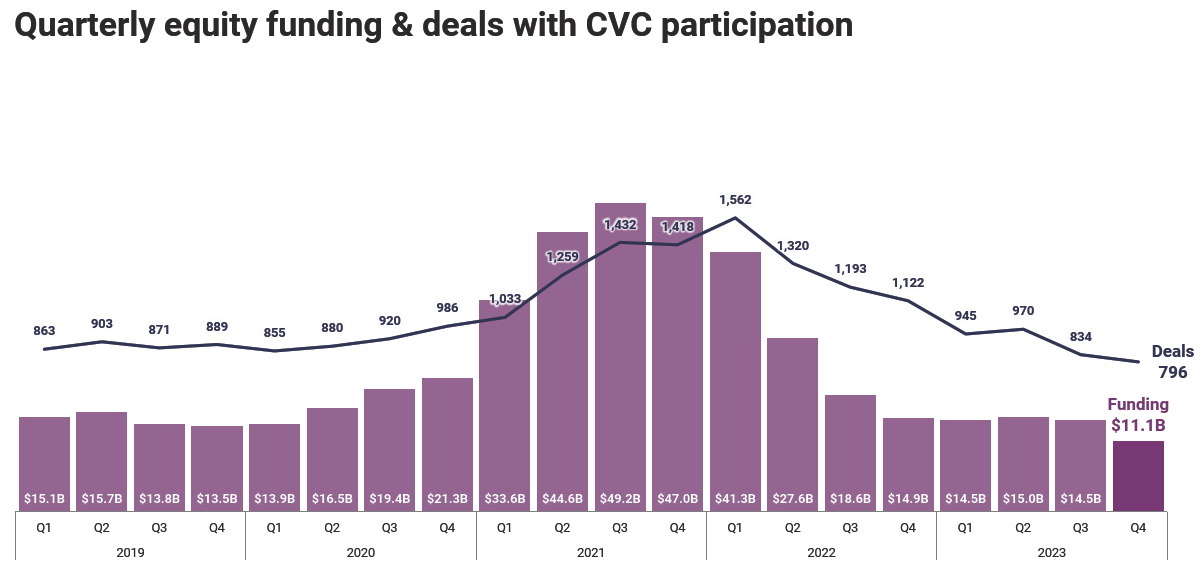
Published: March 4, 2024

Subscribe

To comment, please send an email to editor@investmentecosystem.com. Comments are for the editor and are not viewable by readers.

Inside a Powerful Narrative Creation Machine

The Investment Ecosystem course on due diligence and manager selection is designed to give allocators exposure to concepts and tactics that they can apply to the qualitative analysis of asset managers.

An investment memo that recommends hiring a manager summarizes its philosophy, people, process, decision making, pedigree (the subject of our last posting), and the like.  If you view such a memo next to the marketing materials of the manager in question, you can see how closely the descriptions resemble each other.  Often they are very similar, without any significant elaboration or evidence of independent discovery having taken place.

On one dimension, asset management firms are narrative creation machines.  That’s not surprising, since all individuals and organizations are such machines by nature.  We curate (even create) our stories for others.

The job of someone doing due diligence is to crack that narrative and to find the reality behind it.

Standing apart

The culture module of the due diligence course offers a number of ways to analyze and classify an organization’s culture; the goal is to get past the way those involved say they get things done to find the way that they really get things done.  That requires inquiries that go beyond the standard fare found in manager questionnaires and interviews.

Since the course was created in 2020, this slide has appeared at the end of the culture module:

The ledger had been introduced earlier in the course to emphasize the importance of identifying the factors that differentiate one manager from others.  Its normal application would involve listing the “same as” and “different than” attributes of the manager.  In this case, it was used to show that Bridgewater had positioned itself as being different — and better — than others when it came to organizational culture.  The module closes with a case study about the firm.

The book

In the fall of 2023, The Fund was published.  The book, written by Rob Copeland, is subtitled “Ray Dalio, Bridgewater Associates, and the Unraveling of a Wall Street Legend.”  It paints a withering picture of Dalio and the culture he created at the firm.

In a sense, it is narrative versus narrative, Dalio’s utopian descriptions of “radical transparency” as the ultimate in organizational behavior and Copeland’s account of a dystopian reality much different from the advertised version.

If you check the reviews on Amazon, you’ll find people who said they worked at Bridgewater giving it one star and calling it a hit job — and others awarding it five stars and saying it is a dead-on portrayal of the environment and events at the firm.  Dalio posted his objections to the “tabloid book” on LinkedIn, and an interview with Copeland on the Longform podcast includes background on the investigative process and the fact-checking regimen that was involved before his account was published.

While the whole book is worth your time, sections of it (and reviews about it) are available online; an edition of the Fortnightly after the book’s release included links to excerpts published in a number of high-profile publications, and an article from the New Yorker provides an excellent overview of the themes of the book.

The backdrop

Dalio created the firm as a research consultancy and not long thereafter began publishing “Daily Observations,” which summarized his economic and market views.  After a decade Bridgewater began to manage money and quickly started an ascent that led to it becoming the world’s largest hedge fund, a rise that was driven by good investment results and a reputation for client service and effective communication about big picture issues of interest to investors.

On the investment front, Dalio claimed to have a systematic method of investment, based upon a series of if-then actions that mapped what he came to call the “economic machine.”  But over the past two decades, his focus turned to a machine of a different sort — Bridgewater as an organization — and to the propagation of his behavioral and management principles to a wider audience.

Principles

Inside the firm, Dalio had been promoting those Principles (capitalized here in concert with both Dalio and Copeland) as the key to personal and organizational effectiveness.  Over time, they became an end in themselves rather than a means to the end of investment excellence.

Employees were judged via “baseball cards” on a large number of attributes that Dalio felt represented the practical application of his doctrine.  Improved technology allowed for the creation of the Dot Collector, the Dispute Resolver, PriOS (the Principles Operating System), and the Book of the Future, each new attempted iteration adding more complexity.  In addition there were “issue logs” to be filled out if you had a complaint about something or somebody — about matters from the important to the comically mundane.

The premises were outfitted with cameras, so almost all meetings were recorded and available for replay in the Transparency Library.  Some were edited for training purposes (allowing for the possibility that the radically-transparent original was compromised by a motivated editor).  There were mandatory Principles training films and tests.  All of this activity became more and more time consuming for employees, and created an environment of criticism rather than cooperation.

To judge the implementation of the ideas within the firm, Principles Captains were appointed, as well as Auditors and Overseers, with a Politburo above all.  (Copeland:  “Though theoretically meant to adjudicate disputes, the Politburo often created new ones.”)  And public trials for some accused of not living up to the Principles.

Stop for a second and — based upon your own experience in organizations — imagine what kind of a culture might result from such structures.

In the book, Dalio comes across as mean and manipulative, definitely not a leader whose own behavior modeled the behaviors he espoused.  And while he would publicly state that even the lowest person on the organization chart could give him a poor grade as a part of the daily feedback collection process, in reality he had his thumb on the scale.  The system was tweaked so that he was ranked highest in “believability,” a key factor in determining how collective input was aggregated; everyone else had to earn their rankings based upon the assessments of others.

The promised meritocracy was compromised in a variety of ways, and ultimately a new Principle backed away from the ones that had come before:

Expect those who receive the radical transparency to handle it responsibly and don’t give it to them if they can’t.

Descriptions of the working environment cited in the book include “living in a psychology experiment,” “a feedback loop of self-destruction,” “a religion,” and “a fraud” (not a financial one but a cultural one).

Dalio sought out academics and journalists who would put their stamp of approval on his ideas.  Some did, including Adam Grant in his book Originals: How Non-Conformists Move the World.  A psychology professor published a working paper based on interviews with just twelve Bridgewater employees, selected by referral.  (It is not referenced in the book and can no longer be found online.)  The paper concluded:  “Results indicate that it is possible to actively implement a learning culture in an asset management organization.”  However:

The rating tools, polls and the forced ranking is a way to ensure that the underlying goal of having “the right people doing the right things” (Dalio, 2011) is fulfilled.  Although many of these data gathering methods can be very well understood within a learning context they can appear cruel and inhumane.  In order not to be emotionally harmed within this type of system a person must truly value learning over pride.  It implies a deep love and acceptance of oneself and a profound trust that the system is well functioning.  If any of these conditions is not fulfilled, people might be seriously emotionally hurt in this environment.

Dalio hired an acknowledged computer science expert, David Ferrucci, to convert his Principles into a one-stop system for managing organizations.  Copeland:

Ferrucci, the AI expert, shared with colleagues a gradual awakening:  Dalio’s system contained more artifice than intelligence.

Promotion

One (internal) version of the ever-changing list of Principles was made public by Dealbreaker in 2010.  (That set, which featured 42 pages of overview and explanation, along with descriptions of 210 Principles, can be found here.)  After that, Dalio took his ideas to the public in a variety of ways, including three books about the Principles (among others from Dalio), apps and personality assessments, and a TED Talk (“How to build a company where the best ideas win”).

That presentation included personal reflections by Dalio (“What an arrogant jerk!” he said after showing a video of himself from decades before), a demonstration of the non-stop grading of everyone by everyone at the firm (“Yup, we really do this”), and an explanation of his motivation:

I wanted to make an idea meritocracy.  In other words, not an autocracy in which I would lead and others would follow and not a democracy in which everybody’s points of view were equally valued, but I wanted to have an idea meritocracy in which the best ideas would win out.

He ended by saying, of the radical transparency that was coming for all of us, “I hope it is as wonderful for you as it is for me.”

Investments

The Fund is mostly about the people and culture at Bridgewater — and not much about investment process.  But well before the book’s publication, the investment function at the firm seemed odd to others in the business.

Bloomberg columnist Matt Levine referenced that divide many times over the years, including in a 2022 piece:

I have joked that Bridgewater has a computer that picks the investments, and a lot of interpersonal drama and management hooey to distract the human employees so they don’t interfere with the computer.

In Copeland’s telling, very few people at the firm had any idea how investment decisions were actually made.  Only ten or so out of the couple thousand at the firm were a part of what Dalio called the Circle of Trust.  They were given lifetime contracts and allowed to see the inner workings of the investment process that was advertised as systematic, based upon if-then rules built up by Dalio over time.

But the evidence of such a system is elusive.  In a footnote, Copeland cites an arbitration case that Bridgewater brought against two former employees:

The panel wrote that Bridgewater “argued that its economic success as a hedge fund supported its assertions that it had and has valuable trade secrets but . . . produced no evidence of a ‘methodology’.”  What Bridgewater claimed as its trade secrets were “publicly available information or generally available to professionals in the industry.”

To the extent that an information advantage did exist, it stemmed from Dalio’s assiduous cultivation of government officials around the world.  Gleanings from them were important, but not systematic.

The machine in the investment realm was like the organizational one:  promised as algorithmic but far from it in practice.  Dalio could make decisions in the moment, despite the preestablished rules that were to be followed.

Narratives

The specifics of Bridgewater make it an unusual case, but the overriding concern is universal:  To what extent should we believe the stories that we are being told?

By all accounts, the firm has been good at client service and investment narratives.  From the earliest days, Dalio saw the importance of communicating investment ideas.  The success of Daily Observations was attributable to the desire on the behalf of asset owners for that kind of content and the ability of Dalio/Bridgewater to deliver it.

(A 2021 Capital Allocators interview with Greg Jensen, co-CIO of Bridgewater, is a good example of someone speaking in depth about the investment landscape.)

Clients and prospects are drawn to people who sound smart about economic and market events and possibilities.  (That’s why most investment committee meetings have entirely too much of that content.)  But of more lasting importance to long-term success are the underpinnings of an organization’s leadership, culture, structure, and process.

Bridgewater told good stories about its culture and its investment process, but how true were they?  Copeland’s book punches holes in the narratives, but it doesn’t address an important question:  Did the theory of radical transparency or even pretty-good transparency extend to Bridgewater clients?  Given the secrecy about its methods, apparently not.

Due diligence questions

For those charged with doing due diligence on managers, studying Bridgewater surfaces some foundational questions for any evaluation:

~ Why do you believe what you believe?

~ How do you discount the things that you are told but aren’t allowed to verify yourself?

~ What techniques can be used to crack the narratives that are fundamental to your selection and retention decisions?

~ To what degree do you allow narratives about the economy, markets, and investment opportunities to influence your thinking versus evidence of how an organization operates and makes investment decisions?

~ Where is the line between a firm’s claim of proprietary information and a client’s right to know?

~ When faced with the frequent turnover of people in key positions — and/or the constantly changing retirement plans of a founder — how do you change your view of an organization?

~ If there are uncertainties or qualms about a firm but performance has been good historically, do you act on the concerns (or at least investigate them in new ways) or wait until performance deteriorates?

~ What do you think when the old saying “No one ever got fired for hiring IBM” is altered to refer to a manager on your roster?

A new day

With Ray Dalio having officially retired, Bridgewater has an enormous pile of assets to protect, and it is no doubt busy defending its previous story while promoting a new one.

Through his extensive research and reporting, Rob Copeland has provided a gift, in that investors have an excuse to dig further than they ever have before, to discover whether the Bridgewater that was marketed was realistic — and how its current incarnation is the same or different than its past one.

In the due diligence course, right after the introduction of the concept of differentiation comes that of “edge.”  Not all differences add value.  Some subtract.

The narrative creation machines are always running.  Due diligence is about finding what’s real.


If your organization would like to explore new ways of doing qualitative due diligence, please get in touch.

Published: February 21, 2024

Subscribe

To comment, please send an email to editor@investmentecosystem.com. Comments are for the editor and are not viewable by readers.