Four for Friday ~ More on Private Equity

The previous posting, “Revisiting Beliefs about Private Equity,” explored the broad range of expectations about private equity, the changed nature of the investments being made, and the need for asset owners to take a fresh look at their approach.  Here are some other readings to ponder.

Certainty and uncertainty

In 2020, DWS and MJ Hudson published a report, “Rational or Emotional? The Real World of Private Equity,” based upon research by David Cooper and Richard Taffler.

It is part of a thread of “emotional finance” work from Taffler, which includes a great monograph (“Fund Management: An Emotional Finance Perspective”) co-written with David Tuckett for the CFA Institute Research Foundation (reviewed here).

Among the conclusions in the 2020 piece was that there is “a contradiction at the heart of private equity”:

Although actual investment outcomes are by their nature inherently unpredictable, PE practitioners are required to present a sense of certainty to their stakeholders, and need to believe this themselves.

Of those practitioners surveyed, 96% agreed or strongly agreed with the statement, “Living with uncertainty is an unavoidable part of my work.”  Yet more than 80% answered in similar fashion to this one:  “For us to convince our stakeholders, we need to convey a sense of certainty.”

That dissonance is not exclusive to private equity, but rather is endemic in the investment industry.  The difference is that everyone can see the errors in real time in public markets, while the shroud over private equity allows certainty to be sold more easily.

Access and analysis

An Institutional Investor article, “Desperate for Access to Flagship Funds, Allocators Struggle to Say No to GPs,” by Alicia McElhaney has drawn a lot of attention.  It reported that private equity managers “are getting pushy in the fundraising process, and there’s no clear way out of it.”

A pension fund chief investment officer was quoted as saying, “When they’re launching new strategies, it’s not even a gentle suggestion.  It’s pretty much like you do it or you’re going to be cut off.”

Asset owners, with rare exceptions, are price-takers when it comes to alternatives.  For fear of losing out on future opportunities, it appears many are fund-takers too.

Questions of access cloud the due diligence process and lead to “re-ups” that might not otherwise have been done.  One quote references contacts who have said that private equity teams are becoming more “about managing relationships with the firms as opposed to doing diligence.”

With references to gaslighting and ghosting, it does all sound like relationship drama.  What happens to the analysis?

Public pension plans

Maryland Law Review has published a paper by William Clayton entitled “How Public Pension Plans Have Shaped Private Equity.”  It argues that “public pension plans have left a deep imprint on how the industry operates, and the industry’s operations have enormous consequences for the fiscal health of states and localities across the country.”  Reasons cited in the abstract:

First, public pension plans have complicated the orderliness and efficiency of private equity contracting by introducing several distinctive non-market incentives and requirements to the industry.

Second, large-scale investment in private equity by public plans has also increased the number of ordinary people who are impacted by private equity fund performance.

Third, the massive flow of public pension capital to private equity over the years has also had important implications for capital formation dynamics and the distribution of bargaining power in the private equity industry.

The RIA rush

The hottest areas of the business over the last two decades are private equity and investment advisory firms, especially independent RIAs.  They go together, in that the ever-increasing multiples paid for RIA firms are driven largely by private equity money.

A February article by Andrew Foerch for Citywire RIA is titled “Here’s what private equity funds see in RIAs.”  It includes a list of some of the more notable investments in those firms.

The piece covers the driving force of consolidation in a fragmented industry, as well as the organic growth trends (especially among “upmarket clients”) that provide a tailwind.  In terms of business models, one person was quoted as saying that the firms “are actually not as volatile as you would think.”

Today’s environment might provide a test for that assumption, with both stocks and bonds down this year (and yet still highly valued relative to history, in the face of troubling inflation and interest rate trends).

Those involved think that the growth of independent RIAs is still in the “early innings,” and that “even conservative PE investors generally agree on the RIA industry’s lofty growth prospects.”  But the prices that have been paid are lofty too, in line with those expectations.  Private equity buyers have a lot of dry powder on hand — will they keep pressing ahead or rest for a time?

Published: June 3, 2022

Subscribe

To comment, please send an email to editor@investmentecosystem.com. Comments are for the editor and are not viewable by readers.

Revisiting Beliefs about Private Equity

A recent Wall Street Journal headline, “Wealthy Investors Pile Into Private Equity to Escape Stock Volatility,” was followed by this paragraph:

Individual investors are increasing their bets on private-equity vehicles, hoping that these funds’ long-term horizon will offer a refuge from volatile public stock and fixed-income markets.

Apparently, investors “are attracted to the premise that private funds can avoid daily price swings and potentially scoop up bargains when markets fall,” since flows from individuals have picked up.  Also made clear by the story is that the purveyors of private equity have their sights set on individuals as the source of the industry’s future growth.

A representative of one firm said that demand for private equity would continue to grow, “as more investors reject a traditional 60-40 allocation between stocks and bonds”:

“Bonds have always been the ballast when equities are going down.  If they’re not, where do you turn?” he said.  Private-fund managers “will be the beneficiaries” of the turmoil in public markets, he said.

Private equity as Ballast 2.0.

The implications for investment advisors from the increasing interest by individuals in alternatives were covered in an earlier posting.  This one concerns the beliefs and actions of institutional asset owners in regard to private equity (and, by extension, other private asset classes).

Volatility

The title of another essay from The Investment Ecosystem was “Capital Market Assumptions as Explored Beliefs.”  There is a chart within it which illustrates the assumptions about different asset classes from nearly forty well-known consultants and investment firms.  For private equity, there are projected “standard deviation assumptions of less than 10% out to 35%.  The former must believe that the smoothed numbers reported by general partners represent the true volatility of PE, while the latter scoffs at such an approach.”

A new Verus report on a different private asset category reminds us of the general problem:

Interpreting the stated volatility . . . is tricky.  This is because, as with all privately-traded assets, the reported volatility of private assets understates the true risk of those assets, due to appraisal-based pricing and lag effects.  Investors do not know the true volatility of assets that are not traded daily on a market exchange.

The enormous spread in forecasted volatility for private equity indicates that the lack of knowledge has translated into a wide range of beliefs among those publishing capital market assumptions — and that is mirrored by those of asset owners.  Why does that spread persist?

It is of obvious benefit for the private equity industry to foster the belief that private equity offers lower volatility than public equity (an idea which can be strategically reinforced by a manager through its valuation and smoothing practices).  What’s less clear is why others involved in the process, like consultants, OCIOs, and actuaries, would offer low estimates of volatility (or not object to them when offered by others), although a cynic might say that increased complexity in a portfolio generally means increased fees for intermediaries over time.

The other factor:  In many cases, the low-volatility message fits with what the customer wants.  A generation of allocators has grown up working in and believing in private equity — and many investment committees and boards at leading institutions include private equity professionals.  They are effective promoters of the industry’s message.

On the other end of the expertise spectrum it is a different story, with many decision makers essentially holding the “Ballast 2.0” beliefs cited above.  The numbers say that private equity has been a way to get higher returns at a low level of volatility; that’s a formula for vocal support rather than for an examination of the risks that may be hidden or the possibilities for disappointment in something other than the benign markets of the last decade.

It’s equity

Among the many reactions to the piece in the WSJ was a tweet from Cliff Asness:  “Institutions are stuffed to the gills with expensive equity specially designed not for alpha but to allow them to pretend they don’t own equities.”

Asness is famously cantankerous — and conflicted in a sense, since his firm offers other kinds of investment products — but he hits on some important questions.  Are asset owners “stuffed to the gills” with private equity because it has been an easy, if duplicitous, sale?  How much of a factor has been the desire “to pretend they don’t own equities”?  Are private equity funds really not designed for alpha (but for asset accumulation, driven by that pretension)?

Unpacking those questions in a detailed way would require going well beyond a tweet or a blog posting, since there is a wide spectrum of asset owners, which vary as to asset size, allocation to private equity, history of exposure, and motivations for investing.  But there’s one thing that’s obvious.

It’s equity.

In case you’re unsure, recheck the name:  private equity.  Therefore, pretending it’s not equity is not an option, while being clear about its attributes is an absolute requirement.

Today’s environment

A February report from State Street was issued in the thematic category of “Enhancing Portfolio Diversity.”  It included this:

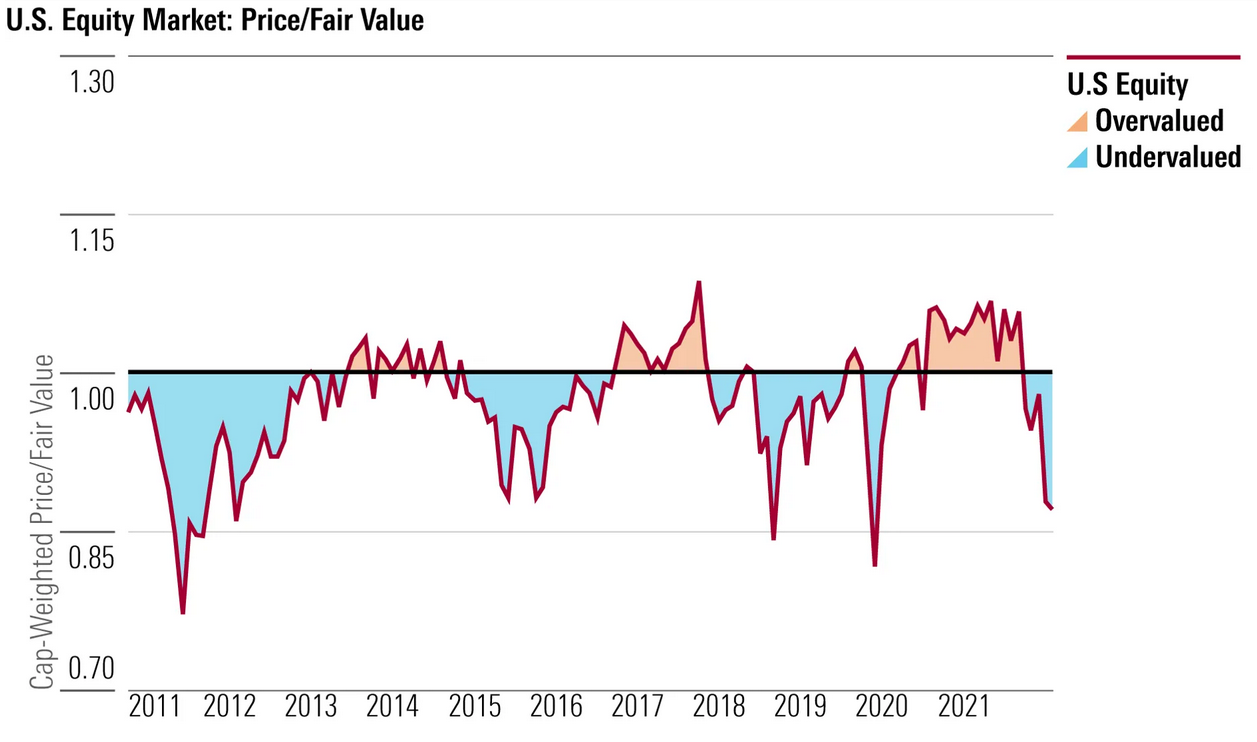
With valuations at high levels, there may be limited further upside for listed equity — particularly as the Federal Reserve is expected to start a rate tightening cycle.  Institutional investors may opt to increase their allocations to private equity to help them hit their return targets.

That’s one good example (there are many more) of the rhetoric that is broadcast into the marketplace by investment firms (and echoed by media outlets).  While some diversification from public equity is possible with private equity (since the universes of each are different in composition), that’s not what the excerpt above is implying.  It’s a simple entreaty to go to the private market if public equities seem like they might be overvalued.

Which brings us to what kind of equity private equity is — especially what kind of equity it is today — since its current nature will set the foundation for the returns to be captured over the coming decades; history may or may not serve as a useful guide.

Dan Rasmussen of Verdad recently wrote a piece called “Private Equity: Still Overrated and Overvalued?”  The title referenced his description of private equity from four years ago as being “overrated and overvalued.”  He was wrong, or at least very early; the party continued in earnest.

Now he thinks that “future returns look materially worse and future risks materially higher” than they did back then, and offers statistics indicating that the circumstances today are substantially different than the ones that led to the good returns of the past.

From Rasmussen’s conclusion:

The average US buyout transaction looks quantitatively like a highly leveraged micro-cap public equity.  In 2000, the average buyout was completed at a 50% discount to the S&P 500; in 2021, the average buyout was completed at a 10% premium to the S&P 500, during a period when S&P 500 valuations soared to near record levels.  To justify these prices, PE firms have shifted to growth sectors like tech and healthcare.  Leverage levels have increased.  Credit stats look significantly worse than B-rated corporate bonds.  In sum, PE LPs are paying higher-than-S&P 500 prices for near-distressed credit quality micro-caps with a heavy sector bias toward tech and healthcare.

Perhaps he will be wrong again.  But his description of the composition of private equity and its relationship to public equities can be verified elsewhere.  Given just the last sentence above, how volatile would you expect a portfolio with that makeup to be in absolute terms and relative to public equity?  What is the nature of the return distribution going forward given those valuation characteristics?  What kind of correlation with public equity is there likely to be?

Examining beliefs

At a time like this, when markets have been under pressure and talk of regime change is in the air, there’s more than enough to worry about.  It is hard to prioritize given all the balls in the air, to say nothing of taking the time to focus intently on something that for most is viewed as settled business, as a long-term commitment to be maintained.  But “beliefs about PE” ought to be on today’s research agenda for asset owners and their advisors — and on the upcoming meeting agendas for the investment committees and boards that are responsible for governance.

What could be more important?  Private equity has become exceedingly popular and is heavily used by many asset owners.  If their expectations for it are off kilter, it could cause major problems down the road.

There are many facets of private equity to consider beyond the capital market assumptions mentioned here, but they serve as a good framing device to start an examination of beliefs.  It’s time to clear away the misconceptions and reexamine the expectations for private equity and its role in portfolios for the future.

Published: May 31, 2022

Subscribe

To comment, please send an email to editor@investmentecosystem.com. Comments are for the editor and are not viewable by readers.

Four for Friday ~ The Role of Sell-Side Analysts

The “star analyst years” on Wall Street have been the topic of two postings here.  The first provided the overall backdrop of the times and the key players, while the second was based upon personal accounts of what it was like to be “in the belly of the beast.”

Given the availability of sell-side ratings, recommendations, and target prices, buy-siders and academic researchers alike have analyzed the “performance” of analysts (although those studies don’t capture the value of other inputs that they provide to the decision processes of investors).  How will their role change going forward?

Great quarter

Quarterly earnings conference calls feature analysts asking managements questions — and offering comments to them, usually of the puffy variety.  In “Great Quarter, Guys,” Marc Rubinstein wrote about the dynamics of the calls and how the title phrase and others like it indicate a trade of “public debasement in exchange for private access.”  Despite the mocking of that practice by others, it has increased in frequency rather than gone away.

(Natural language processing has been used for some time to evaluate the content of information provided by managements on those calls.  It is now being applied to the analysts and their questions as well.  One example.)

Robot analysts

Will robots be better as analysts than people?  From “Human versus Machine A Comparison of Robo-Analyst and Traditional Research Analyst Investment Recommendations”:

Robo-Analysts produce a more balanced distribution of buy, hold, and sell recommendations than do human analysts and are less likely to recommend “glamour” stocks and firms with prospective investment banking business.

Automation allows Robo-Analysts to revise their recommendations more frequently than human analysts and incorporate information from complex periodic filings.

While Robo-Analysts’ recommendations exhibit weak short-window return reactions, they have long-term investment value.

There’s also a cost consideration that could come into play, in the same way that Refinitiv forecasted the increased use of robot analysts in the investment banking department.

Non-deal roadshows

A column from Matt Levine offered “a basic model” of sell-side research.  Of great importance in that model are the meetings between institutional investors and company managements:

Wall Street research analysts are largely in the business of arranging those meetings:  They are intermediaries between corporate managers and big institutional investors, and so they set up meetings between them at investor conferences, “non-deal roadshows” (where a company’s executives fly around to meet with investors), etc.

Levine linked to a paper that studied such meetings and concluded:

Non-deal roadshows (NDRs) are private meetings between management and institutional investors, typically organized by sell-side analysts.  We find that around NDRs, local institutional investors trade heavily and profitably, while retail trading is significantly less informed.  Analysts who sponsor NDRs issue significantly more optimistic recommendations and target prices, coupled with more “beatable” earnings forecasts, consistent with analysts issuing strategically biased forecasts in order to win NDR business.

All evidence (here and elsewhere) suggests that Reg FD isn’t doing what it was supposed to do.

Following price

In February, Kris Tuttle wrote about Vertiv Holdings for Almost Daily Candy.  The company had reported a bad quarter due to inflation and supply-chain issues and the stock got hit hard.  That caused some analysts to slash their target prices and change their ratings.  Tuttle questioned the modeling and investment thinking behind those moves.  With many years of experience on the sell-side himself, he noted:

To be fair sometimes you have to do this so that you can have some impact later when you upgrade the stock in a few months at $17 and increase your price target back to $25.  That’s part of the game but not very useful for investing.

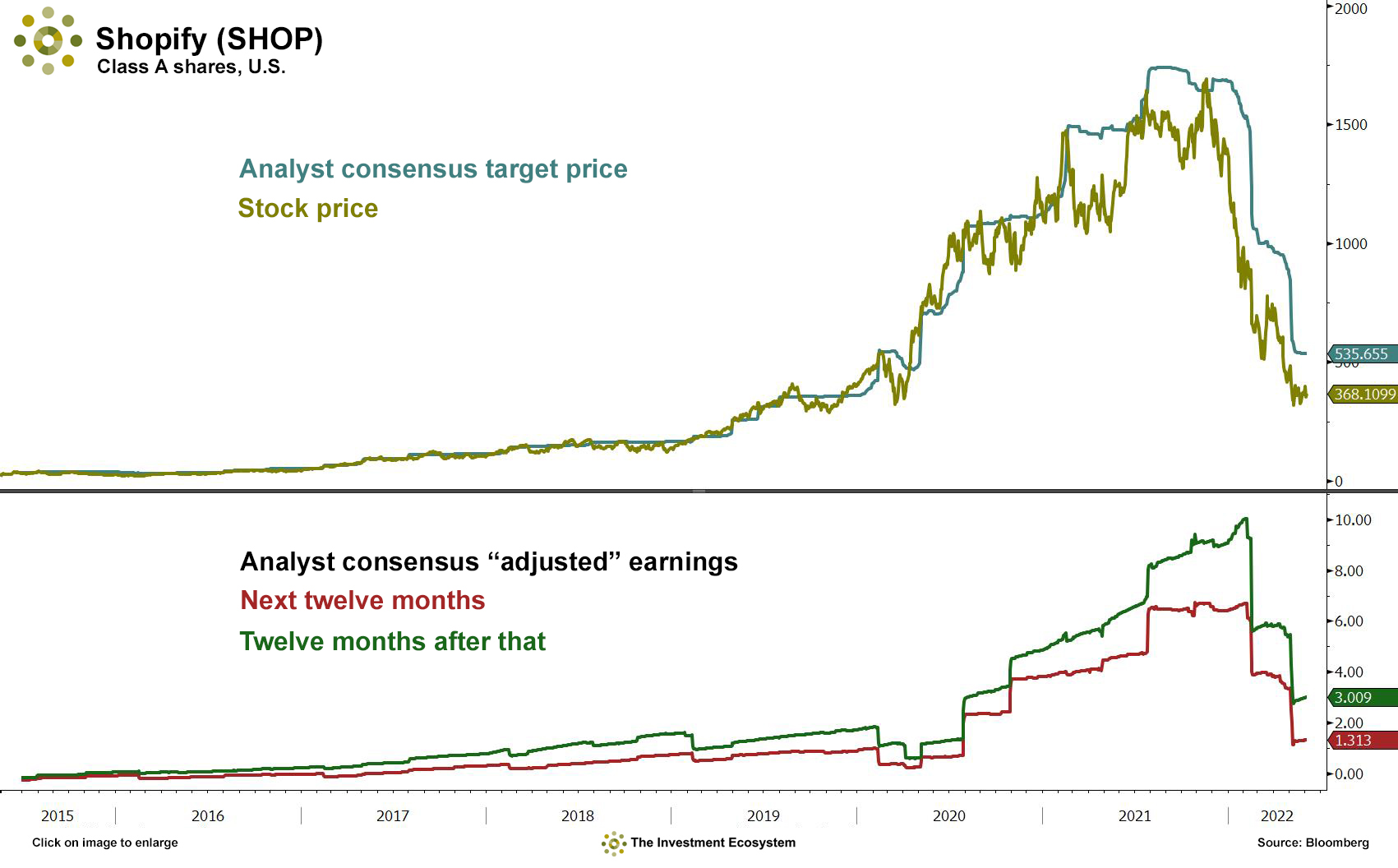
Ignoring the specifics of this case, how do “investing” and “the game” intersect for sell-side analysts when they adjust ratings, targets, etc.?  For example, the evidence shows that analysts move their target prices in response to stock price movements, even when nothing fundamental has changed.  Do you think robot analysts would react that way too?

Published: May 27, 2022

Subscribe

To comment, please send an email to editor@investmentecosystem.com. Comments are for the editor and are not viewable by readers.

Copycat Compliance, Gory Detail, and Patience

To date, the content in The Investment Ecosystem has been primarily made up of longer-form essays (with the exception of these Fortnightlies).  Going forward, there also will be “Four for Friday” postings for paid subscribers.

They will feature shorter items that are clustered around a theme, appearing within the existing posting categories and including a mix of new and historical material you may not have seen.  The postings won’t appear every Friday, but will include “Four for Friday” in the title so that you’ll know what you’re getting.

There’s plenty happening in the ecosystem right now.  60/40 is not doing what 60/40 usually does, freaking out those who have come to rely on it.  The broad-based markets are down and the list of crazy things happening in the risky stuff is very long.  Not much of that here, just good things to read.

Patience

Today’s environment could be described as one that demands patience, making a paper from Permanent Equity very timely.  It begins, “This essay could be a long-winded way of saying ‘good things come to those who wait.’  But the saying isn’t foolproof — waiting can easily lead to decay.”

It lays out “what it takes,” including “the ability to be patient,” which for some is a challenge:

If you don’t have the financial, mental, or emotional discipline to withstand a decline or a period of extreme underperformance, you don’t have the ability to be patient.

In addition, “you can’t lose your mind during periods of success” (but most people do).  The other requirements:  determination, a team, openness, trust — and gratitude, compassion, and humility.

The paper examines how time can twist us in knots.  The first part of it provides a frame for the back half, which uses the themes to set up a comparison between Permanent Equity’s perpetual approach to private equity and the standard industry structure.  In that way, it also illustrates how ideas can be used effectively by asset managers who want to promote their approach but offer something beyond a pitch to the reader in exchange.

Copycat compliance

William Heaston, a Ph.D. student at Wharton, recently issued a paper, “Copycat Compliance and the Ironies of ‘Best Practice’.”  While its subject is general corporate compliance, it has direct implications for investment compliance and other aspects of the industry.

Heaton identifies two “ironies” about “best practice” approaches.

First, there is nothing inherently “best” about them; more often than not, they reflect what is commonly done rather than what is most effective in some empirically validated sense.

And second, taking a formalistic, checklist approach may undercut the supposed goal, “the promotion of ethical behavior.”

Regulated industries like investments have rules that need to be followed, but beyond that, “normative isomorphism” is a powerful force.  What other organizations are doing, what industry organizations are advocating, and what vendors are selling all coalesce into a body of anointed best practices.  But do they really represent the best practices for your organization?

(The theme of isomorphism will be revisited later in other postings, since it helps to explain the profound sameness across a number of industry practices well beyond compliance.)

Gory detail

In “AIMA at work – Contending the contentious,” the CEO of that organization lays out the “gory detail and potential consequences for our industry” from the proposed SEC regulations regarding private funds.  A longer article by Joseph Grundfest calls it “The Most Curious Rule Proposal in Securities and Exchange Commission History.”

Another, even more contentious SEC proposal relates to climate change.  A previous Fortnightly included a description of a paper which argued that the commission was following precedent in putting the rules forward.  The other side of the argument comes from Roger Lowenstein (“The SEC Should Stay In Its Lane”).

Other reads

“Do we speak the same language? A Market Survey on the Future of ESG Ratings,” 2° Investing Initiative.

The majority of survey respondents . . . are in favour of abolishing aggregated ESG ratings that merge environmental, social, and governance issues, and replacing these ratings with individual “E”, “S”, “G” ratings.

“Ever read an article in Bberg or WSJ about a big fraud and wondered how so many professional investors were fooled?” @MarketBricoleur.  A walk through a 2017 Alliance Structured Alpha pitch.

“The Pitfalls of Asset Management Research,” Campbell Harvey, SSRN.  A summary of the issues in academic and practitioner research, including:

As with academic research, investors need to be skeptical of asset management research conducted by practitioners.  Indeed, one company might comb through the academic research and do its own data mining in order to launch many ETFs, fully knowing some will fail.  Nevertheless, the company receives a fixed fee.  Given the large number of funds launched, most remember the winners more than the losers.

Feedback: Information as a Basis for Improvement, with Michael Mauboussin,” Essentia Analytics.  A wide-ranging interview about Mauboussin’s paper (which was the subject of two postings on this site, here and here) and other topics.

“The Work-Life Balance Report,” eVestment and MJ Hudson.  Quoting Richard Taffler and David Cooper:

What came across from our research is that the private equity industry exists on a fundraising treadmill, with all parties being continuously barraged in different ways, so there is always something that needs doing, meaning it is very tough indeed to be able to block out time when it is possible to think.

“How Will You Know A Single Family Office When You Find One?” Marc Sharpe, TFOA.  A basic outline of the attributes and responsibilities of a family office.

“The Four Horsemen of Investing,” Don Phillips, Morningstar.

Complexity, concentration, leverage, and illiquidity are the four horsemen of the investor apocalypse, perennial threats that wreak havoc on portfolios and undermine even the best-laid plans of diligent investors and their advisors.

“Financial Stability Report,” U.S. Federal Reserve.  Everyone is wondering how far (and how fast) the Fed will go; this examines the four categories in its stability monitoring framework.

“IRR is a vanity metric,” Seth Levine, VCAdventure.  “Interim IRR is much too easily manipulated and in some cases incents behavior counter to the long-term benefit of LPs (and GPs).”

“What Are the Odds of Making a Good Investment?” Joe Wiggins, Behavioural Investment.

Why don’t investors like thinking in terms of odds?  There are two reasons — because it’s less exciting than the alternative, which is largely storytelling, and because it is perceived as too difficult.

“The Boston Celtics’ Players-Only Meetings,” The Daily Coach.  Would regular team meetings without “leaders” — in good times and bad — improve organizational health?

Doing it the right way

“I would rather have questions that can’t be answered than answers that can’t be questioned.” — Richard Feynman.

Round trip

MTUM, which “seeks to track the performance of an index that measures the performance of U.S. large and capitalization stocks exhibiting relatively higher momentum characteristics,” is shown since its inception.

Not only is this vehicle of interest because it is one of a vast crop of factor-related ETFs that came into being over the last decade, but because its methodology leads to huge rebalancings of its holdings.  A year ago, the rebalancing caused turnover of 68%, this year’s (imminent) restructuring is estimated to be around 75%.

Given the shift to value, the kinds of companies will have changed dramatically too.  Wells Fargo estimates that technology stocks will go from 31% of the fund to 10%, and financials from 24% to 7%.

The relative performance has done a round trip, and what investors own is likely different than what they think.  The cycles of market momentum aren’t scheduled; the rebalancings are.

Postings

A March posting, “Questions about the Dominance of Indexed Strategies,” was reissued as a Sampler offering, so it’s out from behind the paywall.

The Bond King, by Mary Childs, served as the framework for a series of postings about Bill Gross and Pimco:

“Cult and Culture in the Bond Kingdom.”  Organizational dynamics, Secretariat and the diplomat, pots of gold, and the fall.  Quite a story.

“Hunting for Edges that Others Didn’t See.”  Some of the more notable examples of the firm’s aggressive and unusual moves over the years.

“Challenges and Quandaries in Manager Research.”  Important questions spawned by the book for anyone analyzing asset managers.

Plus:

“In the Belly of the Beast.”  Personal accounts from two people at the nexus of the rise in technology stocks and massive changes in stock research on Wall Street.

Follow us on Twitter to see the Charts of the Day (such as ones on the retrenchment in venture capital, wide variations in REIT performance, and how a high valuation on a stock can disappear quickly) and more.

All of the content published by The Investment Ecosystem is available in the archives.

Published: May 23, 2022

Subscribe

To comment, please send an email to editor@investmentecosystem.com. Comments are for the editor and are not viewable by readers.

Challenges and Quandaries in Manager Research

In The Bond King, Mary Childs writes that a 2014 article by Greg Zuckerman in the Wall Street Journal

shocked those outside the bond market.  The infighting, Gross’s stringent rules on the trade floor, the crown of thorns?  It was a lot.  The Wall Street banks who covered Pimco knew how tightly wound things were in Newport Beach, as did competitors who’d hear the horror stories or who had interviewed there and run away in terror.  But outside of that, no one had had a clue, until now.

How about those investing with Pimco, those doing due diligence on it?  Did they have a clue?

Due diligence is the focus of this third in a series about Childs’s book.  (The first dealt with organizational dynamics at Pimco, the second with ideas and trades that illuminated its aggressive approach.)

If your organization has an archival research database that contains notes and reports about Pimco across the years, you should go back and look at them, whether they were internally generated or came from research firms that followed Pimco and offered advice to investors about it.

Can you find any comments about the toxic culture — or the “blame-seeking framework” (to quote Childs) that was at its core — before the WSJ article?  If so, when and why did they show up?  If not, why not?  Are there any concerns expressed in the notes that weren’t put into a formal report?  If so, why weren’t they published for others to read?

Questions for manager analysts

The subtitle on this section indicates that it is for “manager analysts,” but that should be interpreted broadly as anyone, no matter their title or role, who is charged with evaluating investment managers.

The referenced questions appear throughout the rest of this piece, indented and in italics.

Culture

The dominant thematic questions for consideration presented by the book are:

Does the culture of an asset management organization matter to you, or is it the results that count?

What kind of culture produces the best investment performance?

A recent survey found that “despite the widespread marketing jargon with respect to culture, it plays the least important role in manager selection” (of the factors that were studied).  It seems that all managers talk about their wonderful cultures — if you found some old reports in your archives, check out what Pimco said about its own — and manager selectors speak to its importance too.  Is that all for show (on both sides of the table)?

If the benefits of the aggressive moves by Pimco chronicled in the previous posting led to good performance, perhaps the costs of that corrosive environment were worth it.  But managers that trod that path can create an inherent instability that at some point leads to bigger problems.  Pimco has survived but many others with the same mentality have not.

Saint Augustine of Hippo is famously quoted as praying, “Give me chastity and continence, but not yet.”  Investors want the upside of winning in whatever way possible but not the downside — to be on board for the good years but to spot the problems before they become visible to others, show up in the numbers, catch the attention of regulators, or appear in the Wall Street Journal.

In recent years there has been a raft of studies about organizational behavior that promote principles which are often eschewed within investment firms.  Psychological safety?  Emotional intelligence?  Social sensitivity?  (Etc.)

Are asset management organizations different from other kinds of organizations when it comes to the methods for creating a culture that leads to sustainable success?

If so, why, and in what way?

These kinds of simple but important questions should be at the heart of discussions about culture, but they are usually not addressed.  Descriptions of culture, from managers and allocators alike, are typically full of hazy platitudes.

If culture does matter to you:

How do you further your knowledge of the attributes and indicators of organizational culture, in general and specifically for asset managers?

What tactics do you use to crack the narratives that are offered about culture by managers? 

Edges

Looking back, with the benefit of hindsight and years of reporting, Childs was able to provide examples that provided evidence of edges that Pimco had, some of which were relayed in the last posting.

How can you support or refute the “edge claims” of managers? 

Everyone says they have smarter people, better networks, and differential processes, but most managers are relatively equivalent to one another.  And performance isn’t proof of an edge, although it may be an indicator.

Key man

Despite Pimco’s heft (it likes to advertise the number of portfolio managers it has), Bill Gross so dominated the firm and the public perception of it that he was the embodiment of so-called key-man risk.

As became evident, that can be a blessing as well as a curse.

How do you weigh the potential pluses and minuses of having someone so singularly important to a firm?

What do you do to sort out the reality of his or her influence/dominance at the firm versus the public perception?

To what degree is your impression of the individual affected by their personality and observed behavior?

(Also, Gross’s move to Janus is a reminder that when a star goes off to another firm they often don’t live up to expectations.  They weren’t alone in making that track record.  Environments are hard to recreate.)

Decision making

According to Childs, “Traders grumbled that the Investment Committee meetings and forums, the deliberations and posturing — it was all theater, because in the end, they just traded what Gross already thought.”  Reality is often different than advertised (there was also a “shadow investment committee” at times).

And, if that’s the case when it is only employees in the room, what do you think happens when outsiders are invited to “see what the process is like”?

In what ways can you break through the theater and the process diagrams to get a sense of how decisions are really made?

Oversight

The head of the Pimco fund board’s governance committee “said the board had learned about the Gross/El-Erian drama when they read about it in the paper, like everyone else.”  He had been on the board for twenty-three years, but after the article he made public comments about Gross’s compensation, his “bullying” management style that had been revealed, and his “mediocre” performance at the time.  (He was off the fund board within three months.)

It was a reminder that mutual fund boards don’t control what happens at management firms; they are separate entities.  And in most cases they only know what they are told by the managers — and they don’t do any independent investigation or analysis of them, except as legally required, which doesn’t cover most of the issues that manager research analysts should care about.

Investors who rely on those boards — or other overseers or gatekeepers — often have misplaced expectations about the quality of reviews that they conduct.

Do you count on any outside entities, such as mutual fund boards, regulators, or investment research firms, to serve as watchdogs on your behalf?  In what ways?

Accolades and attention

Gross has talked about the importance of public relations to his success (including in this podcast).  The “Bond King” appellation was a powerful lever, as was Morningstar’s naming him the “Fixed Income Manager of the Decade” in 2010, but they were just part of an ocean of recognition and promotion.

It all has an impact, reinforcing consensus views, making it harder to form a contrary opinion and to have others act upon it.  That’s true for others too — like consultants and research firms — who are reluctant to back away from a portfolio manager who has been good to them.

How susceptible to these pressures are you and those who judge your recommendations about managers?

What strategies do you use to avoid the traps involved? 

The process of due diligence

Investors could hear Gross speak at a conference, and perhaps a few would have an opportunity to briefly rub shoulders with him there.  But most due diligence analysts didn’t ever get a chance to sit down with him to ask questions.  In fact, visitors to the Pimco trading room to “see how things worked” were sometimes admonished to not engage with him if he happened by.

As at many other large firms, there were layers of intermediaries who provided the information that was desired.  But, if it came to be that you had the opportunity to interview Gross, what would your questions be?  The power imbalance involved might result in a fawning question or two — or obvious, easy ones that could be dispatched quickly by him.

Now think about what Gross would do if the situation was reversed.  He would ask the hard questions, realizing the softballs that every one else tossed would yield nothing in return.

Many doing due diligence are too cautious with managers, and not just the famous ones.  They are concerned about future access, so they don’t want to ruffle feathers.  It’s not that you want to go in with both guns blazing, but you need to go where others haven’t gone.

If there is pushback, it’s useful to turn the tables and ask them what their own standards of due diligence are, how they would approach the investigative process if they were in your shoes.  That puts things in perspective.

That advice goes beyond your list of questions to the broader menu of tactics that you employ to get information and develop understanding about a manager.  If they squawk about one of your requirements or requests, relate your quest to their own.  Would they advocate for a more lax approach to due diligence?  You have them in somewhat of a box.

How willing are you to be innovative in your approach to manager analysis and in the process of due diligence, so that you are playing a different game than others in order to surface differential information?

What works for you and what doesn’t?

The end (for now)

The questions could go on; these are just a few of the ones spawned by The Bond King.  It is a worthwhile read that covers major events in the history of the investment business, paints portraits of the people at the heart of a fabled organization, and prompts consideration of what makes asset management firms special and how they should be analyzed.

Published: May 22, 2022

Subscribe

To comment, please send an email to editor@investmentecosystem.com. Comments are for the editor and are not viewable by readers.

Hunting for Edges that Others Didn’t See

At the core of Bill Gross’s (and Pimco’s) investment philosophy was a drive to

be more aggressive on every front — more aggressive on risk taking and leverage, more aggressive at Wall Street sales in the name of better execution, more aggressive in the gray areas of terminology, mandates, regulations.

That quote comes from Mary Childs in her book, The Bond King, which was introduced in the last posting.  In this one, we will look at how the firm’s aggressive mentality played out in different ways.

The backdrop

Pimco started in 1971 as a part of Pacific Life Insurance, at the dawn of a new era in financial markets — and in fixed income investment management in particular.  Over the next fifteen years, bond investing would move from being dominated by buy-and-hold investors to those seeking total return.  Pimco was in the forefront of those changes.

The mortgage-backed securities market came into being.  High yield bonds went from the province of a few deep-value investors to undreamed-of popularity.  International bond trading increased dramatically.  Derivatives came onto the scene.  And the systems to analyze and manage portfolios reached new levels of sophistication.

Bond managers more actively traded one corporate bond for another to pick up a few basis points of yield or to move to a more creditworthy borrower or to own something with better covenants.  They made more yield curve bets.  And they started choosing among all of those new vehicles and sectors and strategies, changing their exposures to capture returns in whatever way they could.

Before, the toolbox for creating portfolios had just a couple basic implements.  Now it was overflowing with possibilities.

Hunting for edges

A hallmark of Pimco’s success was its willingness to look in every direction to add value.  Here are some of the notable examples provided in Childs’s book.

Forcing delivery of futures.  This play was emblematic of the firm’s ways:

Pimco had put itself on the map in the 1980s with a feat that was so complicated, so elegant, so comprehensively and forcefully effective that it felt like it had to be a miracle.  That one trade established its reputation on the Street as an intimidating trading partner, someone who might rip your face off more than the average counterparty without your knowing it had removed your face until long after.

In 1983, the little band of traders [at Pimco] orchestrated a perfectly legal stunt in the mortgage futures market.

The bottom line was that Pimco understood mortgage bond futures and the terms of the underlying securities in a way no one else did.  Those futures could be settled in cash (which was what normally happened) or you could have mortgages securities delivered to you — getting the actual certificates for them.  Market participants tracked the “cheapest-to-deliver” security to facilitate the process and keep the price of the futures in line with those of the mortgages that were likely to be delivered.

The Pimco tale includes the discovery of the opportunity (hiding in plain sight for anyone to find); a further period of research to make sure they weren’t “imagining things or missing something crucial;” registration as a commodity trading advisor to be able to execute the trades (which meant a number of people had to take and pass the relevant exam so the firm would qualify); convincing clients to set up a futures account to participate; carefully implementing the trade without alerting others to the opportunity; and forcing delivery, which included going to a bank in Chicago to pick up duffle bags of Ginnie Mae certificates.

It was a windfall, as Pimco anticipated.  It had been the only firm that realized that there weren’t enough of the cheapest-to-deliver securities available, meaning that other, more valuable ones would be used to fulfill the contract.

(Twelve years later, another cheapest-to-deliver play — this time involving Pimco buying up a good share of the specific bond that people expected to be delivered to satisfy a Treasury futures contract — resulted in a massive payday.)

Operational strength.  All of those new kinds of bonds (but especially mortgage-backed securities) required more sophisticated accounting and operational systems.  Some other firms were slow to upgrade, but not Pimco.  Pat Fisher led the way:

The efficient systems that could handle complex accounting, the perfect trade execution — her operations facilitated the differentiated trading that made the stellar track records.

Her work enabled the blockbuster mortgage trade.  Another simple but important innovation was a bank-rating system, “because you’re only as strong as your weakest link.”  She let banks know about it; “they jockeyed to be the best.”

Pimco wanted to excel at every dimension of investment management, including operations.  Fisher was instrumental in making that happen.

Trading.  The book is replete with examples of Pimco squeezing the Street on trades.  For most firms, it is the other way around, but as it grew bigger, Gross felt that the Street needed Pimco.  For the volume of trades it did, for the liquidity it provided, and for the information that could be gleaned from its maneuvers.  So Pimco traders were expected to get the best possible price every time (and Gross often didn’t think it was good enough), to the extent that the traders had trouble getting jobs elsewhere because they had burned so many bridges.

Structural alpha.  Gross always looked for small advantages that would compound over time.  For example, in what ways could the cash component of a portfolio be used to add value?  By expanding the notion of cash to include “cash equivalents” that stretched the “equivalents” description — or by using the cash as margin for futures positions, to apply a little leverage to the portfolio.  Routinely selling volatility was another tactic.  All of this became known as “structural alpha,” there day in and day out.

Non-benchmark bonds.  Like many other managers, Pimco benefited from easy comparisons, since its portfolios included a variety of investment vehicles that weren’t in the index used as its benchmark.  All of those new options in the toolbox offered ways to set yourself apart, and most of them outperformed during the decades-long move to lower rates.

The Total Return ETF.  In 2012, Pimco launched an ETF based upon the flagship Total Return mutual fund managed by Gross.  For years, Pimco had taken advantage of Rule 17a-7 of the Investment Company Act of 1940, which “allowed for cross-trading among a family of funds,” provided it happened at market prices.  But bond pricing was not a science and pricing services often lagged, so such movements could provide an advantage to one fund over another.

However, even the normally aggressive Pimco decided not to use such transfers to seed the ETF, since:

there were too many eyes on the new product.  “Compliance [is] especially sensitive given visibility of this ETF launch and likely focus by bloggers and/or regulators,” the structured products guy wrote to Gross.  So “17a-7-ing” the bonds into the Total Return ETF would be off-limits.

But there was another way to show good numbers out of the gate, one common with new bond funds.  Gross sent a note to traders:  “cheap odd lots preferred.”  He backed it up with some rewards when the traders found them.  The tactic was good with compliance because “the pricing group had signed off on it.”

Pimco trumpeted the strong early returns as evidence that a manager of an active ETF could add value.  Childs wasn’t so sure:

True, sort of!  The “value” they were “adding” looked suspiciously like buying bonds at one price and then reporting them at a higher price.

Whatever you called it, Pimco was good at finding and exploiting the opportunities that were available.

The housing bust.  The first chapter of the book, “The Housing Project,” details Pimco’s early concerns about the state of the housing market in advance of the financial crisis.  Gross sent analysts to different parts of the country to pose as prospective homebuyers.  He later talked about what they found:  “The extent of the lending malpractice — to use a nice word — was shocking.”

Paul McCulley of Pimco mapped out “the shadow banking system” that supported it all, that hid the rot in the system.  He warned of a “Minsky moment”:  “It’s all connected.  The whole thing is going to blow.”

But the market wasn’t seeing it yet, and people elsewhere kept putting on risk, so getting conservative too early would mean underperforming until things came apart, if they came apart.  That’s why most portfolio managers don’t want to make big portfolio moves even if they sense a risky environment ahead.  But Pimco did it.

Scale

As the firm grew larger and larger, concerns about its scale became more widespread.  But Gross pooh-poohed them:

He always insisted that Pimco could keep performing thanks to its “structural” approach:  its three- to five-year view; its machine of small-but-effective trades; its carefully but consistently taking more risk than everybody else, pressing every dollar for an extra penning, pressing every dealer for an extra basis point, converting minutes into money.

“Doing things that others weren’t willing to do” was a structural trade of sorts too, a mindset that permeated everything about the firm.

Read the documents.  Do real due diligence.  If you find something that others haven’t found, be bold.

Look for advantages wherever and whenever and however, including the ones that massive scale makes possible and the ones facilitated by fame.

Narrative power, market power

As mentioned in the first posting, Gross used his notoriety to good effect.

Childs references an appearance by Gross on CNBC five minutes before an auction of TIPS (Treasury inflation-protected securities), saying he saw little value in them.  But it turned out Pimco had put in a huge bid for TIPS at the auction.  Coincidence?

During the financial crisis, the Pimco line was that “Fannie and Freddie [the big mortgage agencies] were inherently unstable and that the Fed and maybe Treasury would need to pump money into them.”  Again, Gross was on CNBC, lobbying for action.  The Treasury responded a few days later, in the way that Pimco had argued it should do; “Everyone with investments below Pimco in the capital structure got wiped out.”

Gross has denied any back-channel deals — “we were bullies in the trading room, but we weren’t bullies from the standpoint of, you know, Treasury strategy” — but the moves worked to Pimco’s advantage.  Also during the crisis, the government hired the firm to execute trades for a couple of its rescue programs — and Pimco “called the government’s bluff” regarding GMAC and AIG (good gambles as it turned out).  All of it taken together made market participants wonder about front-running possibilities for Pimco and the undue influence it appeared to have at a time of worldwide financial trauma.

No wonder Gross gained a reputation as a man “who could bend markets and politicians to his will.”

Seizing the opportunity

Given the nature of markets, not all of the trades worked.  And Pimco repeatedly struggled in some areas outside of its core expertise —  especially with regard to equities, which it could never get right.  But overall, the firm charged forward to create one of the great success stories in the history of the investment industry.

It must be said that the timing for its coming into existence was perfect.  The proliferation of new securities to trade, the embrace of the total return philosophy by investors, and — the big one — the incredible move lower in interest rates, all of which provided powerful tailwinds.  It’s rare that so much opportunity presents itself at one point in time; certainly that’s the case today, in an era of more efficient markets.

Yet Gross and Pimco seized the day in a way that others did not.  Every angle was probed, every advantage was pressed, and every basis point was tallied to make sure they were still winning.

Published: May 21, 2022

Subscribe

To comment, please send an email to editor@investmentecosystem.com. Comments are for the editor and are not viewable by readers.

Cult and Culture in the Bond Kingdom

The story of Bill Gross and Pimco is told in The Bond King, a book by Mary Childs published in March of this year.  In the introduction, Childs writes that it “is not a comprehensive history of Pimco” (thankfully, since such a tome would be unwieldy), but it provides a well-reported look at a man and a firm that have been at the center of market action and industry competition for decades.

This is the first of three postings about the book, which are not intended to summarize it but to explore some of the implications of it for investment professionals and organizations.  The next one will deal more with the craft of asset management, by focusing on ideas and methods (and seminal market events) that were pivotal for Pimco’s success.  Then the final piece will address problems of due diligence and the difficulty of figuring out what’s really going on behind the façade at an asset management firm.

Organizational dynamics

All organizations are messy, even highly successful ones.  The Bond King recounts plenty of the drama at Pimco — and sets up essential questions about the nature of investment organizations and what it takes to win in the market made up of securities and in the one made up of managers.

Pimco was founded by a “three-legged stool” of leaders.  That’s in contrast to many new asset managers, which are dominated from the beginning by one person with a track record and perhaps some measure of fame.  But who can name the two other than Gross?

As the chief investment officer, he became the face of the firm and he got the credit for its success.  John Wooden, the legendary basketball coach at UCLA, said, “The main ingredient of stardom is the rest of the team,” but in the investment world (as in sports) it’s those stars who get the glory.  That external recognition reinforces their power within their organization.  Business decision making can easily become more concentrated and one-dimensional, especially as other key people leave over time.

For many firms that’s a fatal flaw, although in some cases the death is a slow one, happening over many years, while others seem to come out of nowhere.  When a person is more important than the firm, an imbalance exists that will resolve itself sooner or later.

This is how Childs characterizes Gross’s point of view as his reign at Pimco looked like it might be coming to an end:

No matter how much Pimco management wanted to rein him in, they couldn’t risk his quitting, not amid all the turmoil.  It would destroy the firm.  It was his trump card.

He saw “that Pimco was his, and Pimco was him.”

While those are Childs’s words, they capture the mindset at work at many firms.  In a New York Times interview, she said,  “A lot of these founder-led companies depend so heavily on the founder, and he or she can kind of act however they want.”

Culture

The book is a window onto the Pimco culture and, to a certain extent, the cultural norms of the investment industry.  Therefore, it serves as a platform for examining both specific and general questions about those norms, which will be revisited in the third part of this series.

There are many elements of culture.  The day-to-day work environment is full of clues.  At Pimco, the trading room reflected Gross’s need for quiet, so that he could think.  Louder people were moved further away from his desk.  Communication was usually by email, even if someone was a few feet away.

In some organizations, that sort of hushed habitat indicates a studious, collegial approach.  That was not the case at Pimco:

Serene for him, maybe, but his personality mangled whatever peace the rest of them could have enjoyed.  The place was suffused with Gross’s clinical insecurity that someone might catch up, that someone might threaten Pimco’s dominance.

Those emails from Gross — and the direct personal interactions with him — demanded fast answers and conviction.  “Your ass was always on the line,” is how Childs summarizes it.  And:  “Grown men had been brought to tears.”

The byproduct of his approach was a cutthroat, often merciless environment that could chew people up and spit them out, like the “sweet statistics nerd [who] left twisted, broken, full of rage.”

Gross is quoted as saying, “Maybe there should be a grain of sand in the oyster to produce the pearl, maybe there should be some conflict.”  But how much was too much?  What’s the right recipe?  What are the effects of a win-at-all-costs mentality?

After the infighting at Pimco became public, Marc Andreessen said:

The behavior described is completely typical of any highly-successful, high-functioning organization in any field I’ve ever seen.  [They] aren’t Disneyland.  There’s always stress, conflict, argument, dissent.  Emotion.  Drama.

Where is the line?  At what point does productive tension become destructive infighting?  When do the land mines that have been planted start blowing up?

Gross himself had earlier declared, “Pimco is less likely to explode externally from the ingestion of too many assets than it is to implode internally from a self-induced ulcer.”

Cult

Many investment managers keep their private lives close to the vest, but Gross would sometimes bare his innermost thoughts in his monthly Investment Outlook pieces.  And at times he would say things at conferences that would raise eyebrows.

Childs delves into some of that and offers a multi-faceted look at his personality and behavior.  They has also been the topic of articles by others (and Gross has weighed in himself, as during a Masters in Business podcast), so we won’t go into it any further here.

Despite his quirks and his challenging nature, Gross led a wildly successful firm for more than thirty years, which engendered devotion to him within it.  He might have been an odd duck, but he was the odd duck that laid the golden eggs.

The same kind of admiration grew and grew among investors and gatekeepers and members of the media.  Once he became known as “the Bond King,” it intensified.

Kingdom

Always willing to use narrative to achieve his goals (more on that in the next posting), Gross has said that he wasn’t going to disabuse anyone of the notion that he was, in fact, the Bond King.

He readily admits that being famous was always his goal, and he used his fame like a weapon.

History has shown that investors have trouble maintaining objectivity when it comes to investment managers.  They can fall hopelessly in love, especially with the acknowledged greats.  They even are willing to forgive a manager’s quirks as part of the package you get when you do business with a genius.

Gross was viewed as the king of the bond market, the person who had solved it and, through his use of influence and market power, had even controlled it at times.  His kingdom was vast, but, as he had predicted, it was vulnerable from within.

Secretariat and the diplomat

Many people move in and out of Childs’s story across the decades, but one matters more than all of the others:  Mohamed El-Erian.

El-Erian had worked at Pimco previously, but he left for a short stint as the head of the Harvard Management Company.  When he returned, he was named Co-CEO and Co-CIO.

It turned out that he and Gross were a bad match, but it would take more than six years for the breakup to occur.

Both were paranoid, in the Andy Grove only-the-paranoid-survive sense of the word, but both were driven to notch personal wins too.  El-Erian had his own flaming emails to match Gross’s, often sending them off from distant lands as he flew the world around visiting clients.  Now there were two alpha males, fighting for position.

The son of a diplomat, El-Erian was the consummate behind-the-scenes operative.  A former Pimco partner is quoted (by name) in the book:

Mohamed operated in a Machiavellian way . . . behind the scenes, usually in unilateral conversations, where he would conspire to bring others into supporting his view that other people in the organization should not be given the responsibility they currently are, or compensation, or role.  He was a champion underminer of people, in a stealth fashion.

The pressures grew within the organization.  People started to pick sides.

Gross had always been distrustful of bureaucrats (a quite common point of view among investment managers).  Childs quotes him as saying to some traders, “I’m Secretariat.  Why would you bet on anyone other than Secretariat?”

Pots of gold

Monstrous paydays were the norm.  For example, one year Gross made around $300 million and El-Erian about $230 million — after so-so performance and notable outflows from Pimco’s flagship product.  And they weren’t the only ones getting rich.

Childs:

Compensation was Pimco’s devil’s bargain.  It was also largely how the firm expressed affection.  Why else would anyone tolerate such a scorching office climate?

The extreme unpleasantness was the cost of fatter paychecks than almost anywhere else, at least at the top — and beneath:  the hope of those future paychecks.

So what if it’s a “crucible of toxicity”?  As Don Draper said in Mad Men, a clip of which has become a widespread Twitter meme, “That’s what the money is for!”

The fall

It was destined to end badly.

The fault lines were lying in wait, not just those between Gross and El-Erian, but all of the ones that had been covered up on the one-way road to success.

There had been tremors before, but an earthquake had never occurred until El-Erian resigned in early 2014.  Gross was out eight months later, gone from the firm he defined.

With the solid reporting and good writing that is featured throughout the book, Childs details the palace intrigue and maneuvering that accompanied the deposition of the king.

The subtitle of the book is “How One Man Made a Market, Built an Empire, and Lost it All,” although in his Wall Street Journal review of it, James Grant suggested that it should be “How One Man Reimagined a Market, Built a Business, Got Rich, and Stayed Rich.”

Each is true in its own way.  Like many investment managers before him, Gross got rich and stayed rich, even after losing his edge.  But he also lost his firm and his spot upon the throne, which were the real treasures he had sought.

Published: May 20, 2022

Subscribe

To comment, please send an email to editor@investmentecosystem.com. Comments are for the editor and are not viewable by readers.

In the Belly of the Beast

This continues an occasional series about the decades of the 1990s and 2000s,
when so much about the investment business changed.

The previous posting in this series (“The Star Analyst Years”) concerned a wild period of time on Wall Street, especially within the stock research departments of the major investment banks.  Norms were broken and a few analysts gained great fame.

That account was from the outside.  In contrast, this one tells the stories of two people who were directly involved.  Personal accounts like these are necessarily biased, but each of them gives a fair representation of the times, albeit in different ways.

Dan Reingold

A 1996 New York Times article called Jack Grubman (whose story was recounted previously) and Dan Reingold “the Siskel and Ebert of telecom investing.”  Mostly focused on their differing views of companies in that sector, the piece referenced their competition to be the best on the Street, but said, “As for their rivalry, Mr. Reingold and Mr. Grubman say they are not obsessed with each other.”

The evidence suggests otherwise.  Emails discovered during investigations of Grubman clearly showed his obsession with Reingold, whose case against Grubman’s methods and mischief was one aspect of his 2006 book, Confessions of a Wall Street Analyst.

As can be inferred from the title, Reingold didn’t spare himself (or the firms he worked for or the industry) from blame, even as he called out Grubman for using inside information from companies to ingratiate himself with investors and to further the interests of his favored companies.

The telecommunications industry

In addition to the cultural changes that were occurring on Wall Street during this time — which are compelling on their own — the telecommunications industry was being transformed, making it a worthwhile case study.

The breakup of AT&T on the first day of 1984 set the stage.  It created the seven Baby Bells as local operating companies, leaving AT&T with long-distance services and a variety of other businesses.  Add in other independent phone companies and there were suddenly different business models and strategies to parse (with more choices coming by way of subsequent acquisitions and recombinations) — presenting telecom analysts with a variety of stories to tell and stocks to push.

The individual analysts got known for their often opposing points of view on the prospective winners and losers among industry clusters and companies.  Changes to their ratings, targets, and buy lists were big news, moving the stocks (and raising eyebrows in situations where it looked like the new opinions were calibrated to bring in investment banking business).

Another factor was the privatization of telecom providers around the globe.  Country after country went that route, again providing the Street with banking fees and the analysts with new narrative possibilities.

Then came the internet explosion, suddenly opening up new opportunities to telecom equipment manufacturers, firms laying cable and fiber, and independent telecommunications startups, who were rolling up capacity as fast as they could get investors to finance it.

A sell-side analyst’s role

Reingold recounted those developments and — our focus here — captured what it was like to be a prominent sell-side analyst in the middle of it.  There were benefits:

I’d lived the lush life, traveling on private planes around the globe, eating in the finest restaurants, and sitting in front row seats at World Series games, US Open championships, and Madonna concerts.

But it was mostly a grind.  (For example, those visits to foreign lands to win the privatization deals were often just a few hours on site and lots of travel time in between.)  All the while, everyone was lobbying you:

There were the bankers wanting bullish opinions on their client companies and institutional investors wanting the price of their stock holdings to go up.  There were the hedge funds, many of which bet against certain stocks, hoping for negative calls from analysts.  There were the in-house traders and retail brokers pushing for calls that made stocks rise or fall and therefore generated lots of commission-generating trades.

And then there were the pressures from the company executives themselves.

Those pressures started from day one:  “The first visit to a public company is a weird combination of brownnosing and shoe-leather detective work.”  From then on, you had to play nice — including having favorable opinions — to get the best access, to be able to ask questions during earnings calls, and to have the CEO show up at your gala conference for investors.

Maintaining that balance was hard.  “The analyst’s job, it turned out, was a lot more complicated — and personal — than simply writing reports and rating stocks.”  As the pace quickened and the demands intensified, the analysis part started withering away.  Reingold struggled with that:

I hate what this job has become, I thought.  Everything is rumor, leaks, and guidance.  Is anyone doing primary research anymore?  Am I?  Not really.

Relatively early in his career, MCI stock dropped five percent one morning, with no obvious news that might have caused it.  When he called the company, he was told that the CFO and director of investor relations “are in Boston today, visiting investors.”  The first stop for companies was always Fidelity, the most important investment firm of the era.  That day, it was clear that those in the meeting didn’t like what they had heard, and they had an opportunity to sell before others got the company’s altered guidance.

While Regulation FD is supposed to take care of such selective disclosure now (although there are doubts about whether it really does), it was an accepted way of getting the word out.  The same thing happened when companies dealt with analysts; the favored ones got updates first, rather than everyone finding out at once.

“The power of the poll” was an ever-present concern.  That is, the naming of the Institutional Investor All-America Research Team, voted on by institutions (although not all did, providing some smaller entities that were known to vote with attention that they otherwise wouldn’t have received).  Contacting clients regularly and entertaining them were mostly jobs for a firm’s salespeople, but analysts were expected to do so too.  (The “power of the poll” is greatly diminished these days, but all of this still applies to a lesser extent.)

The unwinding

The banking conflicts were the most pernicious.  Reingold blamed the escalation in those conflicts to the SEC willingly looking the other way, citing a 1997 story about Grubman in which the SEC enforcement chief said, “There are no hard and fast federal laws that say you can do this and you can’t do this.”

The SEC also provided cover later that year by sending a No-Action Letter to Merrill Lynch that allowed analysts to issue opinions on stocks when their firms were involved in pending deals, something previously not allowed.  (That No-Action Letter has gotten little mention over the years; Reingold saw it as pivotal event that led to many of the abuses to come.)

While the conflicts were getting greater, the mania for the stocks was growing, and (as always happens), the research was getting sloppier.  A common thread with other booms that turned to busts also became evident:  The promises of the companies (and the analysts covering them) were out of line with the real fundamentals — and soon the reported numbers were being goosed by a range of accounting shenanigans to fill the gap.  Then it all fell apart.

Reingold came in “as an idealist and left a cynic”:

I was burnt-out, exhausted, and depressed about the current state of affairs.  I’d been both very right and very wrong in my career, but my industry was in a shambles, thanks to a potent mix of overcapacity, underwhelming demand, and good old-fashioned fraud.

He offered a long list of recommendations as to how to reform sell-side analysis (which by and large haven’t been implemented).  He ended the book with the admonition that

for people who don’t have access to this inner sanctum, Wall Street is not a game at all.  It’s deadly serious, and it’s rigged against most of its participants — everyone but the few with a seat at Wall Street’s special tables.

Andy Kessler

A much different bookWall Street Meat, describes Andy Kessler’s adventures as an analyst (and then a hedge fund manager) during the same time.  It’s shorter and punchier.

When Kessler first interviewed for a job on Wall Street, he tried to convey that his technical expertise in electrical engineering would make him a good consultant for those doing stock research at the firm.  The response:  “We don’t need no stinkin’ consultants.  We need an analyst, someone to follow the semiconductor industry.”  (That was very much the approach then and even today, which involves trying to turn subject matter experts into analysts, often unsuccessfully.)

On his first day, he was introduced to others in the research department, including a person with whom he was to spend quite a bit of time, “This is Jack Grubman, our hot telecom analyst.”  As Kessler wrote, “It was the start of a very wild ride.”

Like others getting into the business, he figured it would be more formulaic than it actually was.  He was told that “there is no real answer of how to value stocks.”  It was about how the numbers hung together as part of the story to be told — and about the current mindset of investors, how myopic or expansive their vision was at any point in time.

He figured out that for an analyst “the trick to longevity is picking a theme that can last a decade and finding new little spins on it.”  One chapter title summed it up, “You’re in the Entertainment Business.”

Many of the ideas and themes of the Reingold book (he makes a cameo appearance in this one too) were told in a more, well, entertaining fashion by Kessler:

It was that stupid I.I. poll.  Get ranked.  Get votes from the buy-side.

Affectionately known as “dialing for dollars,” analysts are required to call the top 100 institutional accounts once a month.  This is tracked, put into a database, and correlated against results.  Bizarre, but all of these highly paid, highly qualified industry experts spend over half their time calling places like The First Bank of Neenah monthly because someone once heard that they vote in the I.I. poll.

There are (sometimes withering) portraits of well-known market players and the salesmen who prove the point that “Wall Street is infatuated with athletes.”  Of special interest are the buy-siders, like the Piranha, who “chews up and spits out every analyst who comes into his office.”  And those who really knew their stuff:  “It was exhausting, but when you were done, you either held your own, or needed to go back and rework your thinking.”  Much of it, though, could be like “the Metroliner special,” a thirty-hour mandatory marketing trip through the mid-Atlantic.  (Get ranked.  Stay ranked.)

Kessler captured the times and the characters.  And the conflicts.

Beholden to the companies for information, analysts could easily be played.  Kessler relayed the story of a Microsoft analyst meeting where it talked down estimates (no doubt to make it easier to beat them).  One by one the analysts left to call their firms to get the word out.  The stock went down.  Kessler happened upon Bill Gates and Jon Shirley outside the room later, “laughing as hard as they could.”  Gates said, “What suckers.  This is too much fun.”

But the big conflicts were building within the investment banking firms themselves.  The battle between analysts and bankers “would play out again and again on the Street.  The bankers usually won.”

That intensified as the most common question in the business became, “How do you play this Internet thing?”  As the old saying goes, the ducks were quacking and it was time to feed them.  A frenzy ensued.

Leaving the Street

In 1996, Kessler left to co-found a hedge fund.  He was out of the confines of the sell-side analyst role, but not out of the frenzy.

There was a “Pavlovian response.  Bring deal — trade up.”  The momentum pulled in all kinds of investors, but one group stood out above all the others in their willingness to play the game, to throw caution to the wind:

Momos didn’t care.  They quacked and quacked.  The more hot IPOs they bought, on the deal and for months after they went public, the better their performance.  The better their performance, the bigger the ads they could run in the Wall Street Journal and they more money they would take in.  They just needed more deals to feed into their insatiable machine.

Then the machine went into reverse, despite the visions of a glowing future proclaimed by analysts and companies.  In early 2000, CEO Naveen Jain said, “I predict that Infospace will be the first company ever to have a one-trillion-dollar market capitalization.”  (Kessler pointed out that it was $300 million three years later.)

After the stocks got hit hard that spring, Henry Blodget (covered in the first posting in this series) said the downturn was almost over and talked about the bind he was in:

You’ve got to understand.  If I stop recommending a stock, and the shares keep going up, there is hell to pay.  Brokers call you up and yell at you for missing more of the upside.  Bankers yell at you for messing up their relationships.  There is just too much risk in not recommending these stocks.

At every level, expectations were out of whack.  So far out of whack that there was much more damage to be done.

Kessler also offered perspectives on being a hedge fund manager.  For example, “Trading with the Street is a perilous activity.  It is easy to get ripped off.”  Also, if your numbers are good, people are going to show up at your door, wanting to throw large amounts of money at you.  Some of them are unsavory characters.  (Don’t take it.)

Looking back

Just like Reingold, Kessler did some soul searching:

Everyone on Wall Street gets these “What is this all about?” moments or “Why am I doing this?”  The deep types even ponder, “What does this all mean?”

On one hand it means everything.  Wall Street is where capitalist rubber meets the road.

On the other hand, no matter what your specific job is, I can guarantee you that it doesn’t mean anything.  You are a cog, a pawn, a foot soldier.

Would he do it again?  “Yes, in a heartbeat.”

Published: May 13, 2022

Subscribe

To comment, please send an email to editor@investmentecosystem.com. Comments are for the editor and are not viewable by readers.

Wishful Thinking, Simple Arithmetic, and the Other Side of the Cycle

A February issue of the Fortnightly highlighted “Minsky Moments in Venture Capital” by Abraham Thomas, which looks prophetic now, as even old hands publicly express their worries.  One aspect of that posting by Thomas was the compression of timelines in venture capital — everything was happening faster and faster.

Now there is another compression to contend with:  The risk asset time-horizon accordion is being squeezed together.  When markets get stressed, organizations get stressed, and attention diverts to the now and to the (down) ticks of the market.

The organizations that display equanimity in the face of it have a better chance to take advantage of the opportunities that will be presented.  This is, after all, part of the deal and to be expected.  Those that overreact — that make rash investment decisions and defer needed long-term improvements in methods — usually suffer for it.

Some simple arithmetic

At times, the most basic calculations can offer insights.  That’s the approach of a posting by Matthew Crow of Mercer Capital, “Investment Management Confronts Stagflation and More.”  Despite the title, it’s not about asset managers but the business models of wealth management firms, that hotter-than-hot part of the ecosystem where private equity and other buyers have been rolling up advisory firms with abandon.

Crow offers some simple arithmetic to frame the bottom lines of those golden geese, using the levers of market declines, increased inflation, and higher rates as variables.  They are presented as discrete examples; you can do your own figuring of the effects of all three at once.

An attack on many fronts

As has been explored in previous editions, the SEC under Gary Gensler is more active than at any time in recent history.

A great overview of several of the initiatives comes from the law firm Ropes & Gray in the form of a review of the Investment Management Conference put on by the Investment Company Institute.  A few of the many topics included:  Rule 17a-7 regarding fund cross trades (of interest to those who have read The Bond King), climate change, ESG, proxies, and issues around closed-end, interval, tender offer, and commingled funds.

Plus, it lays out areas of focus for fund boards, who should have a “noses in, fingers out” approach to an advisor’s business strategy.  The second part of that has been routine practice; the first, not so much.  It’s amazing how little some boards know about the organizations managing the funds that they oversee.  (Again, The Bond King.  Postings about the lessons from the book for asset managers and those who analyze them will be coming soon to paid subscribers.)

Russell reconstitution

The reconstitution of the Russell Indexes is a big event each June, with the shake-up leading to composition changes that matter a great deal during this time when being in or out of an important index has a big effect on how a security trades.  Over the years, the probable adjustments have been tracked and front-run, so much so that “FTSE Russell launched the Russell Monitor List” to help its clients follow the likely changes.

That’s according to a paper from the index provider, “Four Decades of Russell Indexes Reconstitution.”  It provides some history, a description of how it all happens, and interesting perspectives on a couple of notable index dividing lines.

The first is in regards to large versus small (the Russell 1000 and 2000 respectively).  The 2021 cutoff for “small” was more than four times that of 2009 (and twenty times 1984’s); size is a moving target.  An exhibit illustrates another divide, that between growth and value flavors of the indexes:  A stock can be represented in both, with the market value divvied up between them; as recently as 2016, that was the case with Apple.

The Fed put

It is quite something how the market’s view of the Federal Reserve has changed.  Now the financial press is full of stories and interviews about how far behind the curve it is.  In “How the Fed lost the plot,” Edward Luce of the Financial Times reminds us:

Some of the Fed’s woes are self-created.  Its chief sin has been wishful thinking — a trait that was also shared by the markets.

It’s been a long journey, starting in 1987 and intensifying with each crisis, until expectations solidified into what became known as “the Fed put” — the belief that it would be there to support the market no matter what (and would be reluctant to quell its excesses).  All of that is in question now and the Fed is in a difficult spot.

Other reads

“The Growing Complexity of ESG Products Puts Pressure on Fund Selectors,” Detlef Glow, Refinitiv.  Those charged with selecting managers “are unsure of how to evaluate fund products since they want to avoid buying funds which may not be suitable for their purpose, or which become the subject of a green washing scandal in the future.”

“The Great Inventory Build,” Eric Cinnamond, Palm Valley.  Charts and quotes capturing the move away from the just-in-time norm that has dominated company thinking for the last many years.

“What Teenagers Really Learn From Stock-Market Games,” Jason Zweig, Wall Street Journal, and a response from the University of Chicago Financial Education Initiative, which includes this:

Games can be used as a helpful learning tool, but what’s fundamentally wrong with these games is that they aren’t based on research.  Instead, what we’re seeing is programs teaching the gamification of investing.

“Will Your Infrastructure Investments Withstand Inflation? The 700 Billion Dollar Question,” Anish Butani, bfinance.  “Although infrastructure is renowned as an inflation-sensitive asset class, the reality varies greatly depending on the strategy type and asset-level specifics.”

“Forensic Analysis of Pension Funding: A Tool for Policymakers,” Jean-Pierre Aubry, Center for Retirement Research at Boston College.  How legacy debt (even from a long time ago) and inadequate contributions led to pension underfunding.

“Manager Trading Practices in Today’s Evolving Electronic Markets,” Abel Noser.  Implications and oversight best practices for asset owners wanting to understand how managers trade across the various venues.

Tweet thread on the “Devil’s Card Game,” 10-K Diver.  “This is a super useful thought exercise.  It can teach us several key concepts in economics, probability, betting, hedging, investor/market psychology, etc.”

“The biggest lie about productivity,” Ozan Varol.

If you slow down, you won’t get left behind.  You’ll use less energy, you’ll go faster, and you’ll go deeper.  The pedal-to-the metal mentality is the enemy of original thought.  Creativity isn’t produced — it’s discovered.  And it happens in moments of slack, not hard labor.

“Making our decisions,” Seth Godin.  “For trivial matters, it’s efficient and perhaps useful to simply follow a crowd or whatever leader we’ve chosen.  But when it matters, we need to make (and own) our own decisions. . . . . None of these steps are easy. This could be why we so often outsource them to someone else.”

Not enough time

“You’ve worked for me for 10 years and I still don’t know if you are a good investor.” — Marc Rowan, CEO of Apollo Group, to the generation of employees at his firm who haven’t had to navigate a difficult market environment.  (From: “Private equity titans dance until the music stops under the California sun.”)

The other side of the cycle

Financial Times story from late April concerned BlackRock Throgmorton Trust, the subject of this chart.  According to it, the portfolio manager “blamed widespread share price declines on ‘fear of potential future problems’ rather than ‘a reaction to actual deterioration in cashflows’.”  In other words, the opposite of what had been happening prior to that.  Valuations go up, valuations go down.  Managers take credit for one, but the other is someone else’s fault.

The chart covers the tenure of the manager and shows positive performance over that time.  But since September, the trust is -45% in absolute terms and -37% on a relative basis.  The bottom panel shows the quick plunge in confidence of late, as measured by the discount to net asset value for the closed-end vehicle.

Portfolio managers have been layering on risk and being rewarded for it.  The reversal of fortune leaves allocators with difficult decisions.  Standard universe performance distribution charts show the rankings at extremes (like the one for Baillie Gifford Long Term Global Growth, which eVestment says was the most viewed on its platform during the first quarter) — on top for longer periods and at the very bottom recently.

You can say that the longer-term numbers are what matter, but maybe that’s just picturing the risk-taking part of the cycle rather than something more profound.  Tough choices ahead.

Postings, etc.

The CAIA Association published “What Will Define the Portfolios of Tomorrow?” which was previously available only to subscribers.

If you missed them, check out these postings:

“Regime Change (With a Lack of Information).”  Despite our sophistication, tools, and zettabytes of data, there is a lot that we don’t know and important gaps in the information we have available to us.

“Risks and Opportunities in the Adoption of Alternative Investments.”  Advisory firms face pressures from clients and from throughout the investment ecosystem to offer new strategies, some of which are being increasingly viewed (and/or promoted) as essential.

Follow us on Twitter to see the Charts of the Day (for example, ones about the almighty dollar, an unusual Berkshire holding, and a look at daily volatility in the S&P 500 prior to the last few days) and more.

All of the content published by The Investment Ecosystem is available in the archives.

Published: May 9, 2022

Subscribe

To comment, please send an email to editor@investmentecosystem.com. Comments are for the editor and are not viewable by readers.

Risks and Opportunities in the Adoption of Alternative Investments

All investment organizations have to make decisions about scope.

The tendency is to branch out into new areas as you grow.  For instance, most asset management organizations of any size have multiple products, in many cases ones that are far afield from their original offering.  Sometimes the forays stay relatively close to “home,” but it’s common for there to be expansion into different strategies, asset classes, and even philosophies.  That naturally brings up questions regarding whether they have the expertise to excel in those new areas — and whether it is more about building assets than delivering value.

A similar evolution can take place within a one-product firm.  Many hedge funds are good case studies in that regard, as they move from a single identifiable strategy into others where they see opportunities.  An increased pool of assets can also be a contributing factor if the original investment approach no longer produces alpha like it did when the assets under management were smaller.

But another impetus for change comes from the environment.  It is hard to resist dabbling in (or diving into) strategies that are at the top of the hit parade in terms of performance (and that are drawing assets).  No one wants to be left behind and no one wants to miss a big trend.  That’s why mutual fund firms incubate new offerings in hot areas, why thematic ETFs are coming to market ever more quickly, and why previous boundaries that define what an organization does tend to get pushed out over time.

Advisory firms

Like other organizations, investment advisory firms must make choices about scope.  It seems like there are plenty of those questions on the table right now, ones that require thinking about investment merit, business opportunity, resource allocation, client segmentation, reputational risk, and more.

Firms that have decided to take an all-passive investment approach (or, as all-passive as possible, since there are always some active decisions in there somewhere) have placed limitations on the scope issue.  But, clients tend to have little pockets of other exposures — and prospects may have big pockets of them — so a broader set of information and expertise may be needed to provide transition advice and/or ongoing financial planning.

Organizations that haven’t limited their offerings as strictly face greater pressure from clients (and from investment providers) to take the plunge into areas that they haven’t used before.  Often, it’s the most “sophisticated” clients — or the largest ones — that are applying the pressure, which complicates the decision making about how to proceed, since the business risks are (or seem to be) amplified.

Alternatives

Most investments that present these dilemmas fall under the broad category of “alternatives.”

A 2021 article in RIA Intel was titled “White Paper Cautions Advisors on Underexposure to Alternative Investments.”  According to it, Cerulli argued that “advisors’ resistance to allocate more money to alternative investments is putting investors at risk.”

That is hyperbolic, of course.  Investors aren’t “at risk” if they don’t use alternatives; in fact they are exposed to some unfamiliar risks if they do.  But the vehicles are popular and advisors can find themselves in the middle:

“Private markets have grown so quickly, and they’ve become so large, our argument is that advisors have to pay attention.  Because if they’re not allocated to [alternative investments], they’re making a bet against these private markets,” Daniil Shapiro, associate director at Cerulli and author of the report, told RIA Intel.

Cerulli’s survey of advisors found that a majority would use more alternatives if they offered better liquidity, but that seems to ignore the fact that “liquid alts” have been a minefield for advisors and their clients (who have paid the price).  Be careful what you wish for.

Examples

There is an old saying that hedge funds are “a compensation scheme masquerading as an asset class.”  One big change over time:  The high-flying performance strategies of years past have given way to approaches that are more likely to be found in a risk-diversifying bucket than a return-seeking one.

Even with that being the case, the aura around hedge funds has lingered, perhaps because of the media attention given to the large personal paydays that some managers receive.  (They must be smart!)  Historically, the interest in hedge fund investing has been driven both by attractive returns and by the status boost that comes from having access to top talent (and the ability to brag about it).

But there’s a new king of the hill on both fronts — private equity.  It is clearly the must-have investment of the day, with wide institutional acceptance and almost-universal expectations that it will offer the best returns around (especially within venture capital, but across the entire range of strategies).

In addition, there is the realm of cryptocurrencies, the sexiest and least understood investment category.  Because those digital wonders lack ties to any assets or cash flows, there are many debates about whether they are investments at all.

To offer or not to offer?

Other examples could be cited, all of which pose similar challenges for an investment advisory firm.  Here are some of the considerations as to the use of alternatives:

Philosophy.  Has your firm positioned itself as one that is quick to expand into new areas or one that is cautious about doing so (or one that responds on a case-by-case basis depending on the clients who are pushing for novel kinds of exposures)?  Past positioning sets the frame (although it can be adjusted).

Investment merits.  Assessing the prospects for an unfamiliar investment approach can be problematic, since the most prominent advocates for it are those who are directly involved and have something (advice or products) to sell.  Therefore, they are also the most conflicted.  Separating the analysis of the investment merits from that of the providers and promotors can be difficult, but it is necessary to yield an independent view that truly considers the needs of your own organization.

Circle of competence.  Do you have the expertise that is needed?  If not, how will you get it (especially since talent is tight and often expensive in specialties that are emerging or very popular)?  This comes into play for one-off requests too.  The question, “Could you take a look at this private deal for me and tell me what you think?” puts a firm in a tough spot.

Resource allocation.  Is it worth allocating resources to something new if that impedes your ability to improve your existing promises/capabilities?

Due diligence. Many alternative investments feature less transparency and more complexity than traditional ones.  (In return, you get to pay higher fees.)  The due diligence burden is significantly greater for most categories of alternatives, yet many advisory firms struggle to even get past the narrative provided by the managers of publicly-available offerings.  They are ill-equipped to go to the next level, which often requires greater investment due diligence expertise and new operational due diligence capabilities.

Client relationships.  Navigating the interests/demands of clients regarding access to a range of investment options is tricky.  If you don’t push the envelope, you won’t lose clients (or attract prospects) who are less adventurous, but the more aggressive ones could head off to find a firm that will.

Reputational risk.  A safe bet is doing what everyone else is doing, which is why most firms look alike.  Boldly venturing into new territory could prove to be a major turning point for your organization — one way or the other.  Cryptocurrencies are an obvious example; on one end of the spectrum there are very lofty expectations, while on the other, a disaster (AKA “a zero”).

A portfolio approach.  Portfolio theory can guide both the construction of clients’ exposures and an organization’s.  While an all-or-nothing choice as to whether to be involved at all may be appropriate given some of the items listed above (the need for expertise, resources, etc.), a bet on a new initiative may be able to be sized in ways that limit the damage to clients and to your organization.

Communication.  As always, everything rests on objective communication about the range of possibilities that exist.  Undue promotion of a new idea increases the pain of failure, as misplaced expectations worsen reactions to unpleasant outcomes.

More to come

Farnam Street report (not available online) said that “one definition of stress is a mismatch between capabilities and demands.”  That’s at the heart of the issue here, and it’s not going to go away.  Unless there is a sustained weakness in performance going forward, the demand for alternatives is likely to continue.

Plus, there are new alternative investment platforms coming online, so your competitors will be trumpeting the access that they can provide (and advertising their expertise, real or imagined).  And efforts are currently underway to include private equity and cryptocurrency in 401(k) plans; if that happens, your clients will see those as normalized exposures.

To weigh the risks and opportunities in these areas, you need a careful, thorough examination of the variables referenced above, a clear strategy, and the realization that a substandard approach will backfire in the end.

Published: May 2, 2022

Subscribe

To comment, please send an email to editor@investmentecosystem.com. Comments are for the editor and are not viewable by readers.